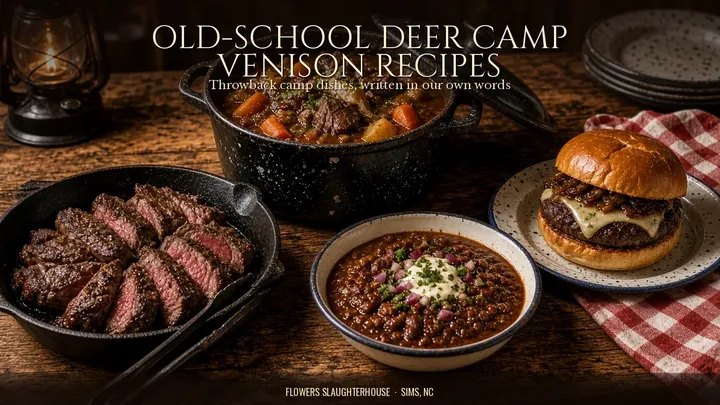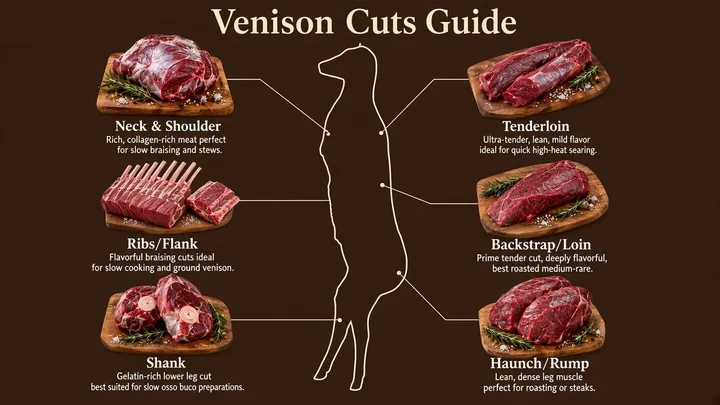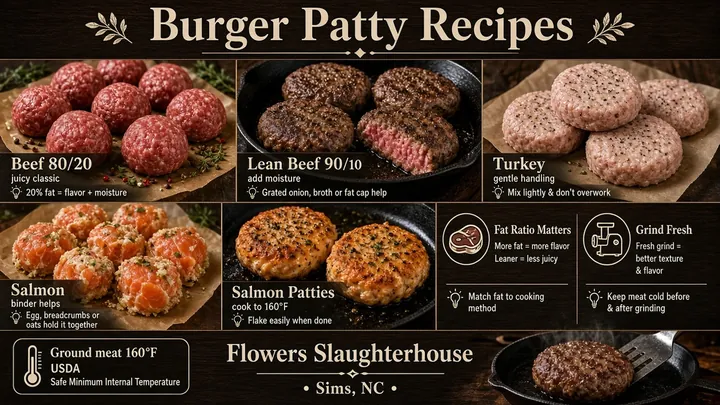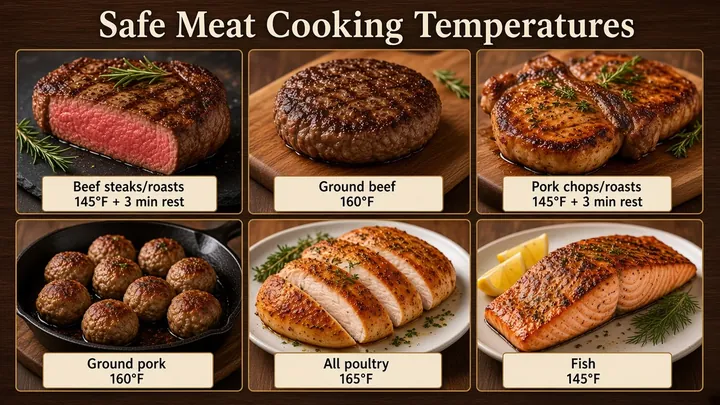
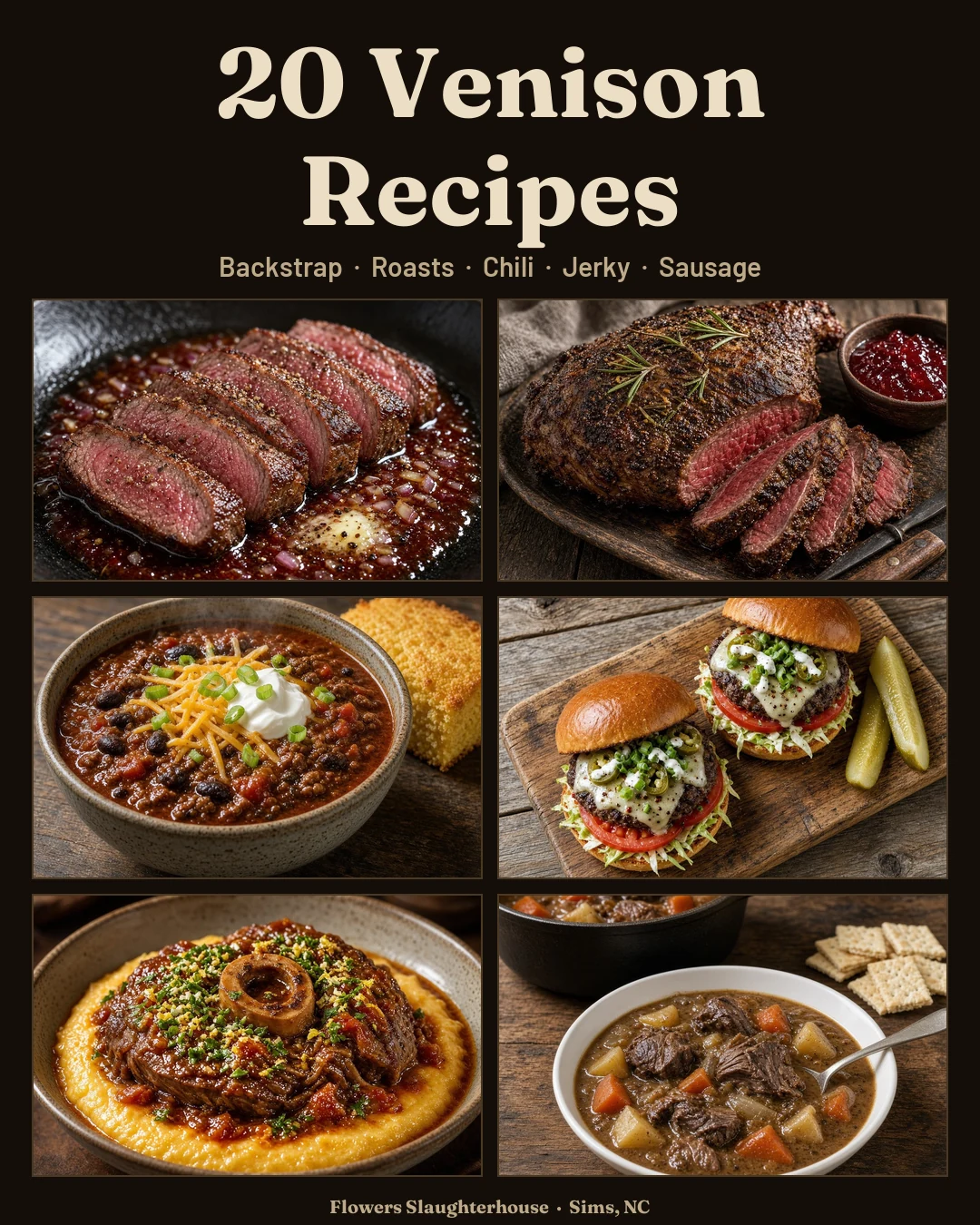
Pick what you are cooking and jump straight to it:
- Backstrap, tenderloin and steaks: 1. Grilled Venison Backstrap, 2. Pan-Seared Venison Tenderloin with Red Wine Pan Sauce, 3. Broiled Venison Steak with Maître d'Hôtel Butter, 4. Venison Cutlets, 15. Smoked Venison Backstrap, 16. Venison Stir-Fry
- Roasts, shanks and stews: 9. Roast Leg of Venison, 10. Stewed Venison Shoulder with Currant Jelly, 13. Braised Venison Shanks (Ossobuco Milanese), 14. Slow Cooker Venison Roast, 17. Venison Stroganoff
- Ground venison: 5. Ground Venison Burgers, 6. Texas-Style Venison Chili, 7. Italian-Style Venison Meatballs, 8. Ground Venison Tacos, 18. Venison Shepherd’s Pie, 19. Venison Meat Loaf
- Jerky and sausage: 11. Venison Jerky, 12. Venison Summer Sausage, 20. Camp Venison Sausages
The recipes are for home cooks working with venison from a hunt or a licensed source. Ingredient lists follow the sources.
Safe cooking temperatures for venison
Use a food thermometer in the thickest part of the meat, away from bone.
Venison-specific consumer guidance. FoodSafety.gov (last reviewed November 21, 2024) lists rabbit and venison, wild or farm-raised, at 160°F (71°C). That is the federal consumer chart that names venison by name. This collection treats 160°F as the official safe minimum for steaks, roasts, stews, and ground venison unless a recipe is a leftover or a mixed casserole, which FoodSafety.gov lists at 165°F.
The general FSIS red-meat chart. The USDA FSIS Safe Minimum Internal Temperature Chart lists beef, pork, veal, and lamb steaks, chops, and roasts at 145°F with a 3-minute rest, and ground meats at 160°F. That chart does not list venison on its own row. Some hunters still cook intact backstrap or tenderloin below 160°F for quality. That is a personal preference, and it is below the venison-specific consumer minimum on FoodSafety.gov.
Jerky. Follow USDA FSIS jerky guidance: heat the meat to 160°F with wet heat (steam or roast, or by boiling the strips in marinade) before dehydrating, then dry at a steady 130°F to 140°F. The National Center for Home Food Preservation also recommends freezing venison 6 inches or less thick at 0°F for at least 30 days before slicing, to address trichinae risk, and checking that a test strip cracks but does not break when bent.
Summer sausage and other ground sausage. Cook to at least 160°F inside, as Oregon State University Extension specifies in its tested method.
Historic cookbooks in this set often said to serve venison “rare.” Those lines are quoted as history only. The temperatures above are the ones to cook to now.
1. Grilled Venison Backstrap
A whole loin, oiled and salted, over a hot open grill. This is the simple backstrap method many hunters want first.
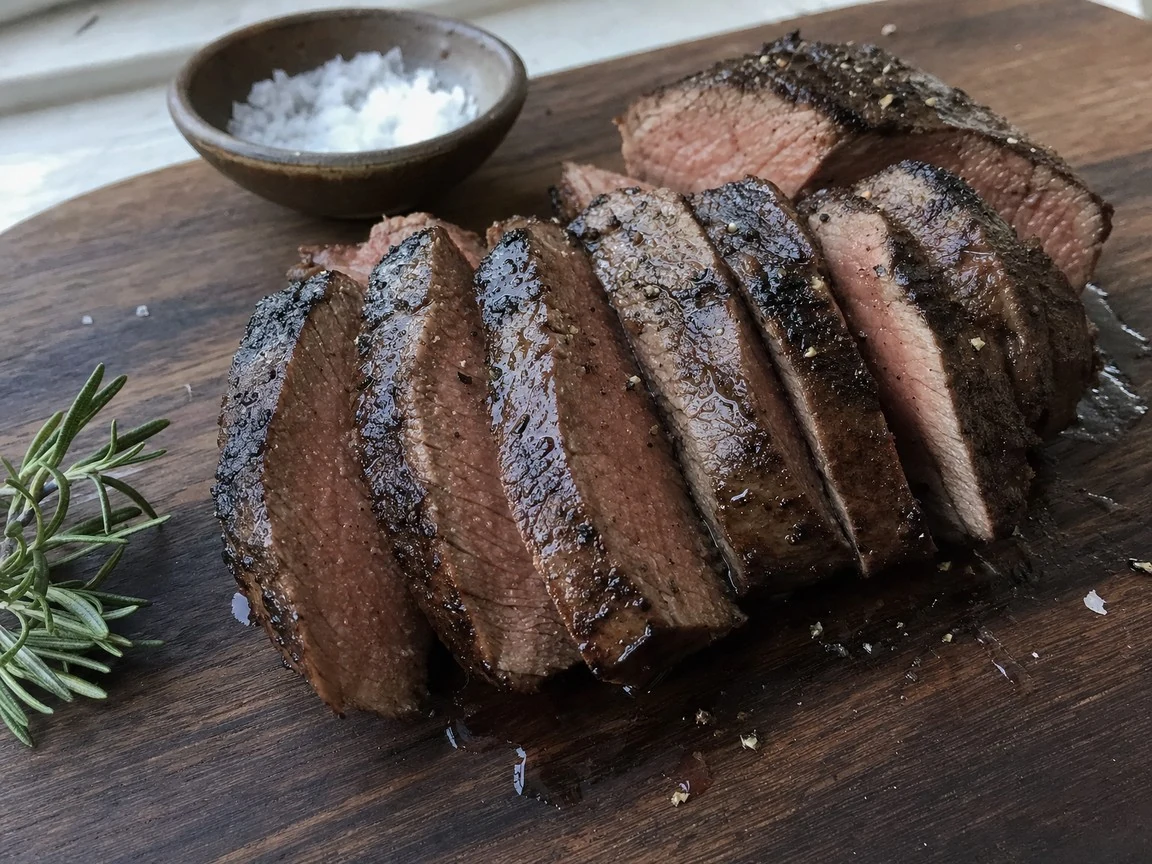
Image: BrockStar Media.
Ingredients (about 4 servings)
- 1 to 2 pounds venison loin (backstrap), ideally in one piece
- Olive oil
- Salt and pepper
- A sauce you like, optional
Steps
- Coat the loin with oil and salt it well.
- Let it sit at room temperature for 30 minutes to an hour so the center is not ice-cold when it hits the fire.
- Get the grill very hot and clean the grates.
- Set the backstrap on the grate and leave the lid open.
- Sear 5 to 7 minutes without moving it, until you have good grill marks, then turn and do the same on the other side.
- If the thickest part still needs time, stand the loin on its unseared edges for a couple of minutes more.
- If you are using a barbecue sauce, brush it on at the end and let it set for a minute or two.
- Take the meat off and rest it 5 to 10 minutes before slicing.
Safe temp note: FoodSafety.gov lists venison at 160°F. Check the center with a thermometer before you slice.
Recipe source / inspired by: Hank Shaw, Hunter Angler Gardener Cook (Honest-Food.net), “Grilled Venison Steak Recipe — How to Grill Venison.” honest-food.net
2. Pan-Seared Venison Tenderloin with Red Wine Pan Sauce
The two small tenderloins from a deer, seared hard in a hot pan, with a quick shallot and wine sauce made in the same skillet.
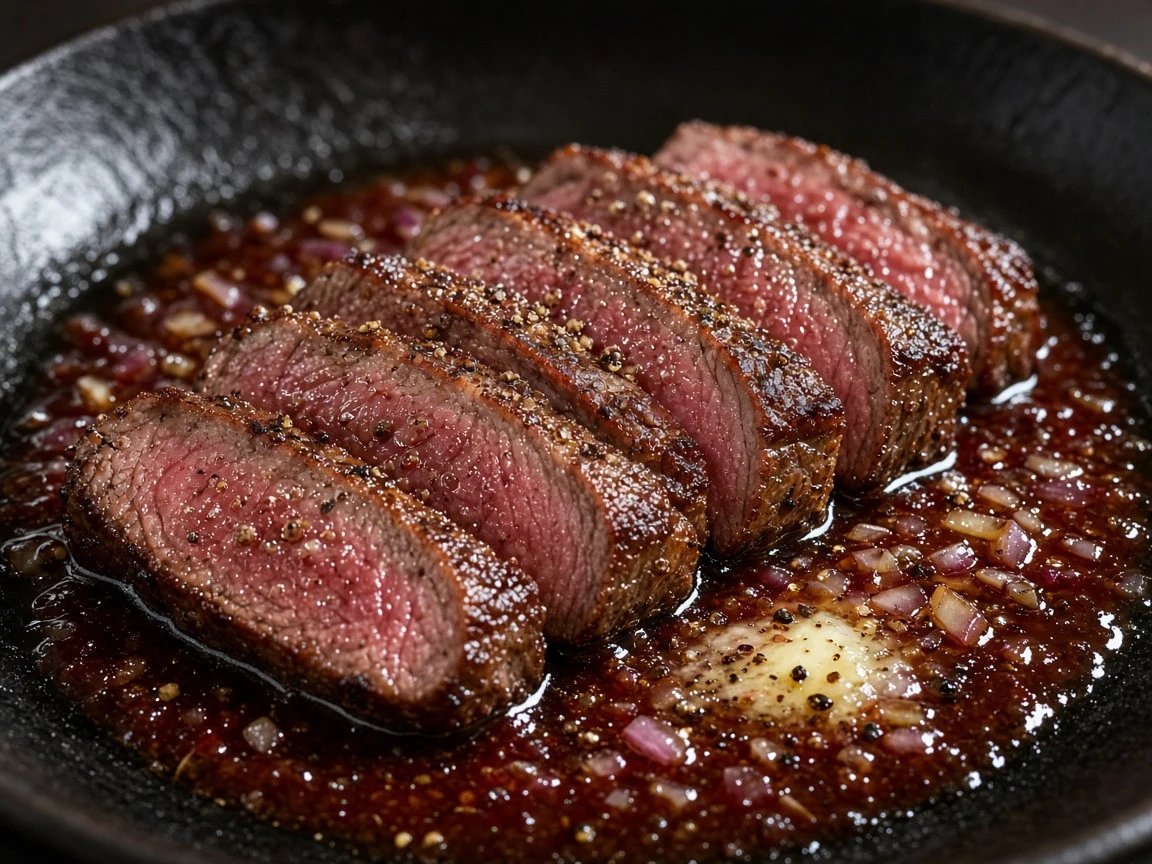
Image: BrockStar Media.
Ingredients (2 to 3 servings)
- 12 ounces venison tenderloin (both tenderloins from a typical deer)
- Salt and freshly ground black pepper
- 2 tablespoons safflower oil, or another high-smoke-point oil, plus 1 tablespoon for the sauce
- 1 shallot, minced
- 1/2 cup red wine
- 1 cup venison or beef stock
- 2 tablespoons butter, added in two pieces
Steps
- Salt the tenderloins and leave them out while you mince the shallot.
- Heat the oil in a skillet that will hold the meat over high heat.
- Pat the tenderloins dry and lay them in the pan; they will shrink as they hit the heat.
- Sear about 2 minutes, then turn to a new side, repeating until all sides are browned and the center is where you want it.
- Move the meat to a board and grind pepper over it.
- Add the extra oil and the shallot to the pan and cook until the shallot takes a little color, scraping up the browned bits.
- Pour in the wine, let it boil briefly, then add the stock and a pinch of salt.
- Reduce until a spoon dragged through the sauce leaves a short trail.
- Turn off the heat and swirl in the butter, one tablespoon at a time.
- Slice the tenderloin into medallions and spoon the sauce over it.
Safe temp note: FoodSafety.gov lists venison at 160°F. Check the thickest part before you slice.
Recipe source / inspired by: Hank Shaw, Hunter Angler Gardener Cook (Honest-Food.net), “Venison Tenderloin Recipe — Pan Seared Deer Tenderloin.” honest-food.net
3. Broiled Venison Steak with Maître d'Hôtel Butter
A steak method from Fannie Farmer’s 1896 Boston Cooking-School Cook Book: broil the steak as you would a beefsteak, and finish it with a simple parsley butter. Farmer wrote that venison “should always be cooked rare.” That is a period preference, not current federal guidance.
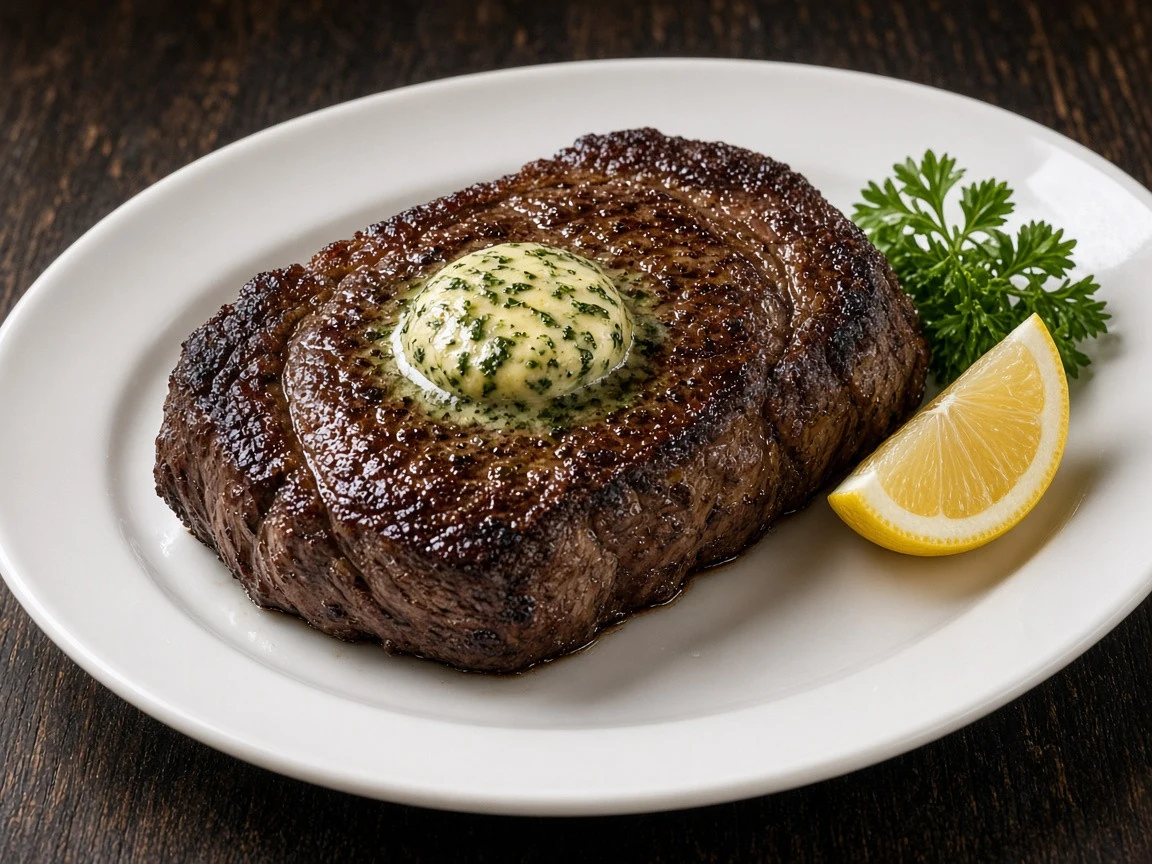
Image: BrockStar Media.
Ingredients (2 servings)
- 2 venison steaks, about 3/4 to 1 inch thick
- Salt and pepper
- Softened butter, chopped parsley, a squeeze of lemon, and a pinch of salt, mashed together for maître d'hôtel butter
Steps
- Wipe the steaks, season them, and set them on a greased broiler or a preheated heavy pan under a hot broiler.
- Cook until both sides are browned and the center reaches a safe temperature, turning once.
- Farmer’s 1896 text points to a short broil; time depends on thickness, so use a thermometer rather than the clock.
- Rest the steaks briefly, then top with a spoonful of the parsley butter so it melts over the meat.
Safe temp note: FoodSafety.gov lists venison at 160°F. Do not rely on the historic “cook it rare” line.
Recipe source / inspired by: Fannie Merritt Farmer, The Boston Cooking-School Cook Book (Boston: Little, Brown, 1896), “Broiled Venison Steak.” Internet Archive · Open Library
4. Venison Cutlets
Another Farmer 1896 method: loin slices, breaded and broiled or sautéed, served with a port-wine sauce.
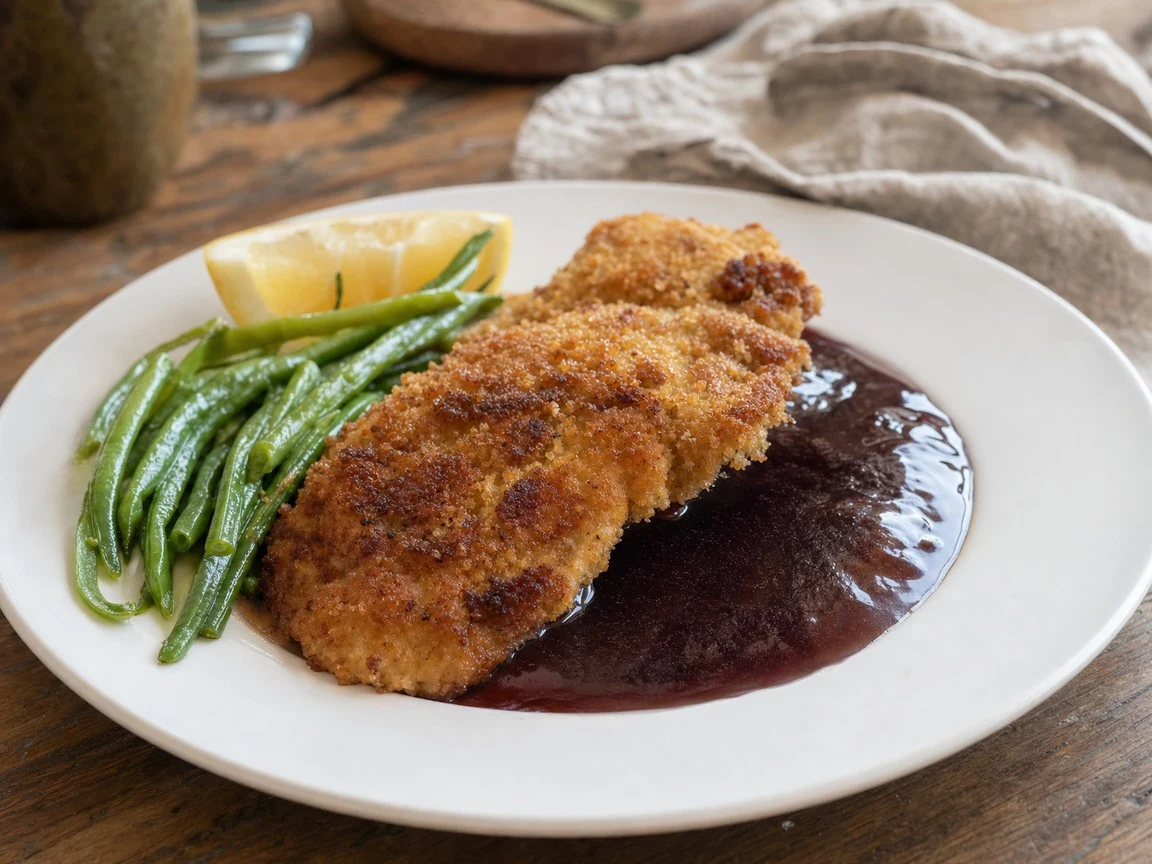
Image: BrockStar Media.
Ingredients (2 to 3 servings)
- Slices of venison cut from the loin, trimmed
- Salt and pepper
- Melted butter or olive oil
- Soft stale bread crumbs
- Port wine sauce, to serve
Steps
- Trim the loin slices clean.
- Season them, brush with melted butter or oil, and roll them in crumbs.
- Broil about 5 minutes, or sauté in butter, until the crumbs are browned and the meat is cooked through.
- Serve with port wine sauce.
Safe temp note: FoodSafety.gov lists venison at 160°F.
Recipe source / inspired by: Fannie Merritt Farmer, The Boston Cooking-School Cook Book (1896), “Venison Cutlets.” Internet Archive · Open Library
5. Ground Venison Burgers
Jalapeño and green onion in the patty, yogurt for a little moisture, and a lime-mustard mayonnaise. Taste of Home’s test kitchen cooks these to 160°F.
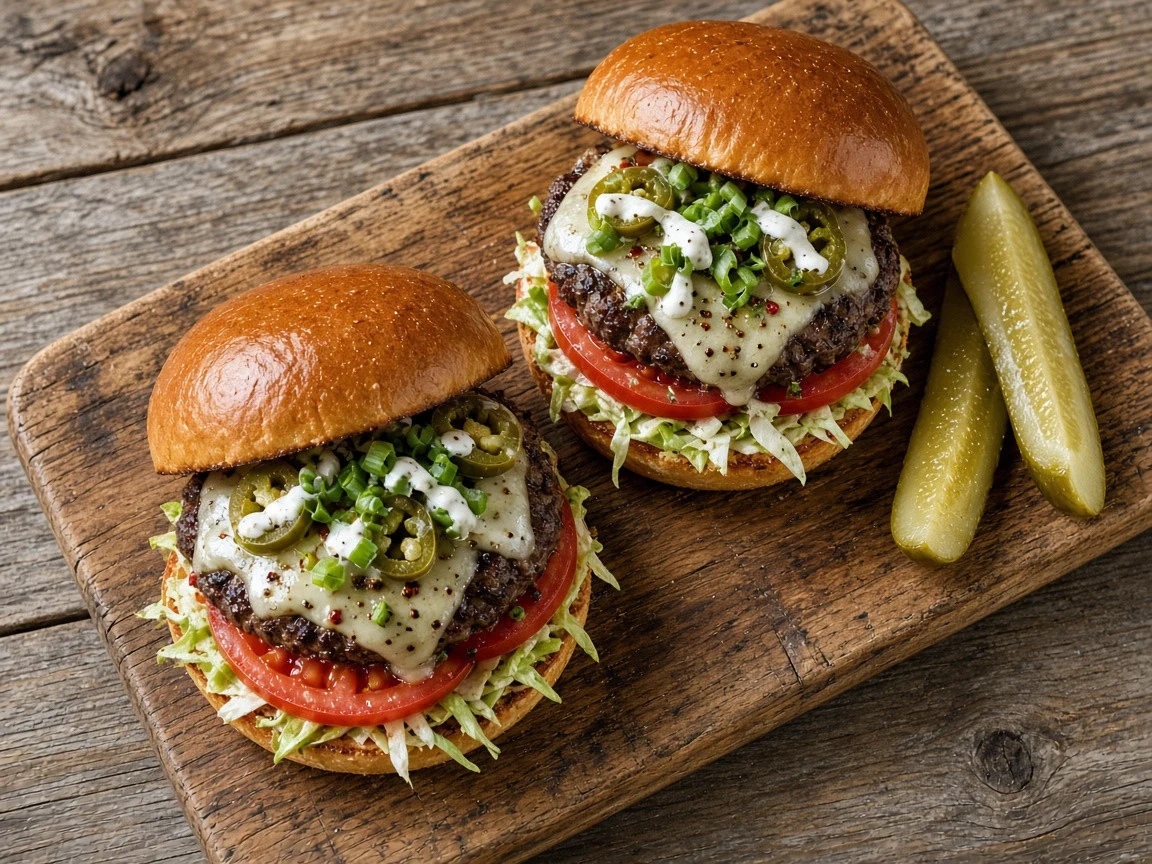
Image: BrockStar Media.
Ingredients (8 servings)
- 1/3 cup mayonnaise
- 1 teaspoon lime juice
- 1 teaspoon Dijon mustard
- 1/2 teaspoon grated lime zest
- 1/3 cup chopped green onions
- 3 tablespoons plain yogurt
- 2 tablespoons finely chopped jalapeño pepper
- 1/2 teaspoon salt
- 1/2 teaspoon pepper
- 2 pounds ground venison
- 8 hamburger buns, split
- 8 slices pepper jack cheese
- Tomato slices, optional
Steps
- Stir the mayonnaise, lime juice, mustard, and zest together and keep that sauce cold.
- In a larger bowl, mix the green onions, yogurt, jalapeño, salt, and pepper.
- Crumble the venison over the top and mix it in gently; don’t pack it like meatloaf.
- Shape eight patties, about 3/4 to 1 inch thick.
- Pan-fry, grill, or broil over medium heat until a thermometer in the center reads 160°F, usually 3 to 5 minutes a side.
- Serve on buns with the cheese, the lime mayonnaise, and tomato if you want it.
Safe temp note: Ground venison is 160°F on both the FoodSafety.gov venison line and the FSIS ground-meat line.
Recipe source / inspired by: Jerry Honeyager, “Ground Venison Burgers,” Taste of Home (tested by the Taste of Home Test Kitchen). tasteofhome.com
6. Texas-Style Venison Chili
A Dutch-oven chili from the Texas Parks and Wildlife Department’s wild-game recipe pages: browned venison, poblano, ancho, cumin, beans, tomatoes, and a long simmer.
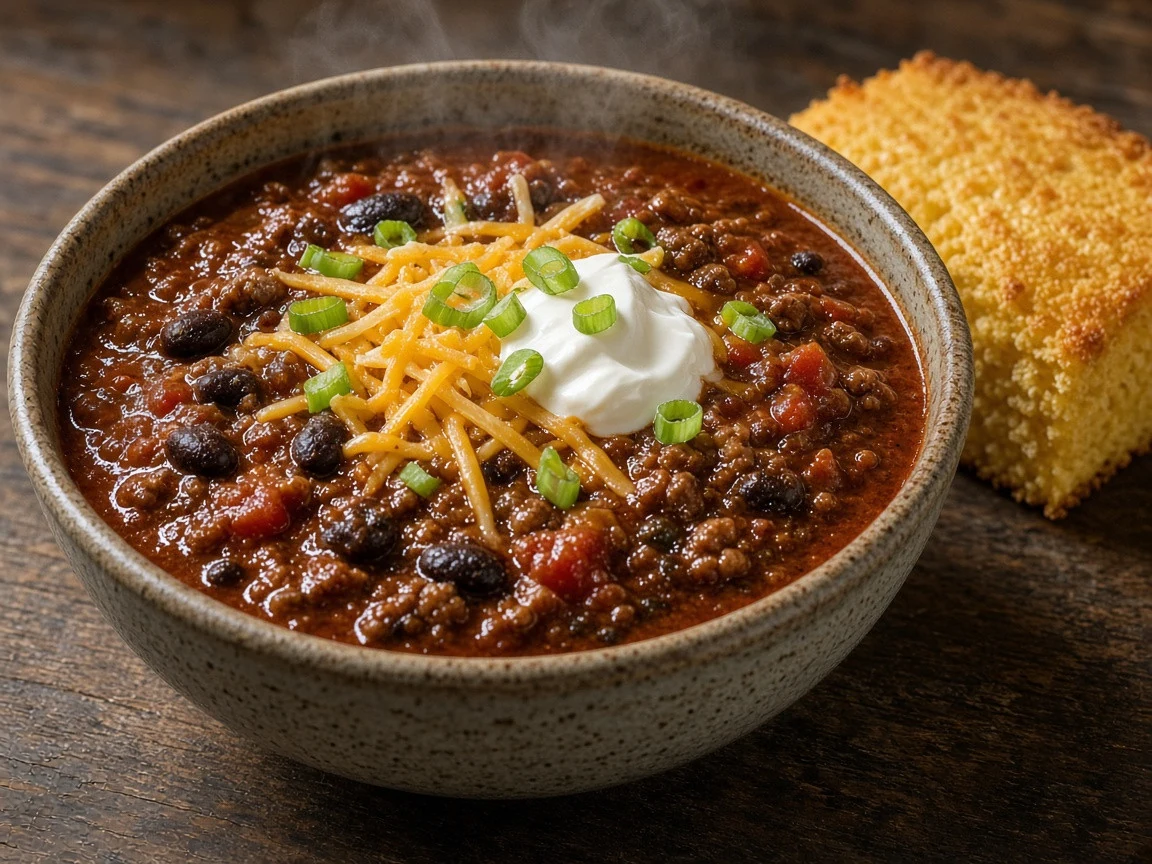
Image: BrockStar Media.
Ingredients (6 to 8 servings)
- 1/4 cup vegetable oil
- 2 pounds venison
- Salt and pepper, to taste
- 2 poblano peppers, stemmed and diced
- 1/2 large onion, chopped
- 5 cloves garlic, chopped
- 1 1/2 tablespoons ancho chile powder
- 2 teaspoons cayenne pepper, or to taste
- 1 tablespoon ground cumin
- 1/2 teaspoon oregano
- 1 can black beans
- 1 can chili beans
- 1 can diced tomatoes
- 2 cups game stock or chicken broth
Steps
- Heat a little of the oil in a Dutch oven over medium-high heat and brown the venison.
- Season it with salt and pepper, then lift the meat out.
- Add the rest of the oil, lower the heat to medium, and cook the poblanos and onion until they soften.
- Turn the heat back up, add the garlic and the spices, and stir for about a minute so the spices bloom but don’t scorch.
- Return the venison and add the beans, tomatoes, and stock.
- Stir, bring it to a simmer, and cook partly covered, stirring now and then, for about 2 hours.
- Serve with cheese, sour cream, onions, or corn chips.
- If you don’t want beans in chili, TPWD notes you can simply use more meat.
Safe temp note: Ground or small-cut venison should reach 160°F as it browns and then simmers. Keep the pot at a steady simmer for the full two hours.
Recipe source / inspired by: Texas Parks and Wildlife Department, “Venison Chili.” tpwd.texas.gov
7. Italian-Style Venison Meatballs
Hank Shaw’s Italian-American meatball: finely ground venison with pork fat, bread soaked in milk, cheese, and a proper fry before the sauce.
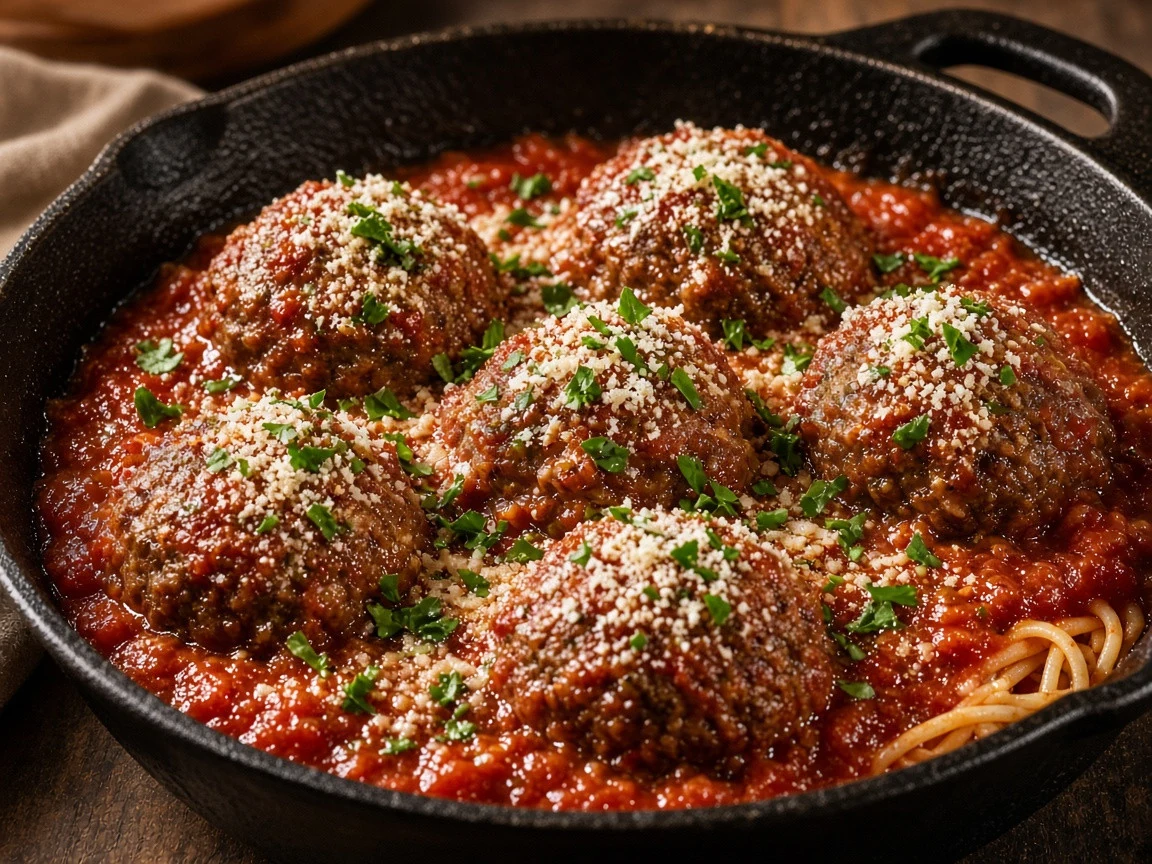
Image: BrockStar Media.
Ingredients (about 10 servings)
- 2 1/2 pounds lean venison
- 1 pound pork belly or fatty pork shoulder
- 2/3 cup milk
- 3 slices bread, crusts removed
- 2 eggs
- 1 tablespoon kosher salt
- 1 tablespoon black pepper
- 1 teaspoon fennel seeds, optional
- 1 teaspoon dried oregano
- 2 cloves garlic, minced
- 4 tablespoons grated pecorino or Parmesan
- 1 1/2 cups bread crumbs, for rolling
- Olive oil, for frying
Steps
- If you are grinding the meat yourself, chill the venison and pork almost to freezing, then grind them fine.
- Warm the milk over low heat, add the crustless bread, and mash it into a paste; let that cool.
- Put the ground meat in a large bowl with the salt, spices, garlic, and cheese.
- Add the eggs and the bread-milk paste.
- Mix with a light hand — don’t knead it.
- Roll loosely packed 1 1/2- to 2-inch balls in your palms, then roll them in bread crumbs and reshape if needed.
- Heat about 1/4 inch of oil in a wide skillet to around 325°F.
- Add the meatballs so they don’t touch, and add oil if needed so it comes halfway up the sides.
- Brown one side, turn once, and brown the other. Drain on a rack.
- Finish them in tomato sauce for about 20 minutes, until the center of a meatball is 160°F.
- Shaw also gives a baking option in a mini muffin pan at 300°F; still finish in sauce and confirm 160°F.
Safe temp note: Ground venison is 160°F.
Recipe source / inspired by: Hank Shaw, Hunter Angler Gardener Cook (Honest-Food.net), “Venison Meatballs.” honest-food.net
8. Ground Venison Tacos
A weeknight skillet taco meat from Danielle Prewett at MeatEater: browned venison, onion, garlic, and a quick lime-honey tomato sauce with ancho and a pinch of cinnamon.
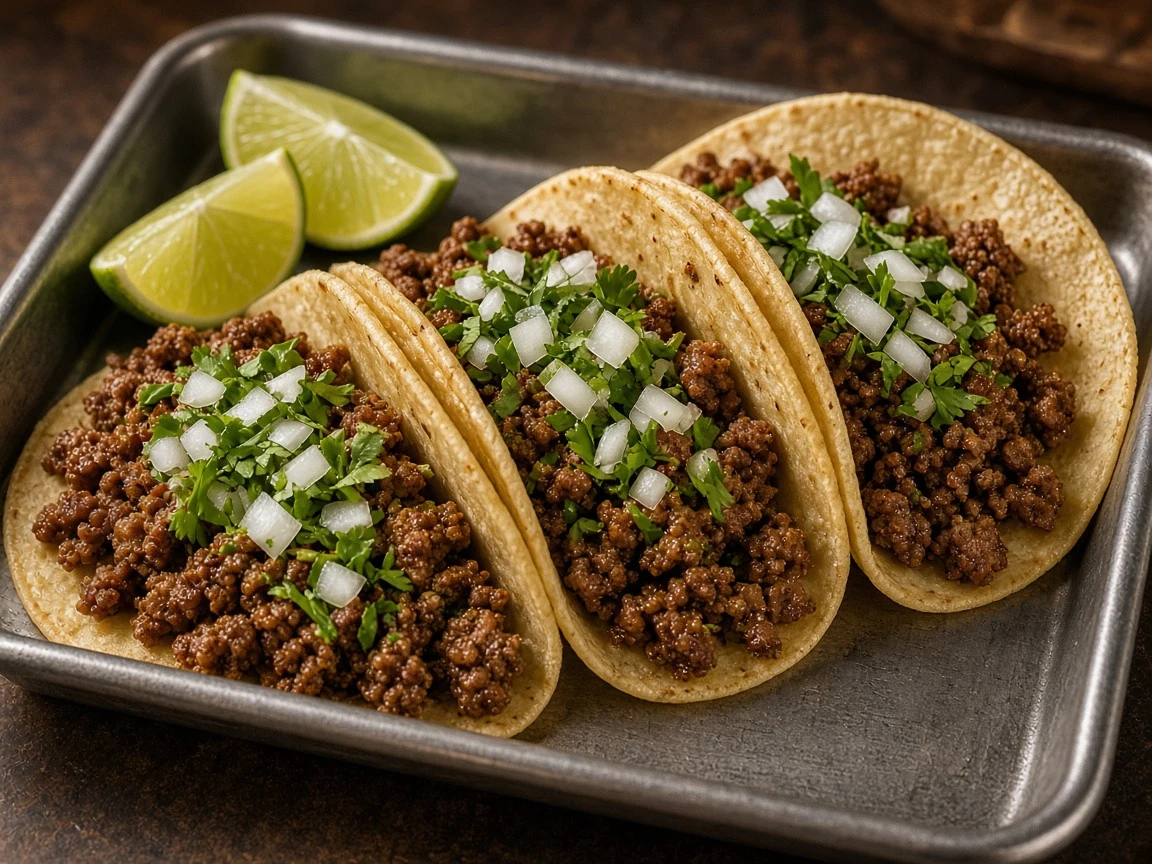
Image: BrockStar Media.
Ingredients (4 servings)
- 1 pound ground venison
- 1 1/2 teaspoons kosher salt
- 1/2 teaspoon cumin
- 1/2 teaspoon oregano
- 1/4 teaspoon cinnamon
- 3/4 teaspoon ancho chili powder
- 2 tablespoons lime juice
- 1 tablespoon honey or agave nectar
- 1/4 cup water
- 3 tablespoons tomato paste
- 1/2 yellow onion, finely diced
- 2 cloves garlic, minced
- 2 tablespoons cooking oil
- Tortillas and toppings, to serve
Steps
- Stir the dry spices in one bowl.
- In another, whisk the lime juice, honey, water, and tomato paste.
- Heat a skillet over medium-high heat with a tablespoon of oil.
- Brown the venison on one side before you turn it, then break it up, and set it aside.
- Add a little more oil if the pan is dry and cook the onion until it softens and starts to brown; add the garlic for another minute.
- Return the meat, pour in the tomato mixture, sprinkle on the spices, and stir until everything is combined and the sauce clings to the meat.
- Serve in tortillas or on tostadas.
- Cook the venison to 160°F as it browns and simmers.
Safe temp note: Ground venison is 160°F.
Recipe source / inspired by: Danielle Prewett, “Venison Tacos,” MeatEater Cook (February 18, 2020). themeateater.com
9. Roast Leg of Venison
Farmer’s 1896 roast: treat a leg of venison as you would a roast of lamb, but don’t leave it in as long. We are updating the doneness to current venison guidance, not to the book’s “cook it rare.”
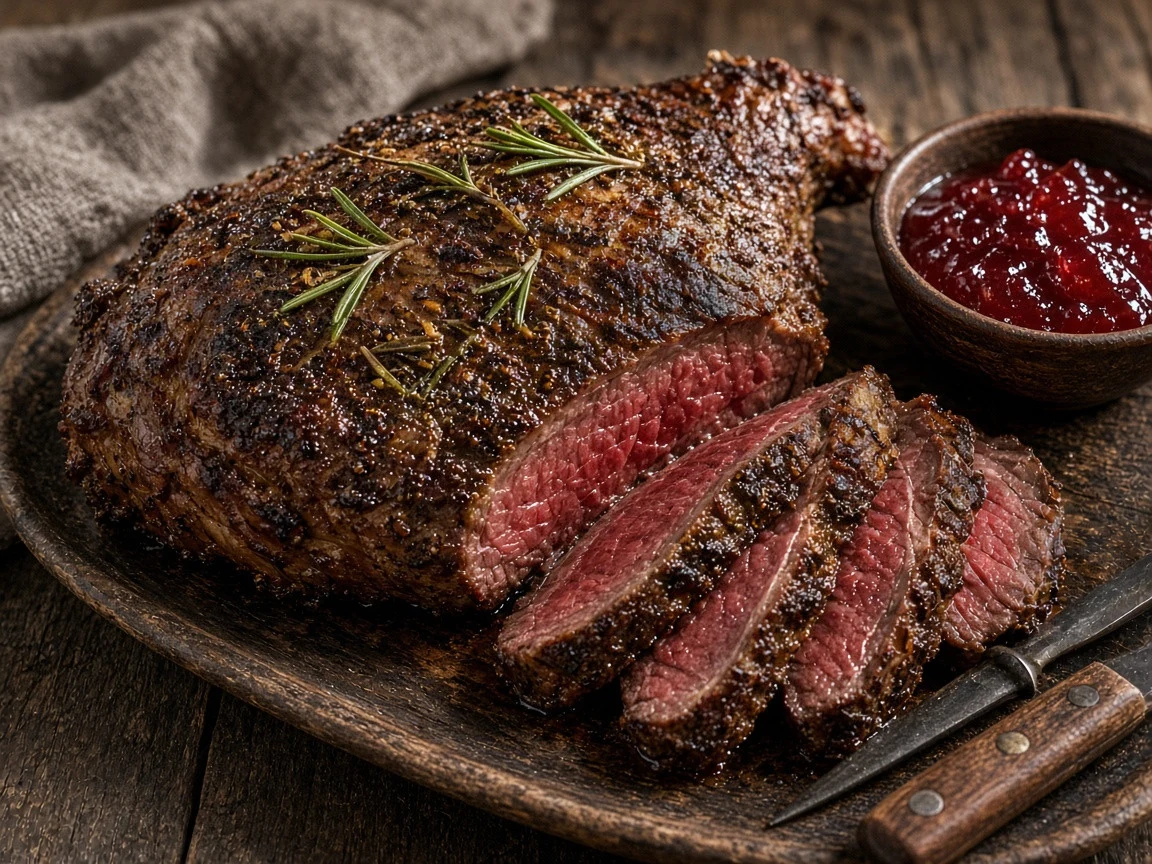
Image: BrockStar Media.
Ingredients (serves a table)
- 1 venison leg (haunch), trimmed
- Salt and pepper
- Butter or oil, for rubbing and basting
- Currant jelly, to serve
Steps
- Bring the roast out of the refrigerator so it is not ice-cold in the center.
- Season it well, rub it with butter or oil, and set it on a rack in a roasting pan.
- Roast in a moderate to moderately hot oven, basting now and then, until a thermometer in the thickest part — not touching bone — reads 160°F.
- Farmer’s instruction was simply to roast it like lamb but for less time so it stayed rare; use the thermometer instead of that historic cue.
- Rest the roast at least 3 minutes, and longer is fine, then slice and send currant jelly to the table.
Safe temp note: FoodSafety.gov lists venison roasts at 160°F.
Recipe source / inspired by: Fannie Merritt Farmer, The Boston Cooking-School Cook Book (1896), “Roast Leg of Venison.” Internet Archive · Open Library
10. Stewed Venison Shoulder with Currant Jelly
A braise from Mrs. Beeton (1861): a boned, rolled shoulder, lined with port-soaked mutton fat, simmered with stock, peppercorns, and allspice, and served with red-currant jelly.
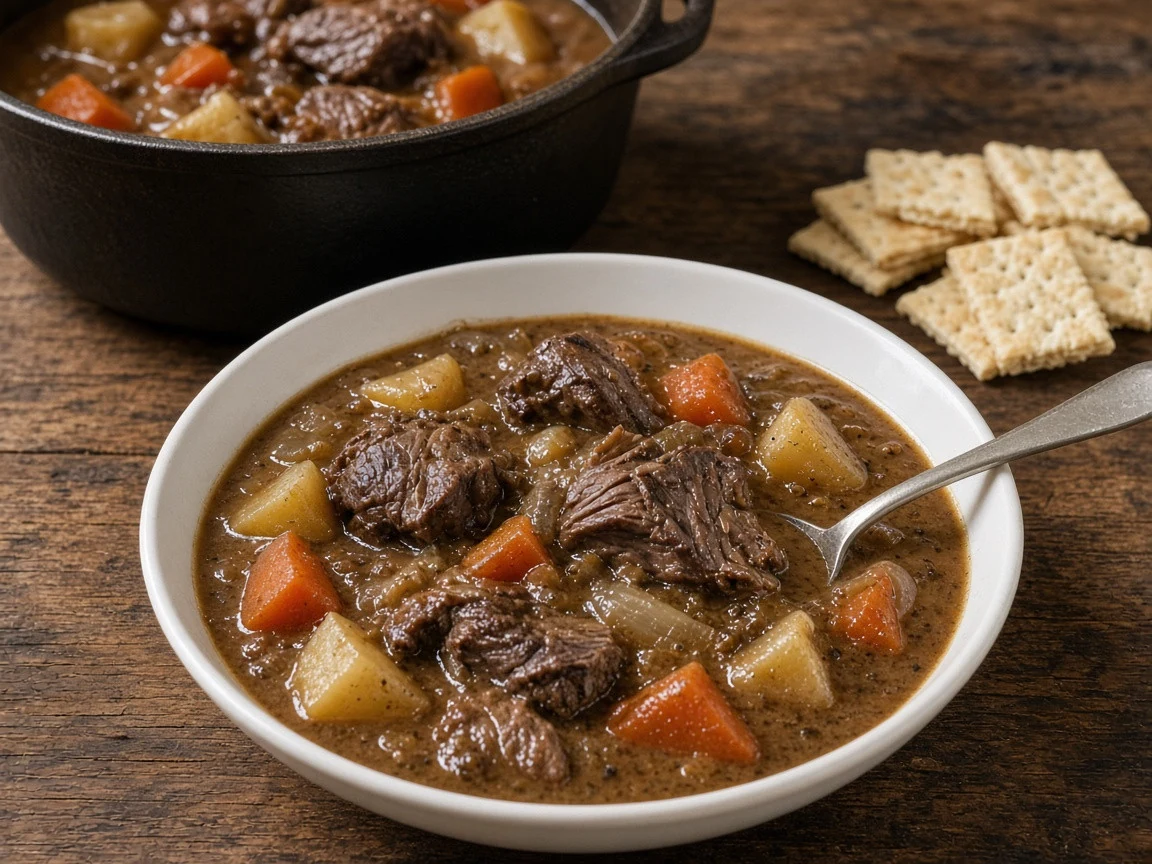
Image: BrockStar Media.
Ingredients (10 to 12 servings in the original; scale down as needed)
- 1 shoulder of venison, well hung, boned, and flattened
- A few thin slices of mutton fat (Beeton prefers fat from the best end of a neck of mutton)
- 1/4 pint (1/2 cup) port wine
- 1 1/2 pints stock
- 1/2 teaspoon peppercorns
- 1/2 teaspoon whole allspice
- Salt and pepper
- Red-currant jelly, to serve
Steps
- Pour the port over the mutton fat and let it sit 2 to 3 hours.
- Flatten the boned shoulder, season it well, and cover it with the soaked fat.
- Roll the meat, tie it securely, and put it in a pot with the boiling stock and the shoulder bones.
- Add the port the fat soaked in, plus the peppercorns and allspice.
- Cover tightly and simmer very gently for 3 to 3 1/2 hours, until the meat is tender and cooked through.
- Remove the string, strain the gravy over the meat, and serve red-currant jelly on the side.
- The accompanying photograph is a modern venison stew, not a period illustration of the rolled shoulder.
Safe temp note: FoodSafety.gov lists venison at 160°F. In a long, covered braise the meat will be well past that once it is fork-tender.
Recipe source / inspired by: Isabella Beeton, The Book of Household Management (London, 1861), “Venison Stewed” (recipe 1336 / 1051 depending on the edition). Wikisource · 1861 text also at victorianlondon.org · Open Library (1861): Open Library
11. Venison Jerky
A tested home-drying method from the National Center for Home Food Preservation, aligned with USDA FSIS jerky guidance.
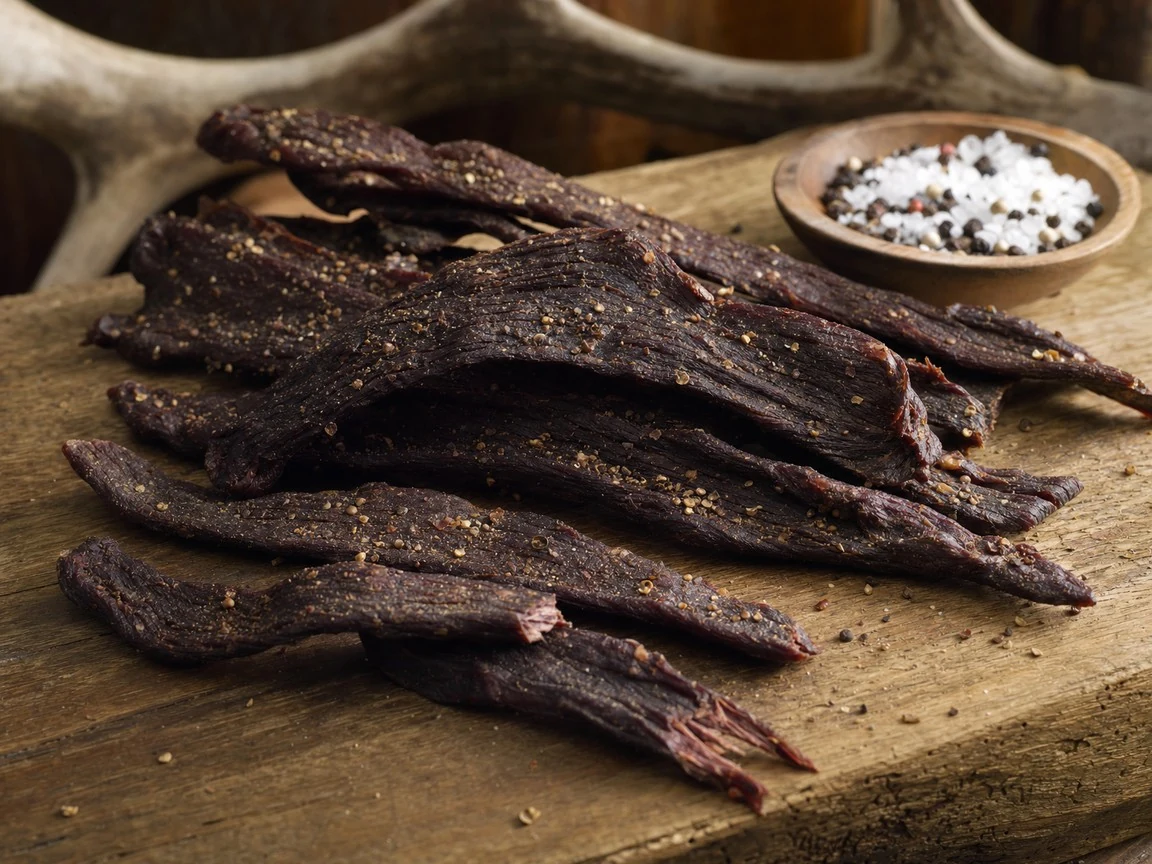
Image: BrockStar Media.
Ingredients (from the NCHFP marinade, for 1 1/2 to 2 pounds of lean meat)
- 1 1/2 to 2 pounds lean venison
- 1/4 cup soy sauce
- 1 tablespoon Worcestershire sauce
- 1/4 teaspoon black pepper
- 1/4 teaspoon garlic powder
- 1/2 teaspoon onion powder
- 1 teaspoon hickory smoke-flavored salt
Steps
- If you are using wild venison, freeze pieces no more than 6 inches thick at 0°F or below for at least 30 days, then thaw in the refrigerator. Trim off all fat.
- Partially freeze the meat so it slices cleanly, and cut strips no thicker than 1/4 inch — with the grain for a chewier jerky, across the grain for a more brittle one.
- Mix the marinade, cover the strips, and refrigerate 1 to 2 hours or overnight.
- To meet the FSIS wet-heat step, bring the strips and marinade to a boil and boil for 5 minutes, longer if the strips are thicker than 1/4 inch, and check that several pieces have reached 160°F.
- Drain the strips, lay them on dehydrator trays without overlapping, and dry at 140°F until a test piece cracks but does not break when bent (often 10 to 24 hours; strips heated in marinade dry faster, so start checking at 3 hours).
- If you skipped the pre-heat, NCHFP says you can heat the dried strips on a baking sheet in a 275°F oven for 10 minutes (for 1/4-inch strips) as a safety step, confirming 160°F.
- Cool, pat off any oil, and store in jars or freezer bags.
- Room-temperature storage is only about two weeks; refrigerate or freeze for longer keeping.
Safe temp note: FSIS: heat to 160°F before dehydrating; dry at 130°F to 140°F. See https://www.fsis.usda.gov/food-safety/safe-food-handling-and-preparation/meat-fish/jerky and the NCHFP jerky page.
Recipe source / inspired by: National Center for Home Food Preservation, “Jerky,” extracted from So Easy to Preserve, 6th ed. (2014), Bulletin 989, University of Georgia Cooperative Extension, revised by Elizabeth L. Andress, Ph.D., and Judy A. Harrison, Ph.D. nchfp.uga.edu
12. Venison Summer Sausage
A tested extension method from Oregon State University: lean venison mixed with pork, cured with a measured amount of Morton Tender Quick, shaped, and baked low until the inside is 160°F.
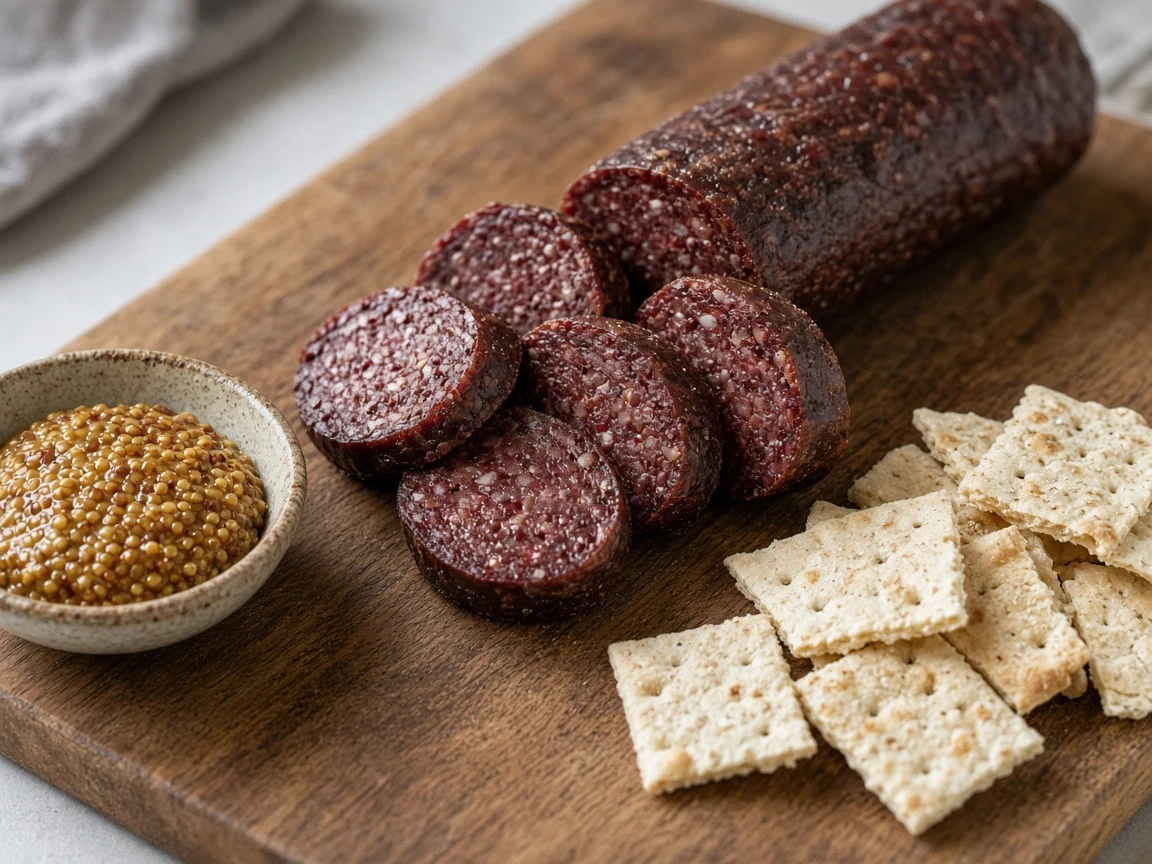
Image: BrockStar Media.
Ingredients (OSU’s 5-pound seasoning batch; use a 4:1 mix of ground venison to ground pork, and keep the meat cold)
- 4 pounds ground venison plus 1 pound ground pork (OSU’s usual ratio)
- 2 tablespoons Morton Tender Quick salt
- 2 1/2 teaspoons garlic salt
- 2 1/2 teaspoons coarse black pepper
- 2 1/2 teaspoons mustard seed
- 1 teaspoon hickory smoked salt or liquid smoke
- Optional: 1/4 to 1/2 cup nonfat dry milk per pound of meat, to help lean sausage hold together
Steps
- Mix the seasonings, sprinkle them evenly over the cold meat, and knead them in with clean, gloved hands.
- Cover and refrigerate at least 24 hours, kneading once during that time.
- Shape into rolls no more than 3 inches across (1 1/2 to 2 inches is typical), or stuff into casings.
- Set the rolls on a rack over a pan and bake in a preheated 200°F oven for 3 to 5 hours, until the center is at least 160°F.
- For a drier sausage, OSU says you can go on to 165°F.
- Cool in the refrigerator, then wrap and keep up to 3 weeks in the fridge or 2 to 3 months in the freezer.
- OSU warns against cooking summer sausage in a smoker that you cannot hold at a safe temperature; a smoker/cooker with a true temperature control is a different story.
- A microwave-only cook is also not recommended.
Safe temp note: Internal temperature at least 160°F (165°F if you want it drier), per OSU Extension.
Recipe source / inspired by: Nellie Oehler, “Summer sausage and deli-style meats,” Oregon State University Extension Service, SP 50-735, revised July 2024. extension.oregonstate.edu
13. Braised Venison Shanks (Ossobuco Milanese)
Cross-cut shanks browned and braised with wine, tomato, and soffritto, in the style of Hank Shaw’s elk/venison ossobuco. Tie large shanks so they hold together. Leave small-deer shanks whole.
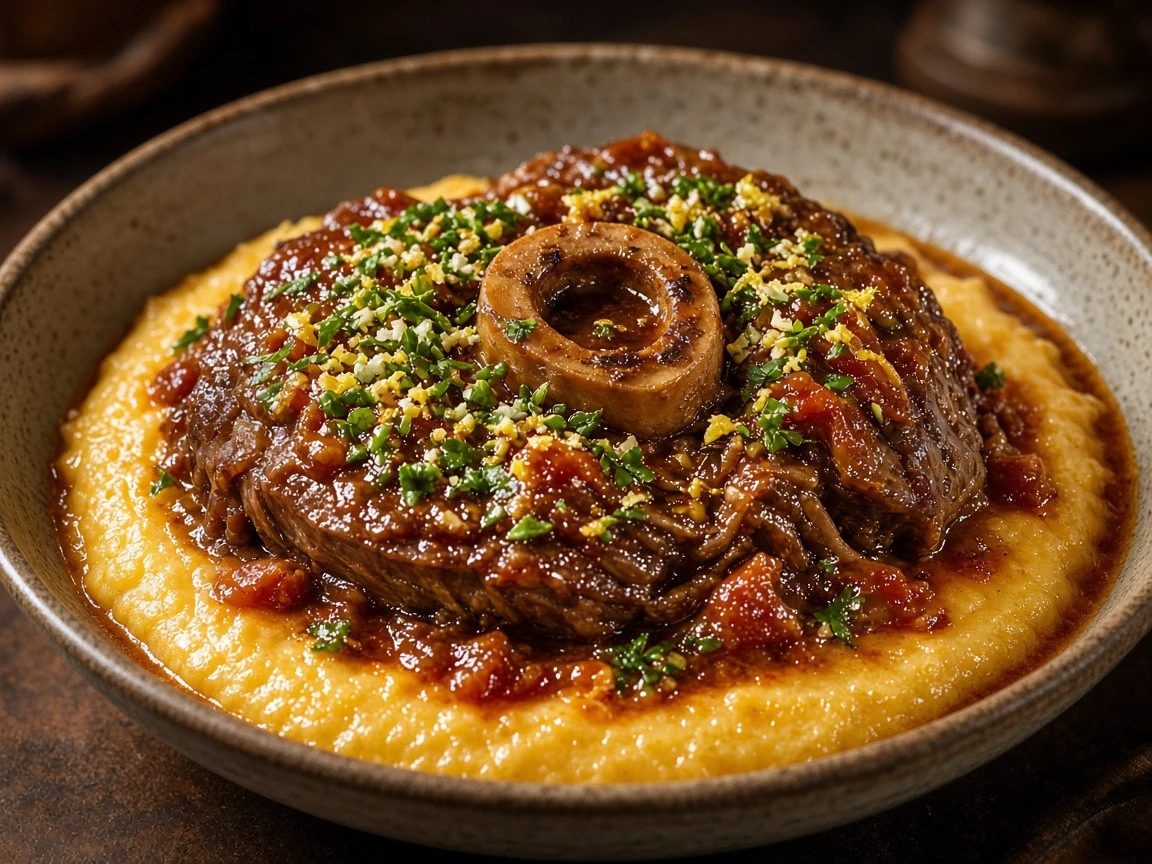
Image: BrockStar Media.
Ingredients (6 servings)
- 4 cross-cut shanks, about 2 to 3 inches thick
- Salt
- Flour, for dusting
- 1/4 cup olive oil, butter, or other fat
- 1 onion, chopped
- 2 carrots, chopped
- 2 celery stalks, chopped
- 1/2 ounce dried porcini mushrooms, chopped
- 1 cup white wine
- 1 cup chicken, beef, or game stock
- 1 (28-ounce) can crushed tomatoes
- 1 teaspoon dried thyme
- 1 teaspoon dried oregano
- Zest of a lemon, in wide strips with the white pith removed
- 2 bay leaves
- 1/4 cup chopped fresh parsley, for garnish
- Optional gremolata: 1 large garlic clove, 1/4 cup minced parsley, and 1 to 2 tablespoons minced lemon zest
Steps
- Heat the oven to 300°F.
- Salt the shanks, dust them with flour, and brown them well in the fat in a Dutch oven — a full 10 minutes is worth it. Set them aside.
- Cook the onion, carrot, celery, and porcini until they take a little color, and salt them as they cook.
- Pour in the wine and scrape the bottom of the pot.
- When it boils, add the stock, tomatoes, thyme, oregano, lemon zest, and bay leaves and bring to a simmer.
- Return the shanks and turn them in the sauce.
- Cover and braise in the oven until the meat is tender, 2 to 4 hours depending on the animal.
- Serve over risotto or polenta, or with bread, and garnish with parsley or gremolata.
Safe temp note: FoodSafety.gov lists venison at 160°F. A shank that is truly tender in this braise will be past that temperature.
Recipe source / inspired by: Hank Shaw, Hunter Angler Gardener Cook (Honest-Food.net), “Ossobuco Milanese.” honest-food.net
14. Slow Cooker Venison Roast
A simple six-hour pot roast from Allrecipes: a boneless venison roast under onion, soy, Worcestershire, and a mix of onion soup mix and cream of mushroom soup.
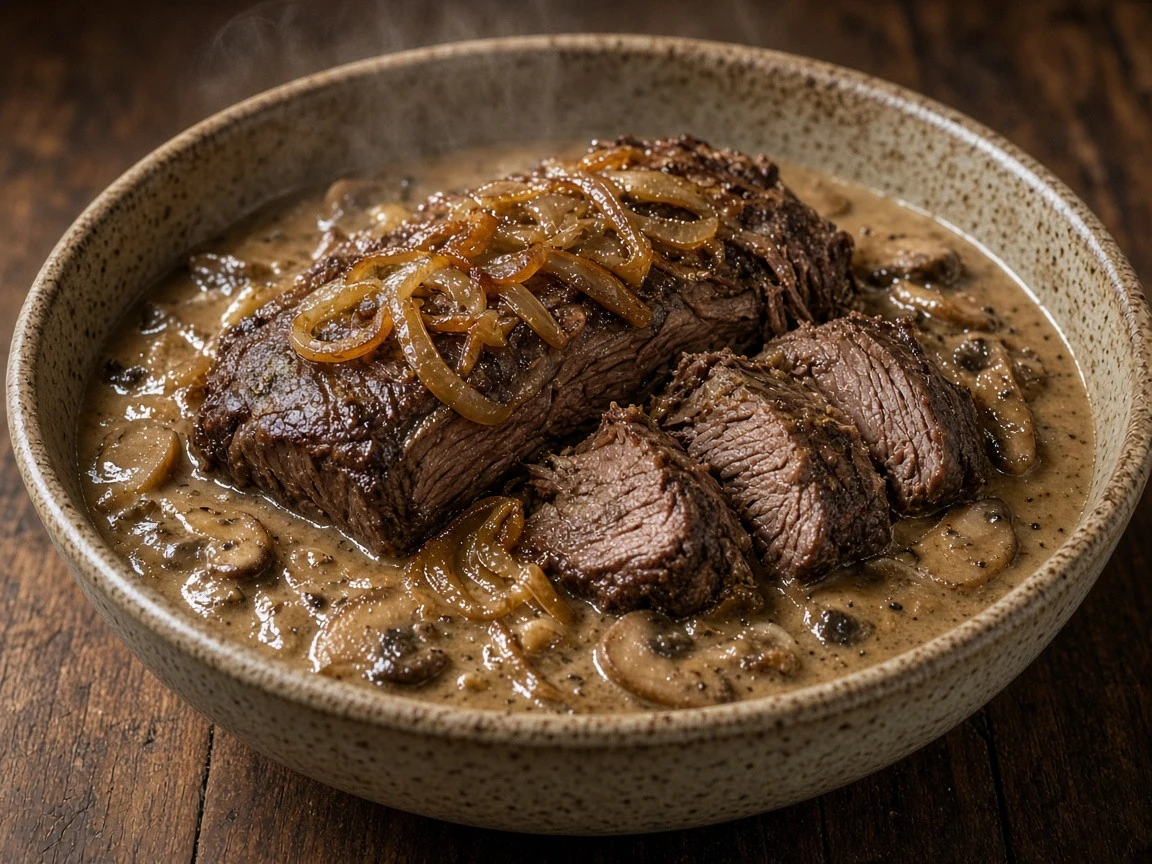
Image: BrockStar Media.
Ingredients (6 servings)
- 3 pounds boneless venison roast
- 1 large onion, sliced
- 1 tablespoon soy sauce
- 1 tablespoon Worcestershire sauce
- 1 tablespoon garlic salt
- 1/4 teaspoon ground black pepper
- 1 (1-ounce) package dry onion soup mix
- 1 (10.75-ounce) can condensed cream of mushroom soup
Steps
- Trim the roast and set it in the slow cooker.
- Cover it with the onion slices and sprinkle on the soy sauce, Worcestershire, garlic salt, and pepper.
- Stir the dry onion soup mix with the condensed soup and pour that over the meat.
- Cover and cook on Low for 6 hours, until the roast is tender and the center has reached 160°F.
- If your cooker runs cool, give it more time and keep checking the temperature.
Safe temp note: FoodSafety.gov lists venison roasts at 160°F.
Recipe source / inspired by: Sara, “Slow Cooker Venison Roast,” Allrecipes. allrecipes.com (the page lists the submitter as Sara; no last name is given.)
15. Smoked Venison Backstrap
A salt-cured, low-and-slow smoked loin from Hank Shaw. His published method pulls the loin around 135°F. That is below the 160°F FoodSafety.gov lists for venison. If you want to follow official consumer guidance, keep smoking until the center is 160°F, knowing the loin will be firmer and drier.
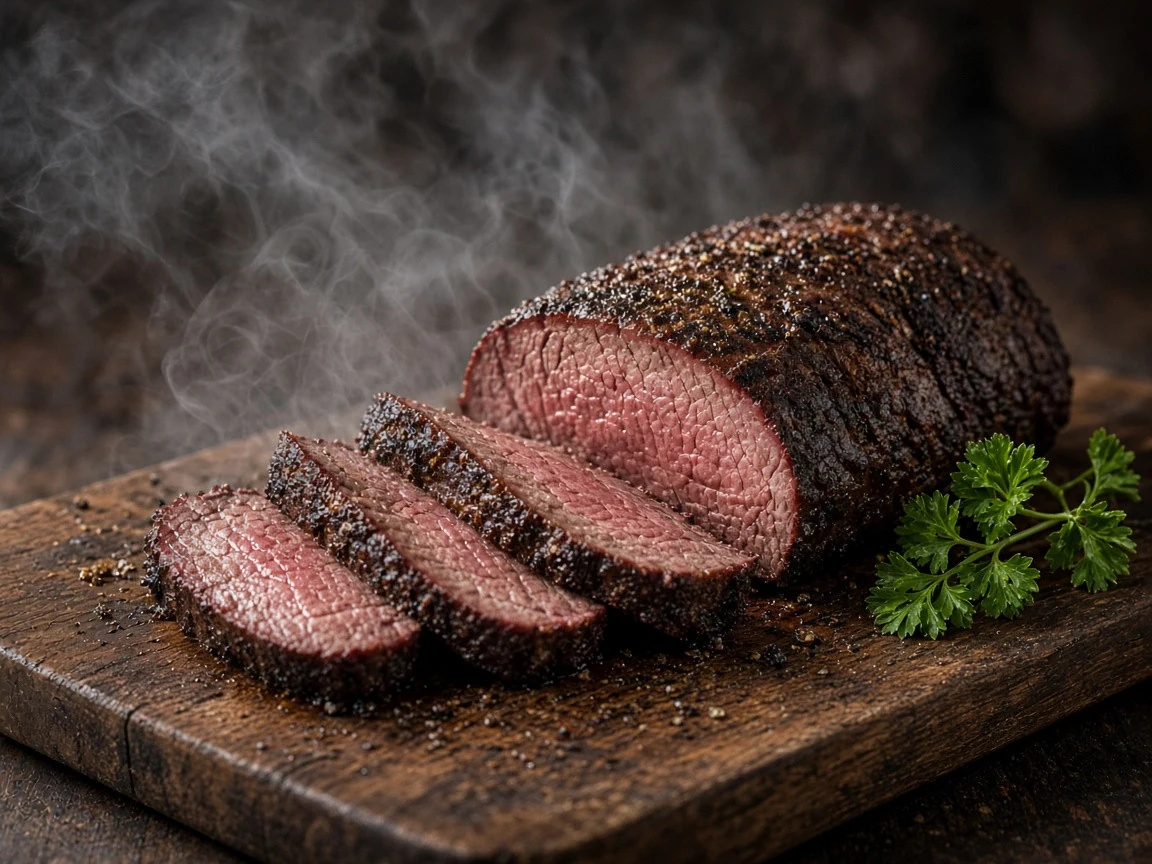
Image: BrockStar Media.
Ingredients
- 1 whole venison backstrap (loin)
- Kosher or table salt at 1.5 to 2 percent of the meat’s weight in grams (Shaw’s equilibrium cure). Weigh the loin in grams, multiply by 0.015 to 0.02, and use that many grams of salt.
- Optional: a light sprinkle of black pepper or other dry seasoning after the cure
Steps
- Weigh the loin and measure the salt as above.
- Coat the meat evenly, put it in a bag or covered container, and refrigerate for several days, turning once a day so the salt is even.
- Rinse if the surface is very salty, pat it dry, and let it sit uncovered in the fridge for a few hours if you want a tacky surface.
- Smoke at a steady 185°F to 200°F.
- Shaw’s target is about 135°F in the center; official venison guidance is 160°F.
- Choose one, and check with a thermometer.
- Rest 10 minutes before slicing.
Safe temp note: FoodSafety.gov lists venison at 160°F. Shaw’s pull temperature is lower. This collection does not treat 135°F as the official safe minimum.
Recipe source / inspired by: Hank Shaw, Hunter Angler Gardener Cook (Honest-Food.net), “Smoked Venison Recipe — Smoked Backstrap.” honest-food.net
16. Venison Stir-Fry
Thin slices of loin, velveted in a sherry-soy-starch marinade, passed through hot oil, then tossed with peppers, chiles, and garlic.
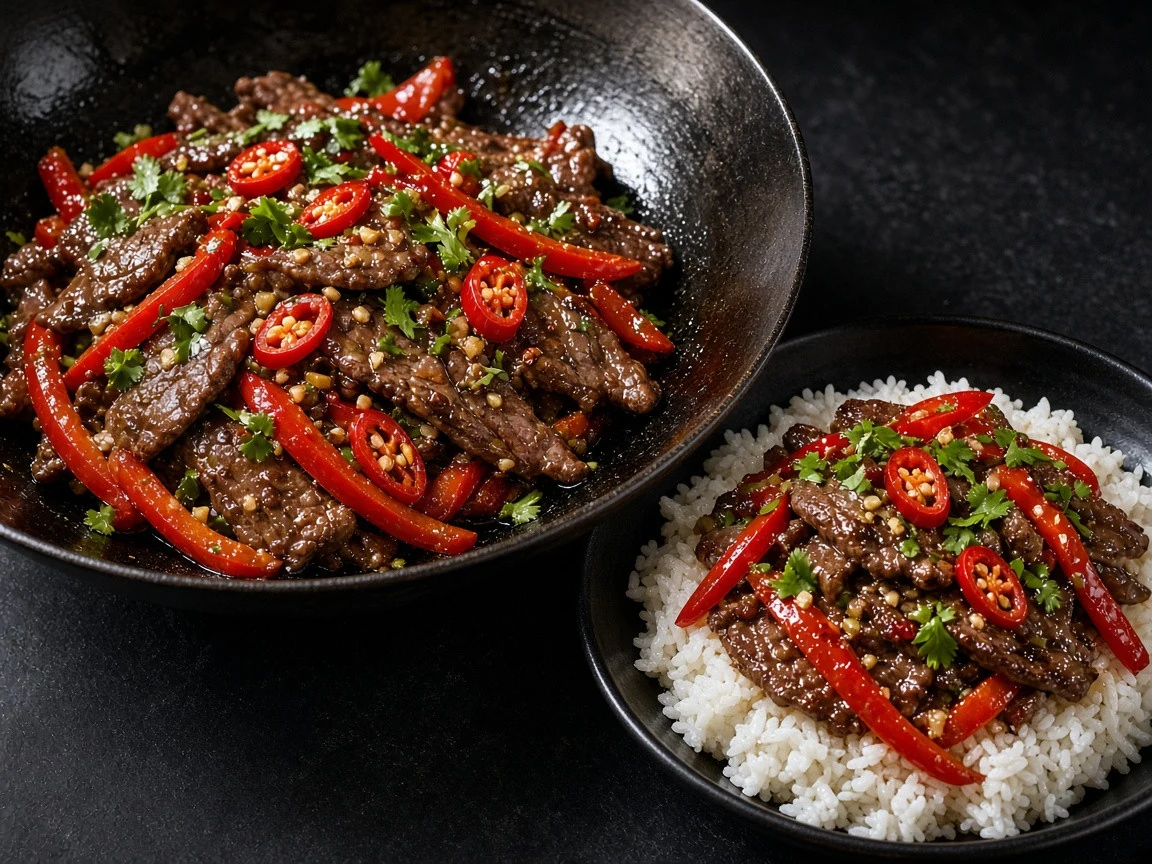
Image: BrockStar Media.
Ingredients (4 servings)
- 1 pound venison loin, sliced thin across the grain
- 2 tablespoons Shaoxing wine or dry sherry
- 2 tablespoons soy sauce, plus more to taste for the sauce
- 2 teaspoons potato starch or other starch
- 1 teaspoon kosher salt
- 2 tablespoons toasted sesame oil
- 1/4 cup peanut, rice bran, or vegetable oil, plus more for the velvet pass
- 2 to 6 dried hot chiles, broken into pieces
- 1 red or yellow bell pepper, sliced
- 4 garlic cloves, slivered
- 1 bunch cilantro, roughly chopped
Steps
- Mix the wine, soy sauce, starch, and salt and toss the sliced venison in it.
- Let it sit 10 to 20 minutes, then mix in 2 tablespoons of oil.
- Heat a wok or a heavy skillet until a drop of water almost instantly evaporates (around 275°F to 290°F for this pass).
- Add a thin film of oil.
- Working in small batches so the pan stays hot, scatter in the meat and move it just long enough to cook through, then lift it out.
- When all the meat is cooked, wipe the pan if it is messy, add the remaining oil, and stir-fry the chiles, bell pepper, and garlic over high heat until the pepper starts to soften.
- Return the venison, add a splash of soy and the sesame oil, and toss.
- Take it off the heat, add the cilantro, and serve at once, usually over rice.
Safe temp note: The slices are thin; they should reach 160°F as they pass through the hot oil. Don’t crowd the pan, or the meat will stew instead of sear.
Recipe source / inspired by: Hank Shaw, Hunter Angler Gardener Cook (Honest-Food.net), “Venison Stir Fry Recipe.” honest-food.net
17. Venison Stroganoff
A weeknight stroganoff from Allrecipes: cubed venison browned with onion, then simmered in condensed cream of mushroom soup and finished with sour cream over egg noodles.
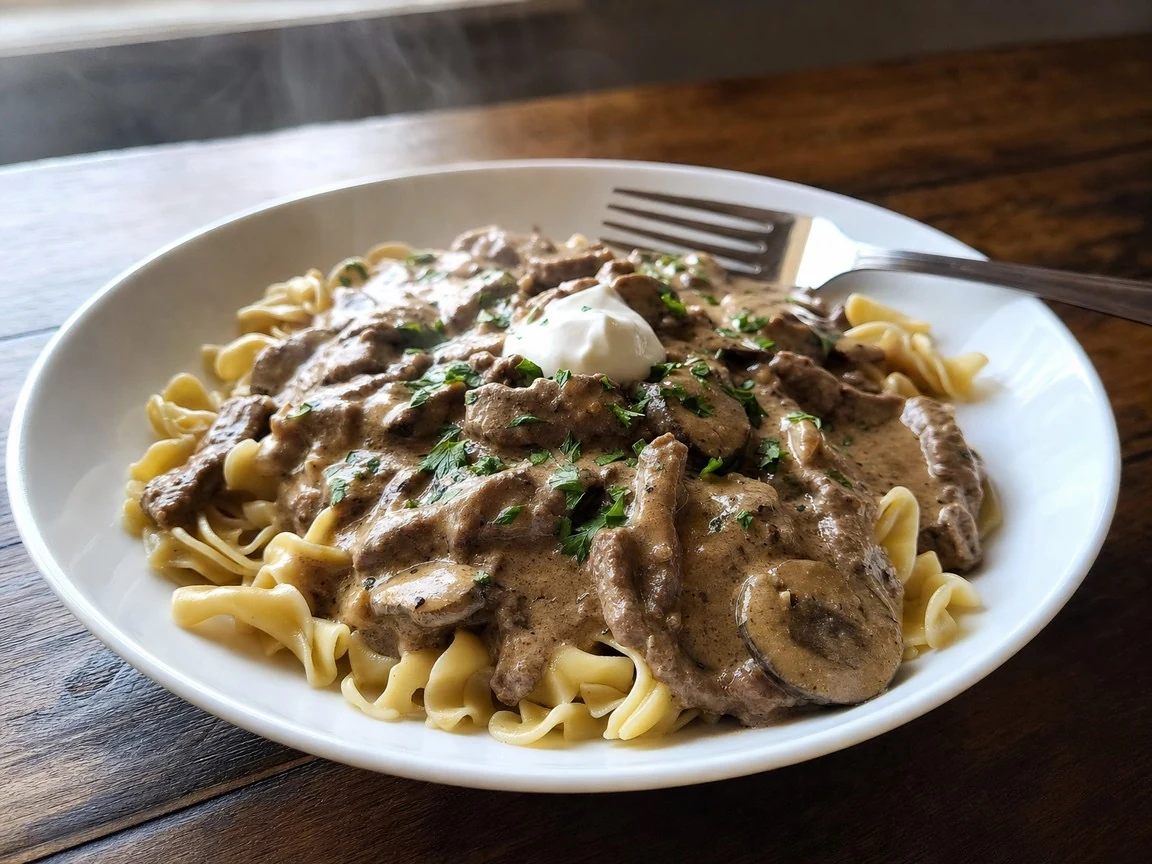
Image: BrockStar Media.
Ingredients (4 servings)
- 1 pound venison, cut into cubes
- Garlic powder, to taste
- Salt and pepper, to taste
- 1 onion, chopped
- 2 (10.75-ounce) cans condensed cream of mushroom soup
- 1 (16-ounce) package uncooked egg noodles
- 1 (8-ounce) container sour cream, or to taste
Steps
- Season the cubes with garlic powder, salt, and pepper.
- Brown them in a skillet with the onion until the meat is cooked through and the onion is soft.
- Stir in the two cans of soup, bring the mixture to a simmer, and cook about 15 minutes, stirring now and then, so the flavors come together.
- Meanwhile, boil the egg noodles according to the package and drain them.
- Stir the sour cream into the skillet off the heat or over very low heat so it doesn’t curdle.
- Serve over the noodles.
Safe temp note: Cubed venison should reach 160°F as it browns and simmers. Leftovers reheat to 165°F.
Recipe source / inspired by: Cathy, “Venison Stroganoff,” Allrecipes. allrecipes.com (the page lists the submitter as Cathy; no last name is given.)
18. Venison Shepherd’s Pie
Danielle Prewett’s MeatEater pie: a ground-venison filling with carrots, peas, and gravy, under a butter-and-cream mash enriched with an egg yolk.
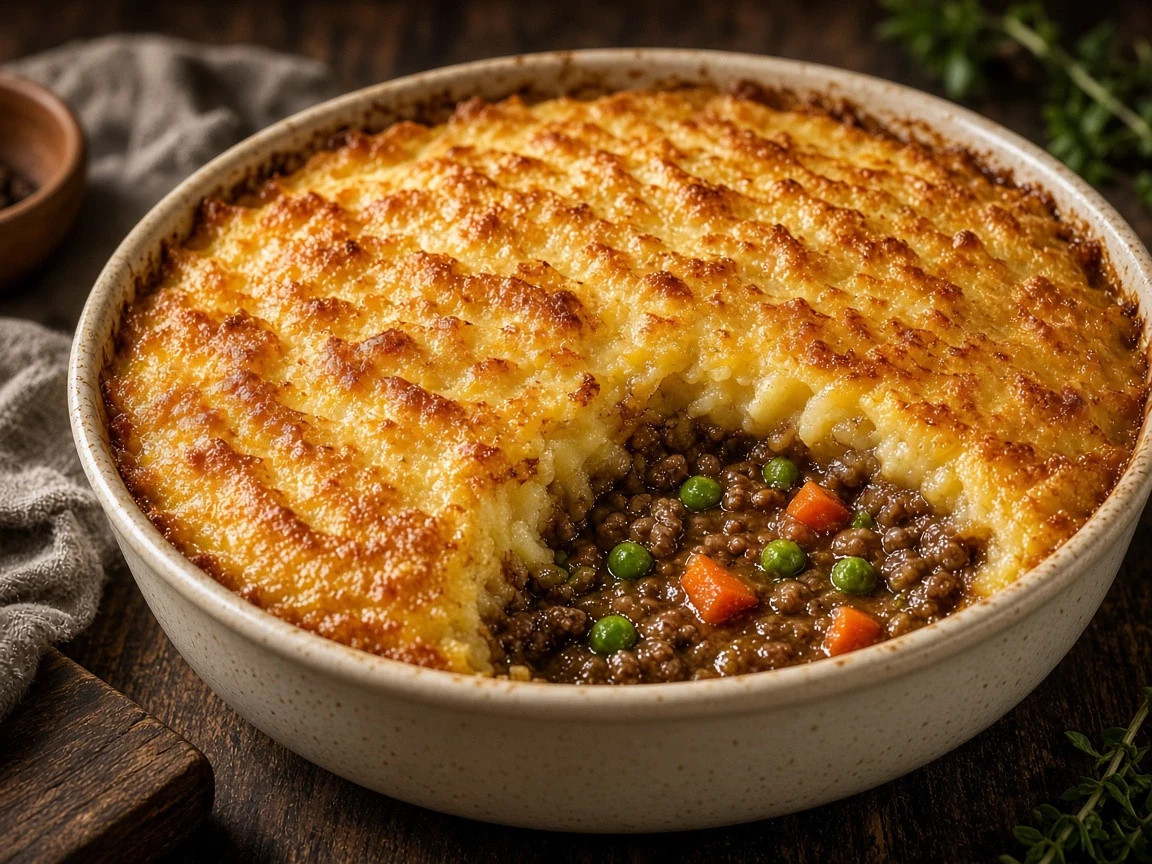
Image: BrockStar Media.
Ingredients (8 servings)
- 2 pounds ground venison
- 1 yellow onion, diced
- 2 large carrots, diced
- 2 cloves garlic, minced
- 2 teaspoons kosher salt
- 1/2 teaspoon black pepper
- 2 tablespoons tomato paste
- 3 tablespoons all-purpose flour
- 2 cups beef or venison stock
- 1 1/2 tablespoons Worcestershire sauce
- 1 1/2 teaspoons chopped fresh rosemary, or 1/2 teaspoon dried
- 1 teaspoon chopped fresh thyme, or 1/3 teaspoon dried
- 1 cup frozen peas
- 2 tablespoons cooking oil, or as needed
- 2 1/2 pounds russet potatoes, peeled and cut
- 4 tablespoons butter
- 1/2 cup heavy cream, plus more if needed
- 1 egg yolk
- 1 teaspoon kosher salt, or to taste
Steps
- Heat the oven to 375°F.
- Boil the potatoes in salted water until they are tender, then drain well.
- Mash with the butter, cream, salt, and egg yolk until smooth; add a little more cream if it is stiff.
- Meanwhile, brown the venison in oil over medium-high heat, breaking it up, and set it aside (it should reach 160°F as it browns).
- In the same pot, cook the onion and carrots with a pinch of salt until they soften.
- Add the garlic for a minute, then the tomato paste, then sprinkle in the flour and stir it for a minute so it cooks.
- Whisk in the stock, Worcestershire, rosemary, thyme, salt, and pepper.
- Return the meat, simmer until the gravy thickens, then stir in the peas.
- Spread the filling in a baking dish, spoon the mash over the top, and rough it with a fork.
- Bake until the top is browned and the filling is bubbling, about 25 to 30 minutes.
- Let it stand 10 minutes before serving.
- Leftovers reheat to 165°F.
Safe temp note: Ground venison is 160°F; leftover casseroles reheat to 165°F.
Recipe source / inspired by: Danielle Prewett, “Venison Shepherd’s Pie,” MeatEater Cook (March 16, 2020). themeateater.com
19. Venison Meat Loaf
A Taste of Home loaf from Liz Gilchrist: ground venison bound with eggs, tomato sauce, onion, and breadcrumbs, baked under a brown-sugar mustard glaze.
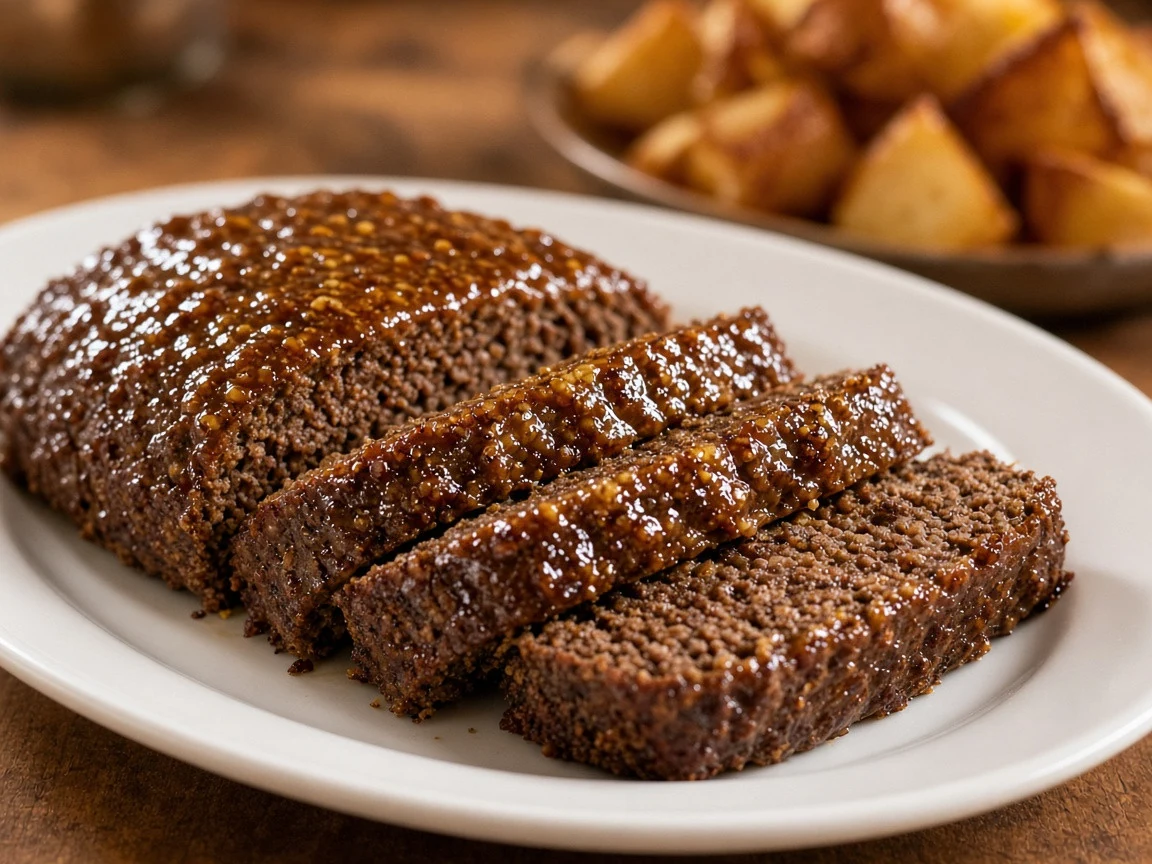
Image: BrockStar Media.
Ingredients (6 servings)
- 2 eggs
- 1 (8-ounce) can tomato sauce
- 1 medium onion, finely chopped
- 1 cup dry bread crumbs
- 1 1/2 pounds ground venison
- 2 tablespoons packed brown sugar
- 2 tablespoons spicy brown mustard
- 2 tablespoons white vinegar
Steps
- Heat the oven to 350°F.
- In a large bowl, beat the eggs and stir in the tomato sauce, onion, and breadcrumbs.
- Add the venison and mix just until combined.
- Pack the mixture into a greased 8x4-inch loaf pan.
- Stir the brown sugar, mustard, and vinegar together and spread that glaze over the loaf.
- Bake, uncovered, until a thermometer in the center reads 160°F, about 70 minutes.
- Drain off any fat and let the loaf stand 10 minutes before slicing.
Safe temp note: Ground venison is 160°F.
Recipe source / inspired by: Liz Gilchrist, “Venison Meat Loaf,” Taste of Home. tasteofhome.com
20. Camp Venison Sausages
Horace Kephart’s 1910 camp sausage: tougher venison minced with half as much salt pork, seasoned with pepper and sage, and fried as pats. Kephart wrote for a cook fire; we are adding a modern 160°F check.
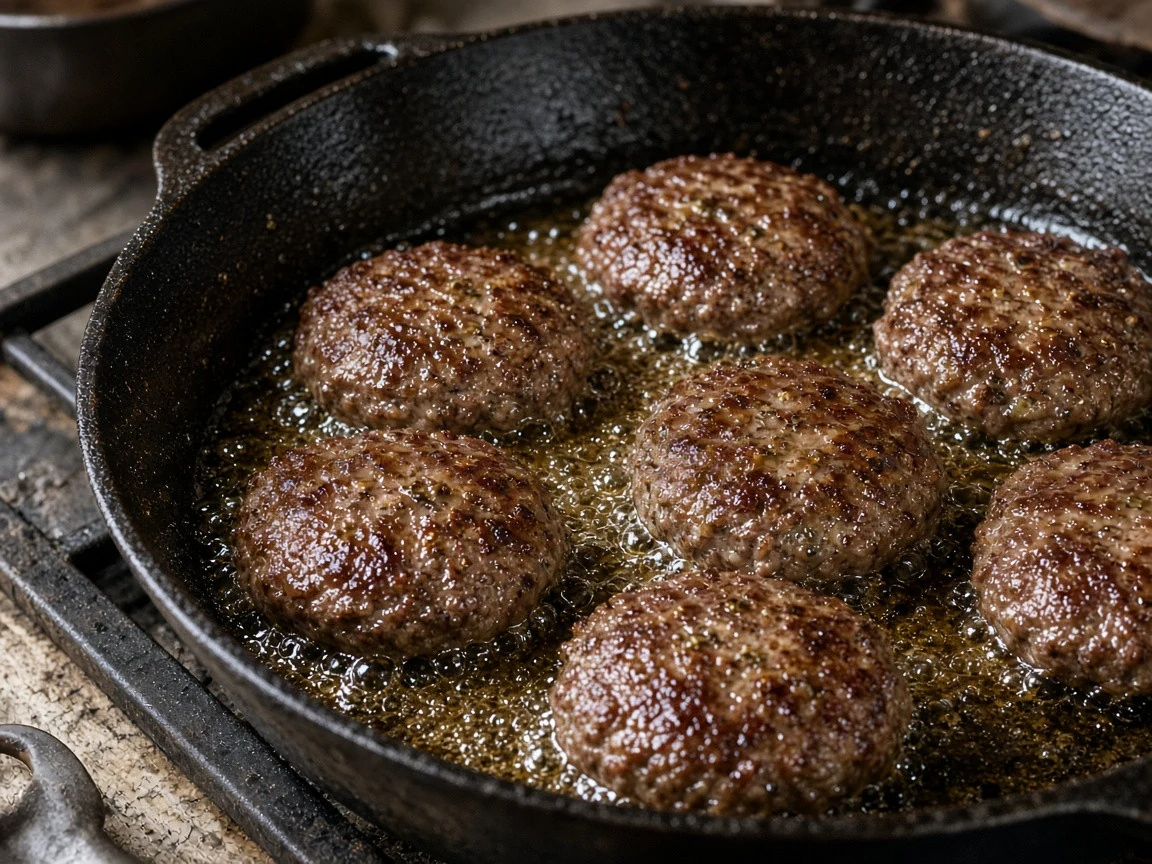
Image: BrockStar Media.
Ingredients (scale to what you have)
- Tough venison trimmings or other lean venison, minced
- Salt pork, half as much by weight as the venison
- Salt, to taste
- Black pepper
- Sage, to taste
- Fat or a little water in the pan, as needed
Steps
- Mince the venison and the salt pork fine, or grind them together.
- Season with salt, pepper, and sage, and mix well.
- Shape into pats about 1/2 inch thick.
- Fry them in a skillet — add a little fat or water if they start to stick — until both sides are browned and the center of a patty is 160°F. Serve them hot.
- These are loose camp patties, not a smoked, cured summer sausage.
Safe temp note: Ground venison mixtures are 160°F.
Recipe source / inspired by: Horace Kephart, Camp Cookery (New York: Outing Publishing Company, 1910), “Venison Sausages.” Internet Archive · Open Library
Frequently asked questions
What temperature should venison be cooked to?
FoodSafety.gov lists venison, wild or farm-raised, at 160°F (71°C). That covers steaks, roasts, stews and ground venison. Leftovers and mixed casseroles are listed at 165°F.
Can I cook backstrap medium-rare?
The official consumer guidance that names venison is 160°F. The USDA FSIS chart’s 145°F-plus-rest line is written for beef, pork, veal and lamb, not for venison. Some hunters cook backstrap and tenderloin lower for quality. That is a personal choice below the venison minimum.
How do you make venison jerky safely?
USDA FSIS says to heat the meat to 160°F with wet heat (steam, roast, or boiling the strips in marinade) before dehydrating, then dry at a steady 130°F to 140°F. The National Center for Home Food Preservation also recommends freezing venison 6 inches or less thick at 0°F for at least 30 days before slicing.
Which of these recipes use ground venison?
Ground venison burgers, Texas-style chili, Italian-style meatballs, tacos, shepherd’s pie and meat loaf. Summer sausage and the camp sausages also start from ground or minced venison.
Got a deer to process?
Call or text 252-885-1892 or see our deer processing and drop-off page. Our venison cuts guide covers what each part of the deer is good for, and Old-School Deer Camp Venison Recipes has more camp-style dishes. Flowers Slaughterhouse, 5154 St. Rose Church Rd, Sims, NC 27880.
Sources
- Safe Minimum Internal Temperatures, FoodSafety.gov
- Safe Minimum Internal Temperature Chart, USDA FSIS
- Jerky and Food Safety, USDA FSIS
- Hank Shaw: Grilled Venison Steak Recipe — How to Grill Venison (honest-food.net)
- Hank Shaw: Venison Tenderloin Recipe — Pan Seared Deer Tenderloin (honest-food.net)
- Fannie Merritt Farmer: Broiled Venison Steak (Internet Archive)
- Jerry Honeyager: Ground Venison Burgers (tasteofhome.com)
- Texas Parks and Wildlife Department: Venison Chili (tpwd.texas.gov)
- Hank Shaw: Venison Meatballs (honest-food.net)
- Danielle Prewett: Venison Tacos (themeateater.com)
- Isabella Beeton: Venison Stewed (Wikisource)
- National Center for Home Food Preservation: Jerky (nchfp.uga.edu)
- Nellie Oehler: Summer sausage and deli-style meats (extension.oregonstate.edu)
- Hank Shaw: Ossobuco Milanese (honest-food.net)
- Sara: Slow Cooker Venison Roast (allrecipes.com)
- Hank Shaw: Smoked Venison Recipe — Smoked Backstrap (honest-food.net)
- Hank Shaw: Venison Stir Fry Recipe (honest-food.net)
- Cathy: Venison Stroganoff (allrecipes.com)
- Danielle Prewett: Venison Shepherd’s Pie (themeateater.com)
- Liz Gilchrist: Venison Meat Loaf (tasteofhome.com)
- Horace Kephart: Venison Sausages (Internet Archive)