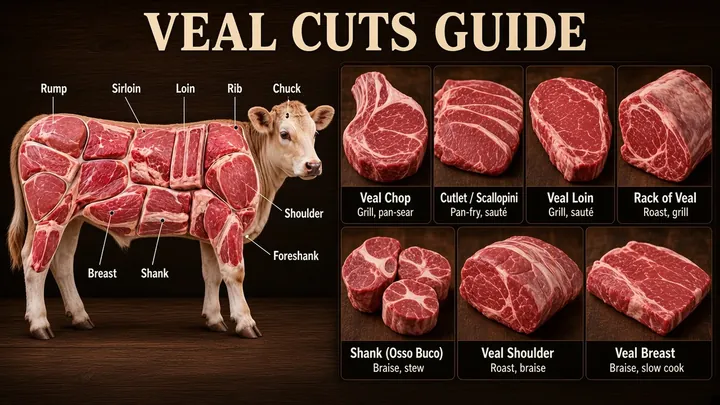
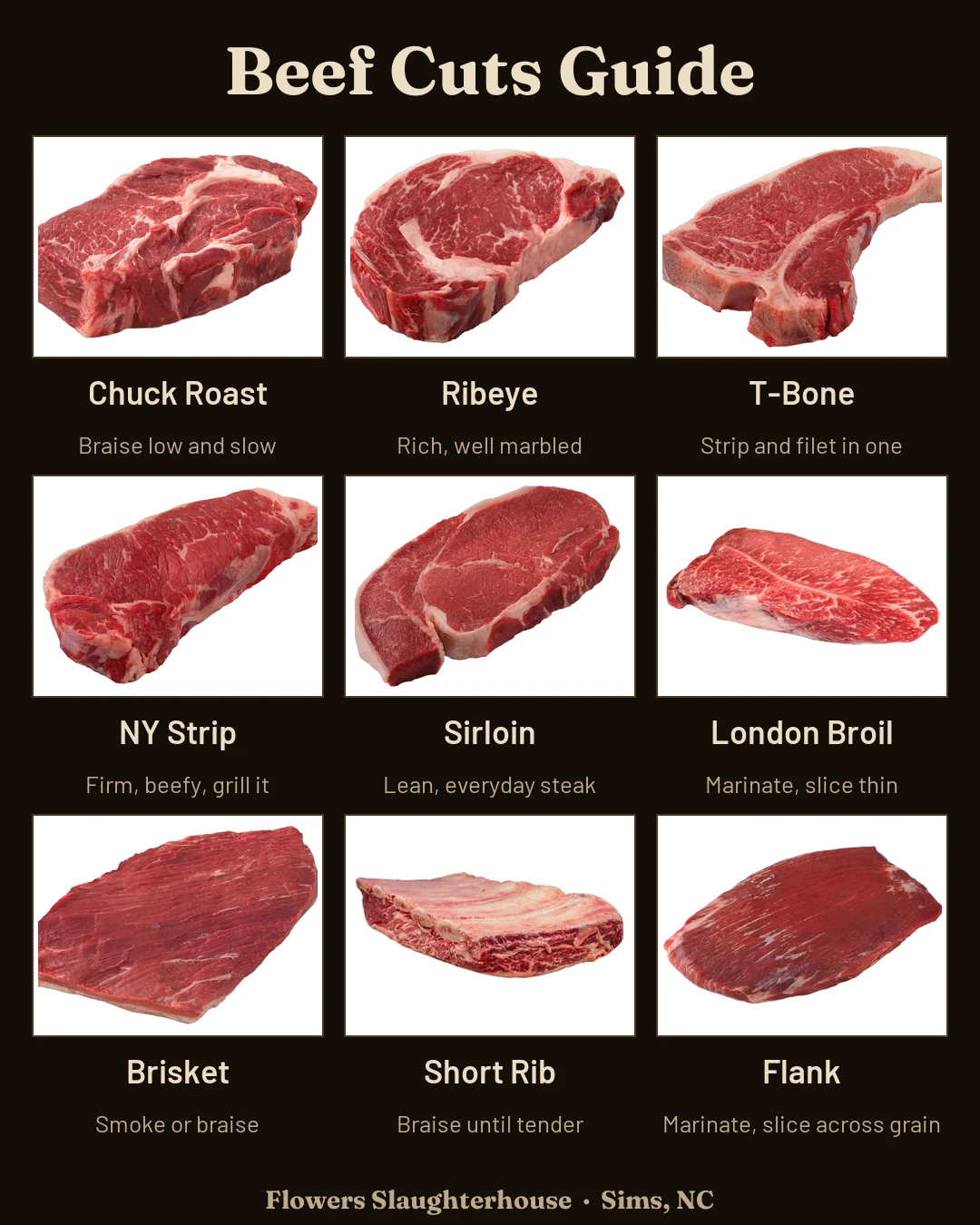
We cut beef every week, and the question we hear most at the counter isn't "what's a ribeye?" It's "I've got a package that says chuck eye or sirloin tip. What do I do with it?" This chart is built to answer that. If you want the longer walk-through of each primal and how much meat a beef yields, read our beef cuts and their uses guide. This page is the quick-look version, sorted two ways: by where the cut comes from and by how you plan to cook it. The same map works for young calves. See our veal cuts guide.

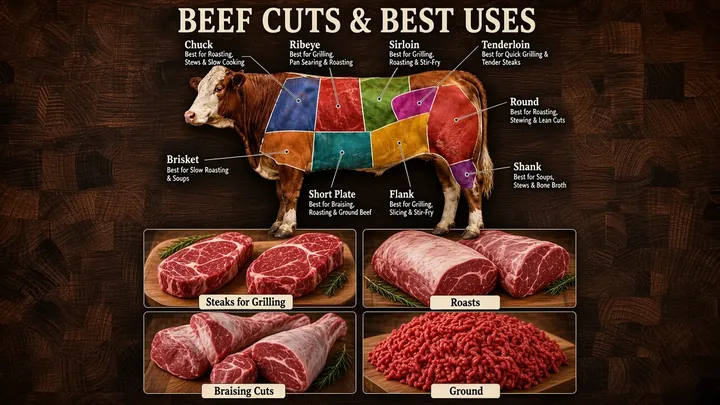
The beef chart at a glance
The nine sections and their industry (IMPS/NAMP) numbers come from the Beef Checkoff's cut charts. Restaurants and wholesale buyers use those numbers so everyone means the same piece of meat [2].
| Section | Where it is | Popular cuts | Best heat |
|---|---|---|---|
| Chuck (NAMP 113) | Shoulder | Chuck roast, flat iron, chuck eye, short ribs, stew meat | Slow and moist, plus a few grill cuts |
| Rib (NAMP 103) | Ribs 6–12, front of the back | Ribeye, prime rib, back ribs | Dry heat: grill, roast |
| Loin | Middle of the back | Strip, T-bone, porterhouse, tenderloin | Dry heat: grill, broil |
| Sirloin (NAMP 181) | Behind the loin | Top sirloin, tri-tip, coulotte, bavette | Grill or roast |
| Round (NAMP 158) | Back leg ("beef hip") | Top round, bottom round, eye of round, sirloin tip | Roast and slice thin, braise, or marinate |
| Brisket (NAMP 120) | Breast | Flat and point | Low and slow |
| Short plate (NAMP 121) | Belly under the rib | Skirt, hanger, plate short ribs | Sear hot (skirt) or braise (ribs) |
| Flank | Belly under the loin | Flank steak | Marinate and grill, or braise |
| Shank | Front and back legs | Cross-cut shanks | Braise or simmer |
Front of the animal: chuck, brisket and shank
Chuck
The chuck is the shoulder, and it's a big section. The Checkoff describes it as a source of cuts with rich, beefy flavor: mostly roasts for slow cooking, plus a few tender, grill-ready cuts such as the flat iron steak [2]. Out of the chuck come the 7-bone and blade roasts, arm roast, cross rib roast, chuck eye roll, shoulder clod, top blade (flat iron), chuck tender, chuck short ribs and a lot of the beef that goes into stew meat and ground beef.
What to do with it: pot roast, braise, smoke or grind. The Checkoff lists blade chuck roast, chuck arm roast, chuck eye roast and cross rib roast among its go-to braising cuts [12]. Chuck eye steak shows up on its grilling chart [13].
Brisket
The brisket is the breast. It works hard holding up the front of the animal, so it's tough until you cook it low and slow on a smoker or in a slow cooker [7]. A whole brisket splits into the leaner flat and the fattier point [7]. FSIS plans a 3- to 4-pound braised brisket at about 1½ to 2½ hours at 325°F. A smoked whole brisket takes much longer [1].
Shank
The shank is the leg, and it does a lot of walking. It's usually cut into cross sections and braised until fork-tender. Osso buco is the classic [10]. Shank is the best beef there is for soup. The bone and connective tissue make a rich broth.
Along the back: rib, loin and sirloin
Rib
The rib section sits under the front of the backbone and holds seven ribs (numbers 6 through 12). It's home to the ribeye steak and the prime rib roast [3]. It also gives back ribs, the bones left when the ribeye is cut off. FSIS plans a 4- to 6-pound bone-in rib roast at 23–25 minutes per pound at 325°F [1].
Loin
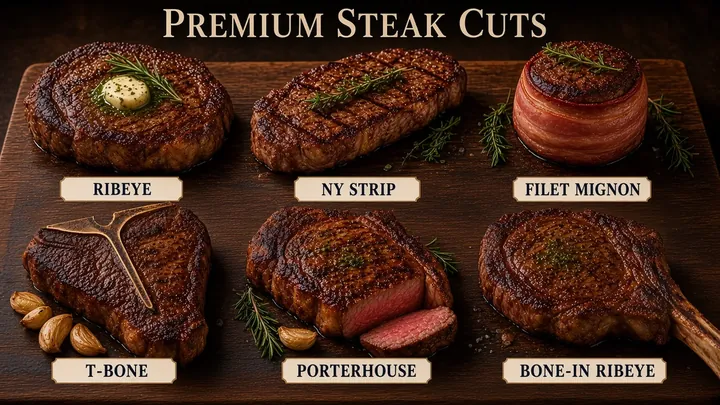
The loin sits under the backbone behind the rib. It holds some of the most tender, popular steaks: tenderloin (filet mignon), strip, T-bone and porterhouse. The Checkoff says loin cuts are great on the grill or under the broiler [4]. The strip goes by a lot of names. FSIS notes the same boneless top loin steak gets sold as strip, Kansas City, New York strip, hotel cut, ambassador or club sirloin steak [1]. For the full steak lineup, see our premium steak cuts guide.
Sirloin
The sirloin is split into the top sirloin butt, which gives grilling steaks like top sirloin and coulotte, and the bottom sirloin butt, which gives tri-tip and sirloin bavette, both good roasted or grilled [5]. Top sirloin is one of the best-value grilling steaks on the animal.
Back leg: the round
The round is the back leg. Butchers sometimes call it the "beef hip" [6]. It breaks into top (inside) round, bottom round, eye of round and sirloin tip, and nearly everything from it is lean [6]. That's why round cuts make great roast beef sliced thin, cube steak, jerky and stir-fry, and why they get dry if you treat them like a ribeye. On the grill, the Checkoff marks round steaks "marinate" [13]. FSIS plans a round or rump roast at 30–35 minutes per pound at 325°F [1].
The underside: short plate and flank
Short plate
The short plate sits right under the rib and carries more fat. It's the source of short ribs, a lot of ground beef, and the skirt steak, which the Checkoff says is best marinated and seared over high heat [8]. The hanger steak and flanken-style short ribs come from here too [8].
Flank
The flank sits under the loin. It's lean, very flavorful, and best braised, or marinated and grilled [9]. Flank steak is the classic London broil and fajita cut. Always slice it thin and across the grain.
The same chart, sorted by how you want to cook
If you already know what you're making, start here instead.
| You want to… | Reach for | Why |
|---|---|---|
| Grill a steak | Ribeye, strip, T-bone, porterhouse, filet, top sirloin, flat iron, chuck eye | Tender muscles that need only fast, high heat [4] [13] |
| Grill on a budget | Flank, skirt, sirloin tip, top round (marinate first) | Lean and flavorful. Marinate, sear hot, slice thin [13] |
| Roast for a crowd | Prime rib, tenderloin, tri-tip, eye of round, top round | Even shapes that carve cleanly [1] |
| Braise or pot roast | Chuck roasts, brisket, short ribs | Collagen melts into gelatin over hours of low, moist heat [12] |
| Stew or make soup | Stew meat, shank, chuck cubes | Covered in liquid and simmered. Cubes about 1 inch [15] |
| Stir-fry | Sirloin tip, inside or outside skirt, flank | Thin strips cook in minutes [14] |
| Smoke low and slow | Brisket, chuck roll, plate short ribs | Fat and connective tissue hold up to long cooks [7] |
| Ground beef, cube steak, kabobs | Trim from chuck, round, plate and flank | The Checkoff's "ingredient cuts" [11] |
Two tips from the Checkoff that help with lean cuts. To slice stir-fry strips thin, put the beef in the freezer for about 30 minutes first [14]. And always slice a grilled steak across the grain [13].
FSIS planning times for common cuts
These are FSIS's approximate times, for beef straight from the refrigerator. Use them to plan the meal. A thermometer tells you when it's done [1].
| Cut | Size | Method | Time |
|---|---|---|---|
| Rib roast, bone-in | 4–6 lb | Roast 325°F | 23–25 min/lb |
| Chuck roast, brisket | 3–4 lb | Braise 325°F | 1½–2½ hours |
| Round or rump roast | 2½–4 lb | Roast 325°F | 30–35 min/lb |
| Whole tenderloin | 4–6 lb | Roast 425°F | 45–60 min total |
| Steaks | ¾ inch | Broil or grill | 4–5 min per side |
| Stew meat or cross-cut shanks | 1–1½ inch | Simmer, covered with liquid | 2–3 hours |
| Short ribs | 4 in. × 2 in. | Braise 325°F | 1½–2½ hours |
| Hamburger patties | 4 oz | Grill, broil or fry | 3–5 min per side |
Safe temperatures
The USDA FSIS Safe Minimum Internal Temperature Chart [16]:
- Beef steaks, roasts and chops: 145°F, then rest at least 3 minutes.
- Ground beef: 160°F.
- Organ and variety meats (heart, liver, tongue, kidney): 160°F [1].
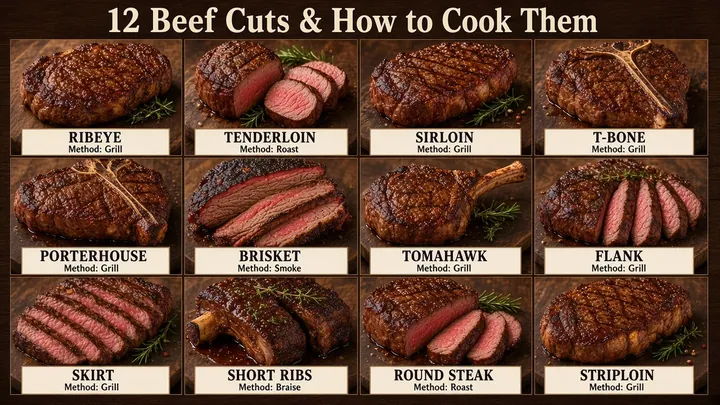
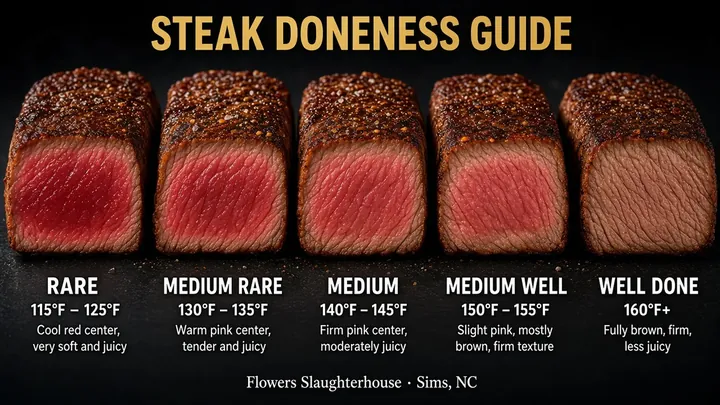
Many people like steaks below 145°F. Our steak doneness guide gives pull temperatures for each doneness and marks the USDA line clearly. For burgers, see our burger doneness guide. Tough cuts like brisket and short ribs are safe at 145°F but aren't tender until much hotter. That's covered in 12 popular beef cuts and how to cook each.
Using the chart on your cut sheet
The chart shows every cut there is. The beef cut sheet lists the ones we cut, and each section of the chart becomes a choice on it:
- Chuck: roast, steak, cubed or hamburger. Arm roast and arm steak, also from the shoulder, have the same four choices.
- Rib: ribeye roast, ribeye steak, rib steak (a bone-in ribeye) or hamburger.
- Loin: T-bone, NY strip and filet, or hamburger. It is one choice, because the same short loin can't give you both.
- Sirloin: sirloin steaks (cut in half if you like) or hamburger.
- Round: bottom round roast, round steak, cubed steak, London broil or hamburger, plus rump roast, cubed or hamburger.
- Brisket, short rib and flank: brisket whole or cut in half, short ribs in 3 or 6 inch pieces, and flank. Skirt, hanger, tri tip and flat iron are on the sheet too if you want them.
- Extras: stew beef, stir fry, kabobs, fajita strips, beef tips, soup bones and liver.
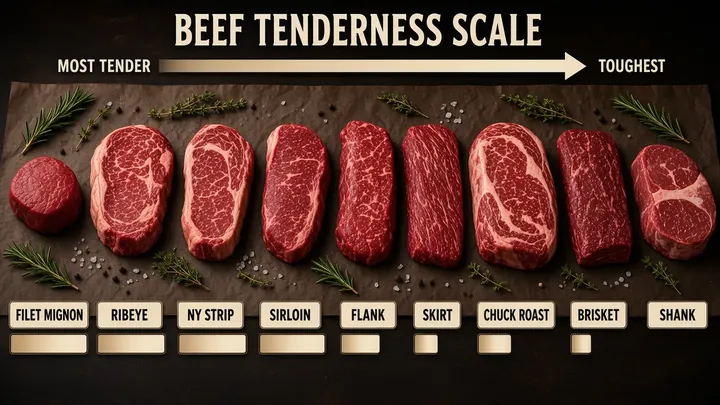
If you're not sure which way to go, our beef tenderness scale ranks the cuts from most tender to toughest, which can help you decide what's worth keeping as steaks.
Frequently asked questions
How many primal cuts of beef are there?
USDA names four basic primals: chuck, rib, loin and round. The industry chart used by butchers and restaurants splits the carcass further into nine sections: chuck, rib, loin, sirloin, round, brisket, short plate, flank and shank.
Which part of the cow has the most tender meat?
The loin. It holds the tenderloin (filet mignon), strip, T-bone and porterhouse. The rib, with the ribeye and prime rib, is a close second. These muscles do the least work.
What are the best beef cuts for slow cooking?
Chuck roasts, brisket, short ribs and shank. They have the most connective tissue, which breaks down into gelatin over hours of low, moist heat.
What is the cheapest steak that's still good on the grill?
Top sirloin and chuck eye are good value straight on the grill. Flank, skirt and round steaks are good too if you marinate them, cook them hot and slice them thin across the grain.
Bring us a beef
We do custom slaughter and processing for steers and heifers, whole, half or quarter, cut to your sheet. Call or text 252-885-1892, see our beef page, or fill out the beef cut sheet. Producers selling beef by the cut can book dates here. Weekday mornings are the easiest time to reach us.
Sources
- Beef From Farm to Table — USDA Food Safety and Inspection Service
- Square-Cut Chuck Primal — Beef. It's What's For Dinner (Beef Checkoff)
- Rib Primal — Beef. It's What's For Dinner (Beef Checkoff)
- Loin Primal — Beef. It's What's For Dinner (Beef Checkoff)
- Sirloin Primal — Beef. It's What's For Dinner (Beef Checkoff)
- Round Primal — Beef. It's What's For Dinner (Beef Checkoff)
- Brisket — Beef. It's What's For Dinner (Beef Checkoff)
- Short Plate Primal — Beef. It's What's For Dinner (Beef Checkoff)
- Flank Primal — Beef. It's What's For Dinner (Beef Checkoff)
- Shank Primal — Beef. It's What's For Dinner (Beef Checkoff)
- Ingredient Cuts — Beef. It's What's For Dinner (Beef Checkoff)
- Braising Basics — Beef. It's What's For Dinner (Beef Checkoff)
- Grilling Basics — Beef. It's What's For Dinner (Beef Checkoff)
- Stir-Fry Basics — Beef. It's What's For Dinner (Beef Checkoff)
- Stewing Basics — Beef. It's What's For Dinner (Beef Checkoff)
- Safe Minimum Internal Temperature Chart — USDA Food Safety and Inspection Service