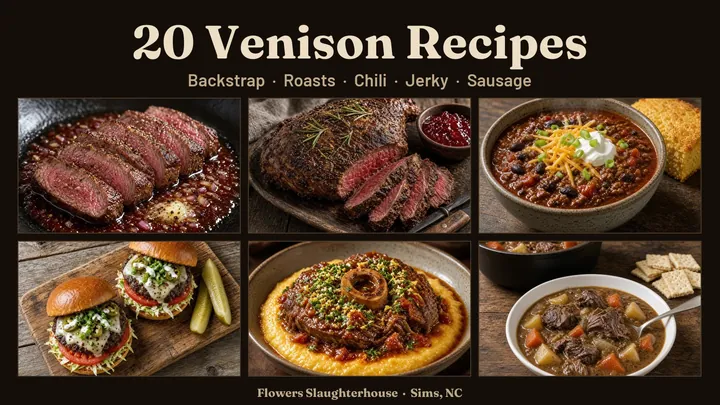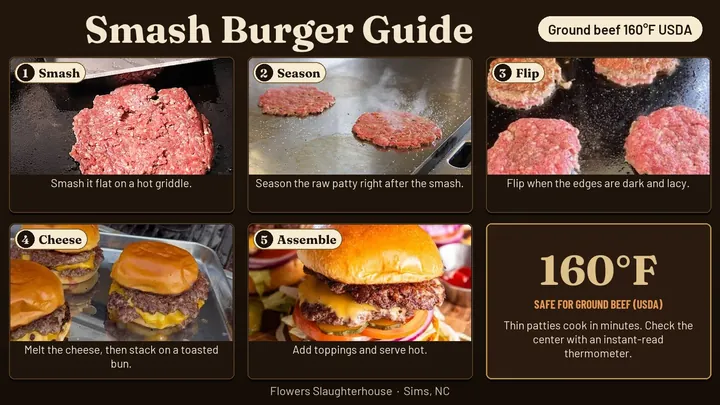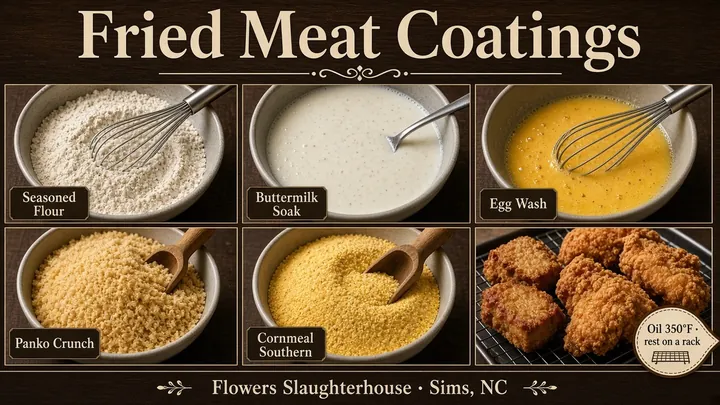
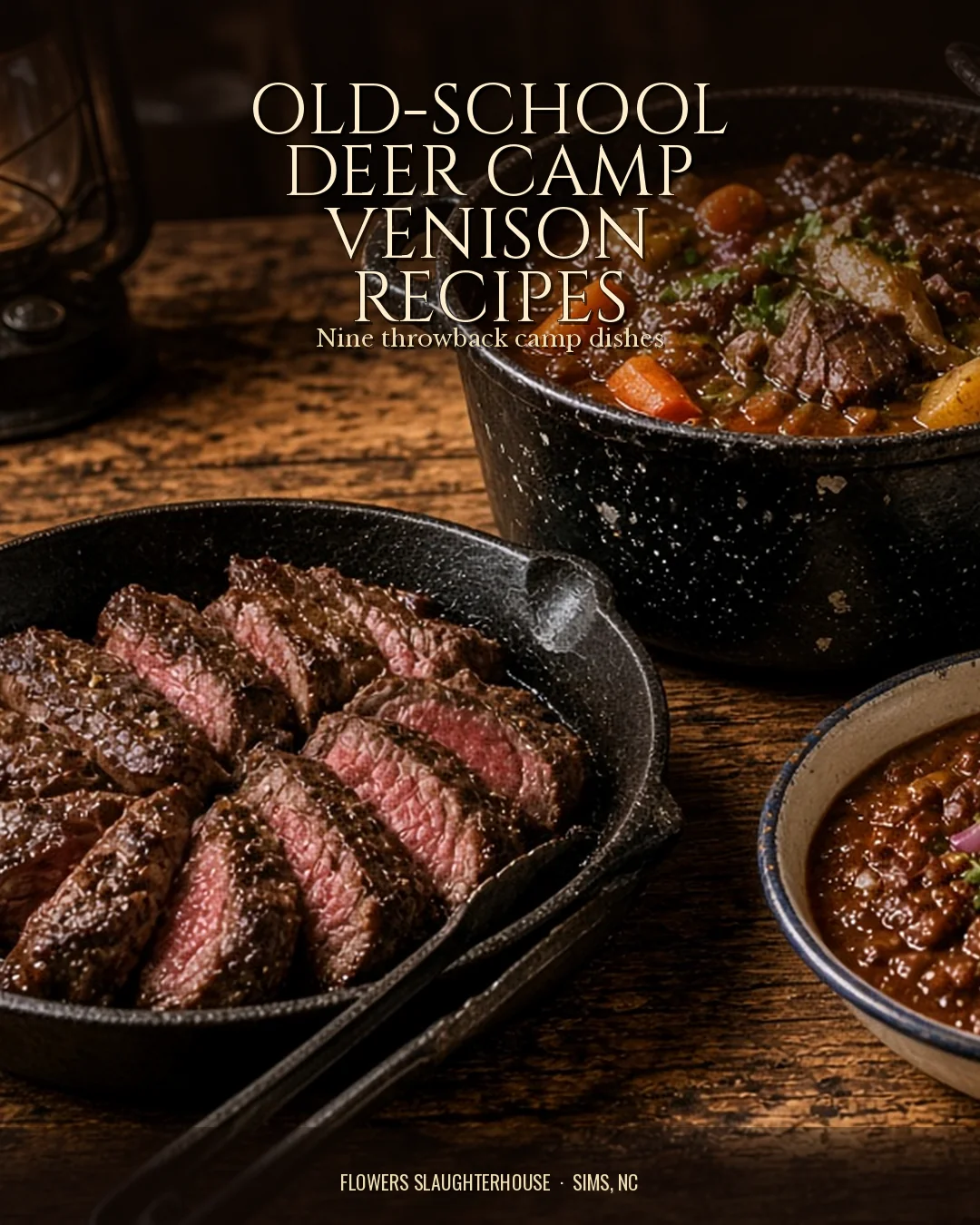
Deer season around Sims fills the cooler and the freezer. These are the kinds of dishes hunters have been cooking in camp and at home for a long time: a red-wine marinade, a hot skillet of backstrap, a beer pot roast, a bacon burger, a stew, a ragout, a chili, and a pot of spaghetti sauce. It is home cooking, written so you can use the meat you already have.
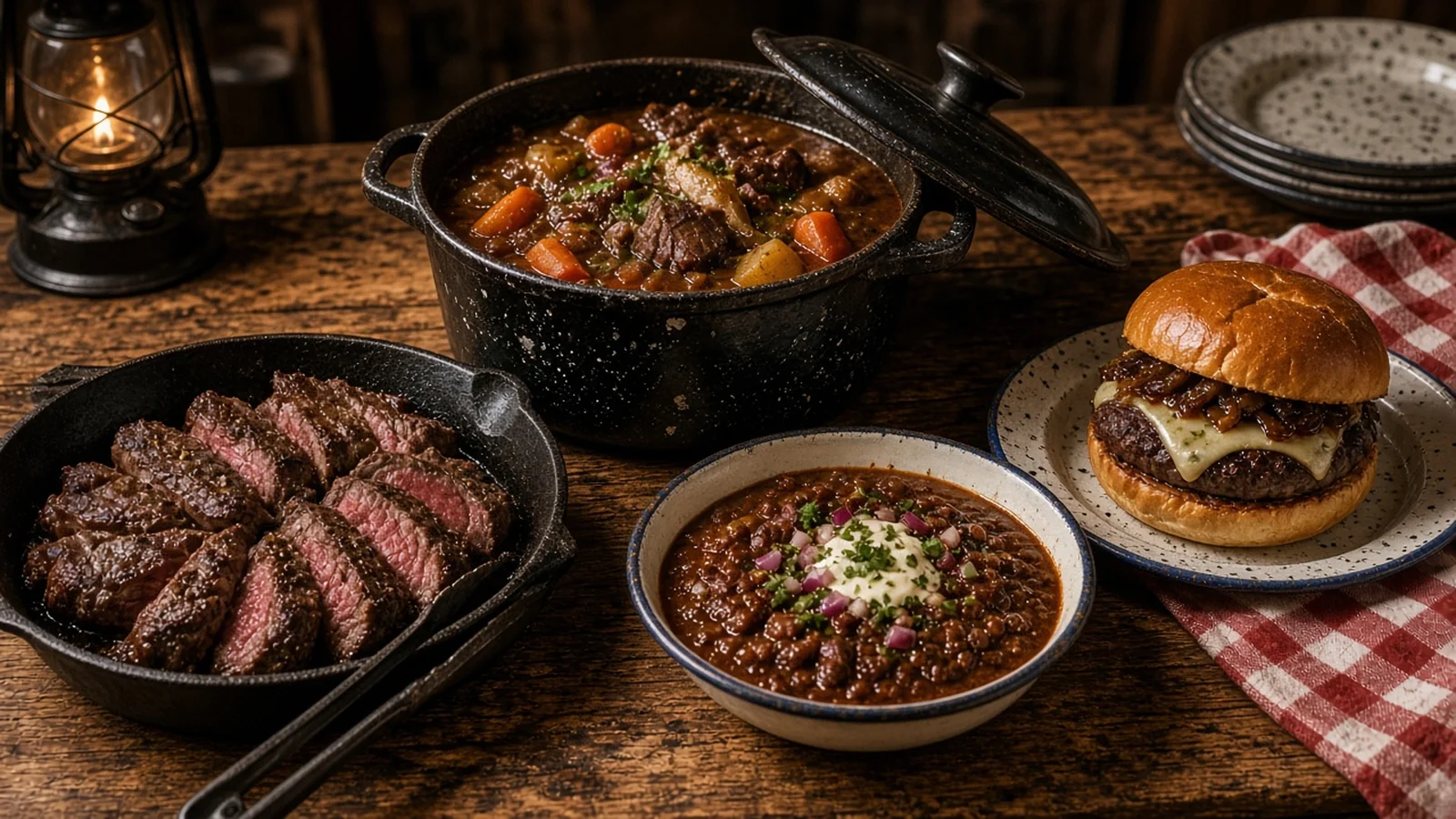
Image credit: Original AI-generated image, BrockStar Media.
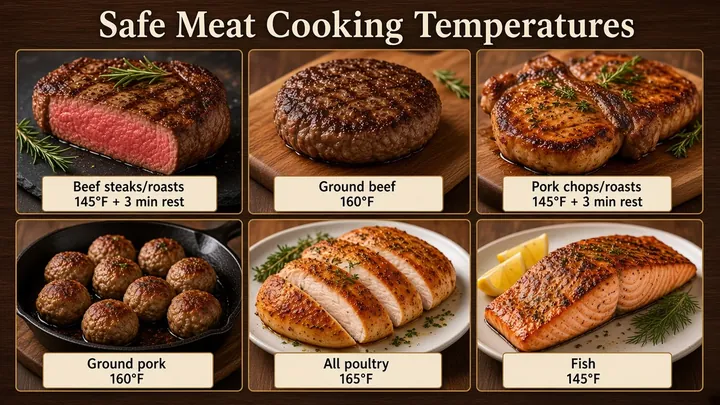
Safe temperatures for venison
Use a thermometer in the thickest part of the meat, away from bone.
FoodSafety.gov, last reviewed November 21, 2024, lists rabbit and venison, wild or farm-raised, at 160°F (71°C) [1]. That is the federal consumer chart that names venison. The USDA FSIS Safe Minimum Internal Temperature Chart lists beef, pork, veal, and lamb steaks and roasts at 145°F with a 3-minute rest, and ground meats at 160°F, but it does not give venison its own row [2]. Many hunters still like intact backstrap or tenderloin pinker than 160°F. That is a preference, not the venison-specific consumer minimum. Ground venison, chili, burger, and spaghetti sauce should be 160°F either way. Leftovers and mixed casseroles reheat to 165°F.
Older cookbooks and camp handbooks often said to serve venison rare. Treat that as history. Cook to the numbers above.
A 24-hour red wine marinade
A long, cold soak in red wine, oil, and aromatics is one of the oldest ways to flavor a lean roast or a thick steak before it hits a pan or a pot. Keep it in the refrigerator the whole time.
Ingredients (enough for about 2 to 3 pounds of venison)
- 1 1/2 cups dry red wine
- 1/3 cup olive oil
- 2 tablespoons red wine vinegar or balsamic vinegar
- 1 medium onion, sliced
- 2 cloves garlic, smashed
- 1 bay leaf
- 1 teaspoon black peppercorns, lightly crushed
- 1 teaspoon kosher salt
- A few sprigs of thyme or rosemary, or 1/2 teaspoon dried
- 2 to 3 pounds venison roast, backstrap, or thick steaks
Steps
Stir the wine, oil, vinegar, onion, garlic, bay leaf, peppercorns, salt, and herbs in a glass or food-safe plastic container — not metal, which can react with the acid. Add the venison and turn it so every surface is wet. Cover and refrigerate for 12 to 24 hours, turning once or twice. Take the meat out, let the extra drip off, and pat it very dry so it will brown. Throw the used marinade away, or if you want it as a sauce, bring it to a full rolling boil for at least one minute first and strain it.
Use this marinade under the backstrap, the camp steak, or the pot roast below.
Pan-seared backstrap with balsamic and red wine pan sauce
The backstrap is the long loin along the spine — the cut most hunters guard for a special meal. A hard sear and a short pan sauce of balsamic, red wine, and stock is a camp-and-kitchen classic.
Ingredients (4 servings)
- 1 1/2 to 2 pounds venison backstrap, trimmed, in one piece or in 1 1/2-inch medallions
- Kosher salt and black pepper
- 2 tablespoons oil with a high smoke point, or a mix of oil and butter
- 1 shallot or 1/4 of a small onion, minced
- 1/3 cup dry red wine
- 2 tablespoons balsamic vinegar
- 1/2 cup beef, venison, or game stock
- 1 tablespoon butter, to finish
- Optional: a teaspoon of Dijon mustard or a pinch of thyme
Steps
Salt the backstrap and let it sit at room temperature for 20 to 30 minutes. Pat it dry and pepper it. Heat a heavy skillet until the oil shimmers. Sear the loin on all sides until it is well browned, then check the center with a thermometer. Whole loins may need a couple of extra minutes on a slightly lower heat after the sear. FoodSafety.gov lists venison at 160°F [1]. Move the meat to a board to rest. Pour off all but a thin film of fat. Cook the shallot until it softens, then add the wine and balsamic and scrape the browned bits. Reduce by about half, add the stock (and mustard or thyme if you are using them), and reduce until the sauce lightly coats a spoon. Take the pan off the heat and swirl in the butter. Slice the backstrap across the grain and spoon the sauce over it.
Camp-style pan-seared steak
When you are cooking in a skillet over a stove or a camp burner, a thick venison steak does not need much: dry meat, a hot pan, salt, pepper, and maybe a little butter at the end. If you used the red wine marinade, pat the steak extra dry or it will steam.
Ingredients (2 servings)
- 2 venison steaks, about 3/4 to 1 inch thick (hindquarter or backstrap)
- Salt and pepper
- 1 to 2 tablespoons oil or bacon fat
- Optional: a pat of butter and a smashed garlic clove for the last minute
Steps
Season the steaks. Heat the fat in a skillet until it just starts to smoke. Lay the steaks in and leave them alone until a brown crust forms, usually 3 to 4 minutes, then turn and cook the other side. Check the center. Rest a few minutes, and if you added butter and garlic at the end, spoon that over the steaks.
Beer and onion-soup pot roast
A pot roast with beer and a packet of dry onion soup mix is the kind of camp-and-Sunday-supper method that shows up in a lot of late-twentieth-century hunting-camp cooking. Our version uses a 3-pound roast, a bottle of beer, and the soup mix, plus onions so the gravy has something to it.
Ingredients (6 servings)
- 3 pounds venison roast (shoulder or hindquarter), trimmed
- Salt and pepper
- 2 tablespoons oil
- 2 onions, sliced
- 2 cloves garlic, minced
- 1 (1-ounce) packet dry onion soup mix
- 1 (12-ounce) bottle of beer (a lager or amber works)
- 1 cup beef or game stock, plus more if the pot looks dry
- 2 bay leaves
- Optional: 3 or 4 carrots, cut into chunks
Steps
Heat the oven to 300°F, or plan to use a tight-lidded pot on a very low burner. Season the roast and brown it well in the oil on all sides; set it aside. Cook the onions in the same pot until they soften and pick up the browned bits, then add the garlic for a minute. Sprinkle in the soup mix, pour in the beer, and scrape the bottom of the pot. Add the stock, bay leaves, and carrots if you are using them. Return the roast, cover tightly, and braise until the meat is tender and the center is at least 160°F, often 3 to 4 hours. If the liquid drops below a gentle simmer around the roast, add a splash of stock. Rest 10 minutes, then slice or pull the meat and serve it with the onions and gravy.
Venison hamburger with bacon
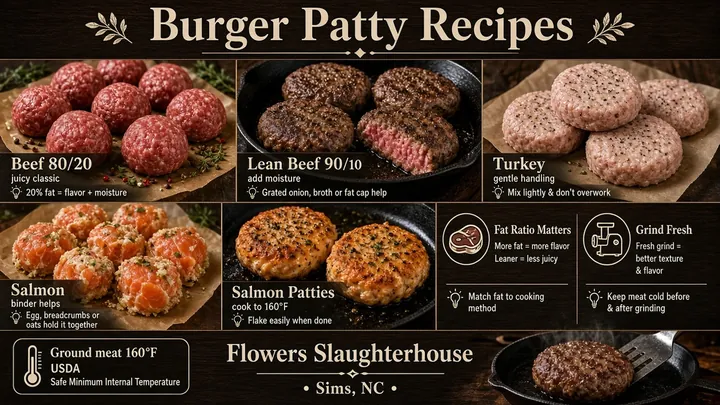
Venison burger is lean. A little chopped bacon in the patty, or a strip cooked on top, is an old camp way to add fat and flavor. Cook ground venison to 160°F [1].
Ingredients (4 burgers)
- 1 1/2 pounds ground venison
- 4 slices bacon, finely chopped, plus 4 more slices if you want a strip on each burger
- 1/2 teaspoon kosher salt
- 1/2 teaspoon black pepper
- 1/2 teaspoon garlic powder, optional
- 4 buns and the usual toppings (onion, cheese, mustard)
Steps
If you are mixing bacon into the meat, cook the chopped bacon until it has rendered some fat but is not brittle, then cool it. Mix it gently into the venison with the salt, pepper, and garlic powder — don’t overwork it. Shape four patties a little wider than the buns, with a shallow thumb dent in the center. If you want a bacon strip on top, start those in the skillet, then cook the patties in some of the bacon fat over medium heat until the centers are 160°F, usually 4 to 5 minutes a side. Rest a minute, and build the burgers.
Old-fashioned deer stew
A simple brown stew: cubes of shoulder or other stewing meat, onions, carrots, potatoes, and stock, cooked until the meat gives. This is the bowl you want after a cold day.
Ingredients (6 servings)
- 2 pounds venison stew meat, cut into 1 1/2-inch cubes
- Salt and pepper
- 1/3 cup flour, for dusting
- 2 tablespoons oil or bacon fat
- 1 large onion, chopped
- 2 cloves garlic, minced
- 4 cups beef or game stock
- 1 tablespoon tomato paste, optional
- 1 teaspoon dried thyme
- 2 bay leaves
- 4 carrots, cut into chunks
- 3 or 4 potatoes, cut into chunks
- 1 cup frozen peas, optional, added at the end
- Chopped parsley, to finish
Steps
Season the cubes, dust them with flour, and brown them in batches in a Dutch oven so they actually sear. Set the meat aside. Cook the onion in the same pot until it softens, add the garlic, then stir in the tomato paste if you are using it. Pour in the stock and scrape the bottom of the pot. Return the meat, add the thyme and bay leaves, and bring it to a gentle simmer. Cover and cook 1 1/2 to 2 hours, until the venison is getting tender. Add the carrots and potatoes and cook another 30 to 45 minutes, until the vegetables are done and the meat is tender. Stir in the peas for the last few minutes. Taste for salt, add parsley, and serve. In a long stew like this, the meat will be well past 160°F once it is fork-tender [1].
European-style venison ragout
A ragout is a slower, more aromatic stew: wine, stock, bacon or salt pork, and herbs, cooked down until the sauce clings. Think of it as the stew’s Sunday clothes. Serve it over noodles, polenta, or bread.
Ingredients (6 servings)
- 2 1/2 pounds venison shoulder or neck, in 1 1/2-inch pieces
- Salt and pepper
- 3 ounces bacon or salt pork, diced
- 1 tablespoon oil, if needed
- 1 onion, chopped
- 1 carrot, chopped
- 1 celery stalk, chopped
- 2 cloves garlic, minced
- 2 tablespoons tomato paste
- 1 1/2 cups dry red wine
- 2 cups beef or game stock
- 1 bay leaf
- 2 sprigs thyme, or 1/2 teaspoon dried
- 8 ounces mushrooms, halved, optional
- 1 tablespoon red currant jelly or a small splash of balsamic, optional, at the end
Steps
Season the venison. Render the bacon in a heavy pot and lift it out, leaving the fat. Brown the venison in batches in that fat, adding a little oil if the pot goes dry, and set the meat aside. Cook the onion, carrot, and celery until they soften, then add the garlic and tomato paste and stir for a minute. Pour in the wine and scrape the pot clean. When it boils, add the stock, herbs, bacon, and venison. Cover and simmer gently, or braise at 300°F, for 2 to 3 hours, until the meat is tender. If you are using mushrooms, brown them in a separate pan and stir them in for the last 20 minutes. Finish with a little currant jelly or balsamic if you want a faintly sweet-sour edge, and taste for salt. Serve over wide noodles or polenta.
Venison chili with beer
Chili is standard deer-camp supper. Beer in the pot is a late-century camp habit that loosens the sauce and adds a little malt. Use ground venison, or a mix of ground and small cubes.
Ingredients (8 servings)
- 2 tablespoons oil
- 2 pounds ground venison
- 1 large onion, chopped
- 1 green bell pepper, chopped
- 3 cloves garlic, minced
- 2 tablespoons chili powder
- 1 teaspoon ground cumin
- 1 teaspoon smoked or sweet paprika
- 1/2 teaspoon oregano
- 1/4 to 1/2 teaspoon cayenne, to taste
- 1 (12-ounce) bottle of beer
- 1 (28-ounce) can crushed or diced tomatoes
- 1 (15-ounce) can beans (pinto or kidney), drained, optional
- 1 cup stock or water, as needed
- Salt
- Toppings: cheese, onion, sour cream
Steps
Brown the venison in the oil, breaking it up, until it is cooked through and has some color. It should reach 160°F as it browns [1]. Add the onion and pepper and cook until they soften, then add the garlic and spices and stir for a minute so they bloom. Pour in the beer and scrape the pot. Add the tomatoes, beans if you are using them, and enough stock to loosen the chili. Season with salt. Simmer partly covered for 45 minutes to 1 1/2 hours, stirring now and then, until it is thick and the flavors have come together. Serve with the usual toppings.
Venison spaghetti sauce
A long-simmered red sauce with ground venison is an easy way to use a lot of burger. Brown the meat first, then give the sauce time.
Ingredients (8 servings, enough for a pound of pasta)
- 2 tablespoons olive oil
- 1 1/2 to 2 pounds ground venison
- 1 onion, chopped
- 2 cloves garlic, minced
- 1 teaspoon kosher salt, plus more to taste
- 1 teaspoon dried oregano
- 1 teaspoon dried basil, or a handful of fresh basil at the end
- 1/4 teaspoon red pepper flakes, optional
- 2 tablespoons tomato paste
- 1/2 cup red wine, optional
- 2 (28-ounce) cans crushed tomatoes
- 1 bay leaf
- Black pepper
- Pasta and grated Parmesan, to serve
Steps
Heat the oil in a wide pot and brown the venison, breaking it up, until it is cooked through (160°F) [1]. Add the onion and cook until it softens, then add the garlic, salt, oregano, basil, and pepper flakes. Stir in the tomato paste for a minute. If you are using wine, pour it in and let it bubble. Add the tomatoes, bay leaf, and a grind of black pepper. Simmer uncovered, stirring now and then, for 45 minutes to 1 1/2 hours, until the sauce is thick and tastes cooked, not raw. Add a splash of water if it gets too tight. Taste for salt, toss with pasta, and finish with cheese.
Frequently asked questions
What temperature should I cook venison to?
FoodSafety.gov lists 160°F for venison, wild or farm-raised [1]. That includes steaks, roasts, stews, and ground venison. Leftovers reheat to 165°F.
Can I cook backstrap below 160°F?
Some hunters do, for quality. The USDA FSIS chart’s 145°F-plus-rest line is written for beef, pork, veal, and lamb, not for a venison-specific row [2]. Official consumer guidance that names venison is 160°F.
How long can I leave venison in a wine marinade?
Keep it refrigerated, and 12 to 24 hours is plenty for this marinade. Past a day, the surface can turn mushy. Never marinade at room temperature. Boil any used marinade for at least a minute if you want it as a sauce, or throw it out.
If you’re dropping a deer with us
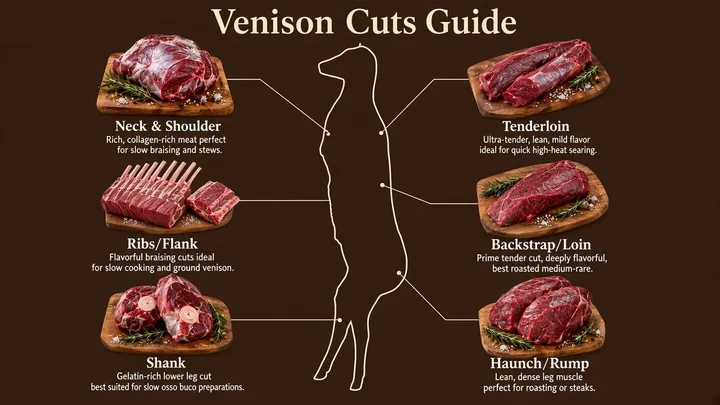
Call or text 252-885-1892 or see our deer processing and drop-off page. Our venison cuts guide covers what each part of the deer is good for. Flowers Slaughterhouse, 5154 St. Rose Church Rd, Sims, NC 27880.