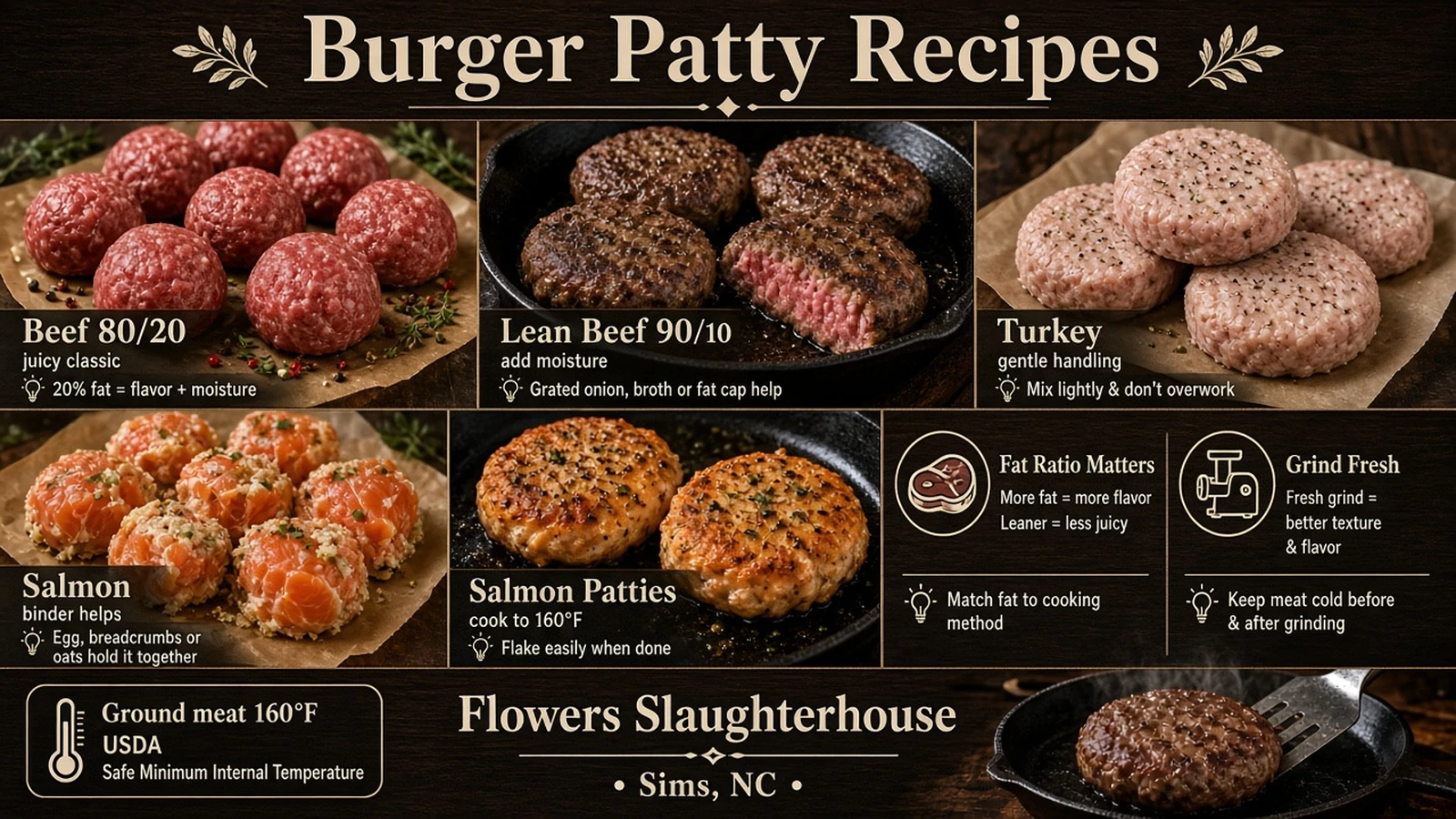
We grind a lot of beef. Here are nine patties we'd be happy to put on a bun, with amounts, how to form them and how to cook each one so it's both safe and juicy.
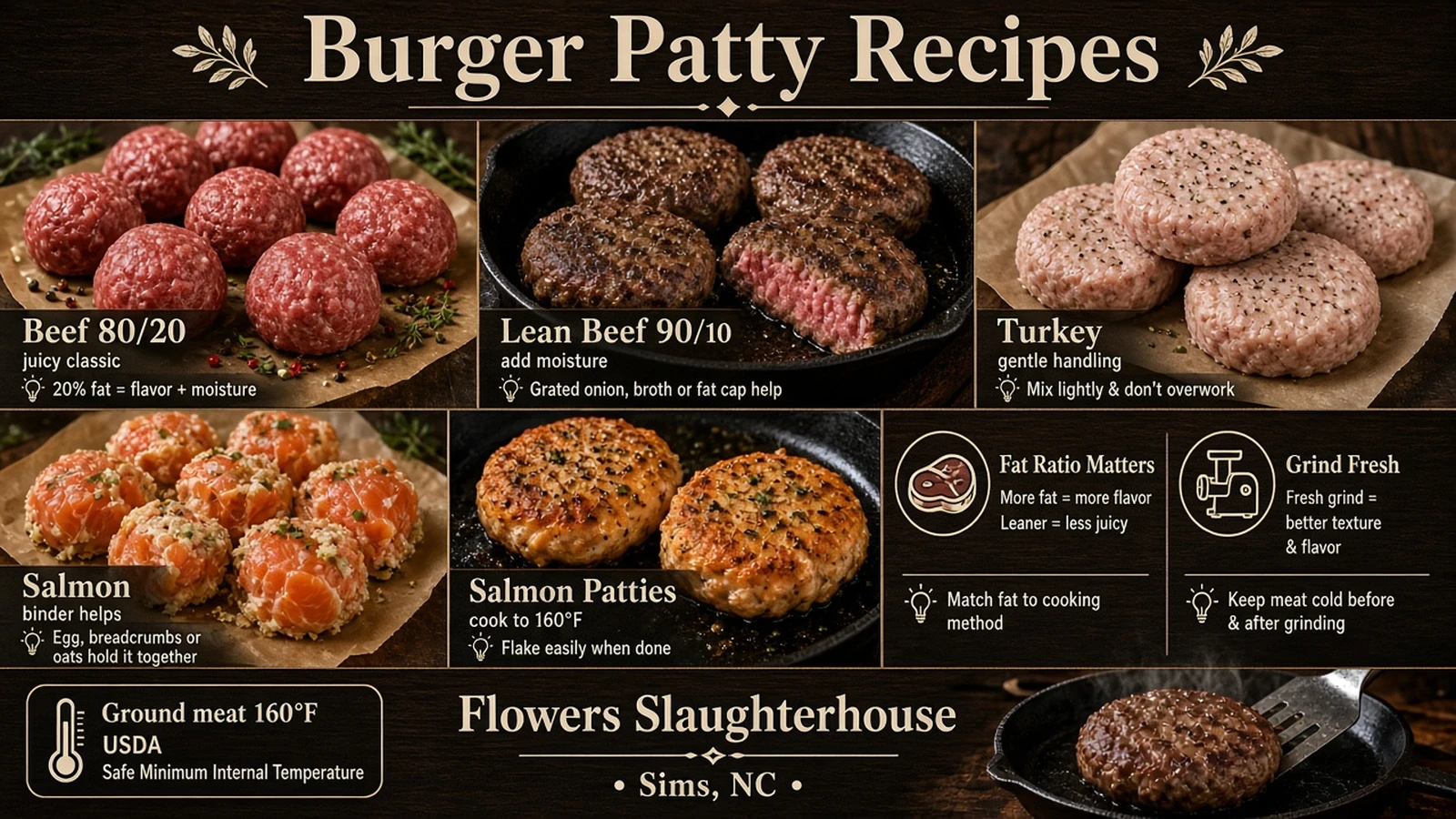
Patty chart at a glance
| Patty | Makes | Safe internal temperature | Best way to cook |
|---|---|---|---|
| Classic beef | 4 | 160°F | Grill, griddle |
| Mushroom beef blend | 4 | 160°F | Griddle, grill |
| Spicy chili beef | 4 | 160°F | Grill |
| Herbed chicken | 4 | 165°F | Griddle, oiled grill |
| Lean turkey | 4 | 165°F | Griddle |
| Spiced lamb | 4 | 160°F | Grill |
| Salmon | 4 | 145°F | Skillet |
| Black bean | 4 | 160°F (contains egg) | Skillet, oven |
| Garden veggie | 4 | 160°F (contains egg) | Skillet, oven |
Temperatures from the USDA FSIS chart [1]. The recipes are ours.
A few rules for any patty
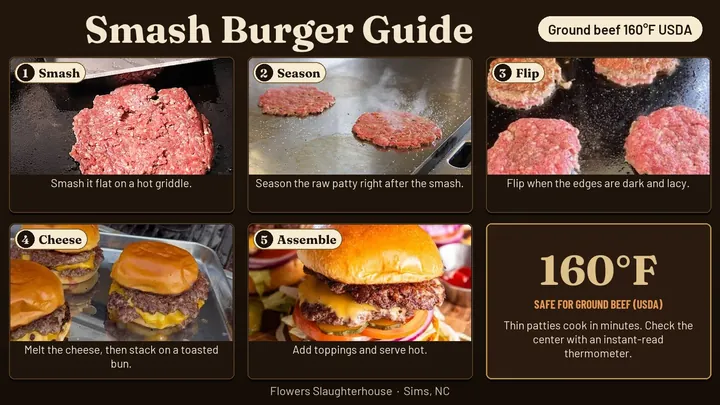
- Shape it right. For beef burgers the beef checkoff recommends forming patties a little wider than the bun to allow for shrinkage, pressing a dimple in the center so they cook flat, flipping once, and never pressing down on them while they cook [3]. (Smash burgers are the one exception. See our smash burger how-to.)
- Handle it as little as you can. Overworked meat gets dense. Mix with your fingertips just until everything comes together.
- Keep it cold. Form patties straight from the refrigerator, and put them back until the grill is ready.
- Don't partly cook burgers to finish later. FSIS says that lets bacteria survive and grow [4].
- Clean platter for cooked burgers. Never put cooked patties back on the plate that held raw ones unless it's been washed [4].
1. Classic beef
- 1½ lb ground beef, 80/20
- 1½ teaspoons kosher salt
- ¾ teaspoon black pepper
That's it. Divide into four 6-ounce balls, flatten to about ¾ inch, press a thumbprint into the middle, and salt the outside right before cooking rather than mixing salt in early, which can make the texture tight. The beef checkoff lists 70%-lean ground beef for burgers and browned crumbles, and 80–85% lean for meatloaf and meatballs [5]. We like 80/20 for a burger that stays juicy at 160°F. The checkoff's grill method is medium heat, about 4 to 5 minutes a side, until the center reads 160°F [3].
2. Mushroom beef blend
- 1 lb ground beef, 80/20
- 8 oz cremini mushrooms, finely chopped
- 1 tablespoon butter
- 1 teaspoon Worcestershire sauce
- 1 teaspoon kosher salt
- ½ teaspoon black pepper
Cook the mushrooms in butter until their liquid is gone and they're brown, then let them cool completely. Fold them into the beef with the seasoning. The mushrooms keep the patty moist and stretch a pound of beef into four burgers. Cook to 160°F.
3. Spicy chili beef
- 1½ lb ground beef, 80/20
- 1 jalapeño, seeded and minced
- 1 tablespoon chili powder
- 1 teaspoon ground cumin
- 1 teaspoon smoked paprika
- 1½ teaspoons kosher salt
Top it with pepper jack and pickled jalapeños. Spices on the outside can scorch over high flame, so cook this one over medium heat to 160°F.
4. Herbed chicken
- 1½ lb ground chicken (thigh meat if you can get it)
- ⅓ cup panko
- 2 tablespoons chopped parsley
- 1 tablespoon chopped fresh dill or basil
- 1 garlic clove, grated
- 1 teaspoon kosher salt
- Zest of ½ lemon
Ground chicken is soft and sticky, so wet your hands to form the patties and chill them for 30 minutes before cooking. They stick to grill grates, so a griddle or oiled grill pan works best. Ground poultry needs 165°F, higher than ground beef [1].
5. Lean turkey
- 1½ lb ground turkey (93% lean)
- 2 tablespoons olive oil
- 1 tablespoon Worcestershire sauce
- ¼ cup finely grated onion
- 1 teaspoon kosher salt
- ½ teaspoon black pepper
Lean turkey dries out fast, so the oil and grated onion are there for moisture. Keep the patties a little thinner, about ½ inch, so the middle gets to 165°F before the outside dries out [1]. See our turkey cuts guide for what ground turkey is made from.
6. Spiced lamb
- 1½ lb ground lamb
- 2 garlic cloves, grated
- 1 teaspoon ground cumin
- 1 teaspoon ground coriander
- 2 tablespoons chopped mint
- 1¼ teaspoons kosher salt
Serve it in pita with tzatziki, sliced cucumber and red onion. Ground lamb is safe at 160°F, the same as all ground meat [1]. Our lamb cuts guide covers where lamb grind comes from, and our lamb chop sauces include a tzatziki recipe.
7. Salmon
- 1¼ lb skinless salmon fillet, pin bones removed
- 1 tablespoon Dijon mustard
- 1 green onion, thinly sliced
- ⅓ cup panko
- 1 teaspoon kosher salt
- Zest of 1 lemon
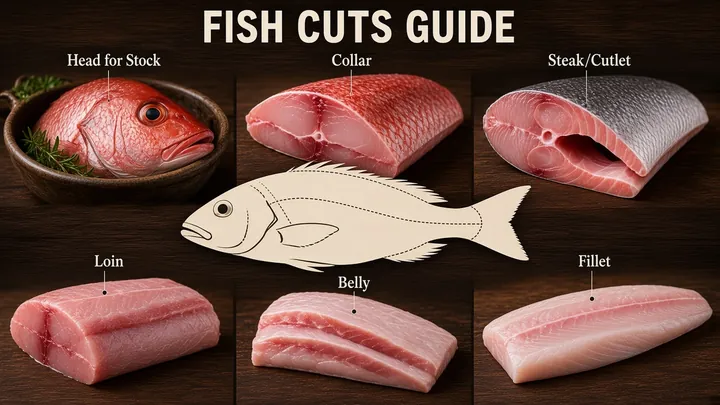
Cut a quarter of the salmon into a fine paste and the rest into small pieces. The paste is the glue. Fold in everything else, form four patties and chill for 30 minutes. Sear in an oiled skillet over medium-high heat. Fish is safe at 145°F [1]. Without a thermometer, the FDA says fish is done when it separates easily with a fork [6]. For how a whole fish breaks down, see our fish anatomy and cuts guide.
8. Black bean
- 2 cans (15 oz) black beans, drained and patted dry
- ½ cup cooked rice or quick oats
- 1 egg
- ½ cup finely chopped onion, sautéed
- 1 teaspoon ground cumin
- 1 teaspoon chili powder
- ¾ teaspoon kosher salt
Dry beans make a patty that holds. Spread the drained beans on a sheet pan and bake at 350°F for about 10 minutes to dry their skins, then mash about two-thirds of them and leave the rest whole. Mix in everything else, form and chill. Because of the raw egg, cook to 160°F, the egg-dish number on the USDA chart [1].
9. Garden veggie
- 1 cup grated zucchini, squeezed dry in a towel
- 1 cup grated carrot
- ½ cup corn kernels
- 1 can (15 oz) chickpeas, drained and mashed
- 1 egg
- ½ cup breadcrumbs
- 1 teaspoon kosher salt
- ½ teaspoon garlic powder
Squeeze the zucchini hard. Water is what makes veggie burgers fall apart. Cook in a skillet with a little oil until crusty on both sides and 160°F in the center because of the egg [1].
Why color won't tell you a burger is done
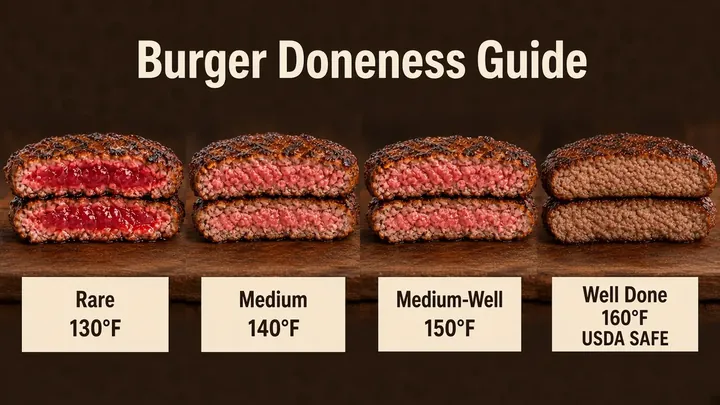
Burger color is unreliable both ways. FSIS research found that more than 25 percent of fresh ground beef patties turned brown before reaching 160°F, and some lean patties stay pink even above it [7]. A patty cooked to 160°F, measured with a thermometer, is safe regardless of color [2]. Our burger doneness guide goes deeper into why a burger isn't a steak.
How to check: for patties too thin to probe from the top, take the burger off the heat onto a clean spatula and slide the thermometer in from the side until the tip reaches the center [2].
Handling and storing ground meat
- Use or freeze raw ground meat within 1 to 2 days [8]. Ground beef keeps its best quality in the freezer for about 4 months [4].
- Freeze patties flat on a sheet pan with parchment between them, then bag them. They'll come apart one at a time.
- Thaw in the refrigerator. If you thaw in cold water or the microwave, cook right away [4].
- Leftover cooked burgers keep 3 to 4 days in the refrigerator. Reheat to 165°F [4].
- Wash your hands with soap for 20 seconds before and after handling raw ground meat [4].
Frequently asked questions
What temperature should a burger patty be cooked to?
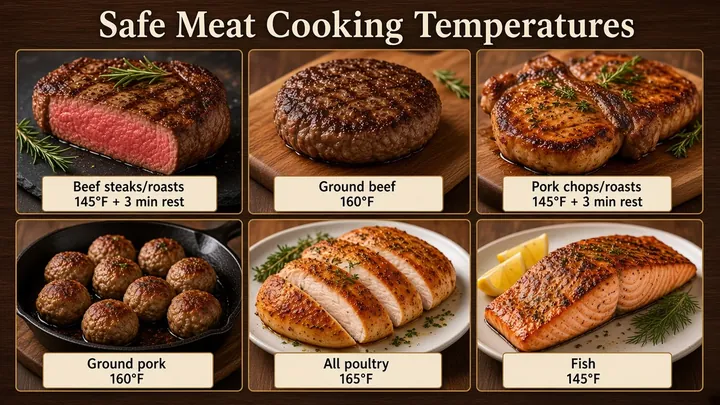
It depends on the meat. Ground beef, pork and lamb: 160°F. Ground chicken and turkey: 165°F. Salmon and other fish: 145°F. Bean or veggie patties made with raw egg: 160°F.
What's the best fat ratio for burgers?
For a juicy beef burger, we like 80/20 (80% lean, 20% fat). Leaner beef works, but it dries out faster at 160°F, so add moisture with mushrooms or grated onion, or keep the patties thinner.
How do I keep chicken and turkey burgers from falling apart?
Use a little panko as a binder, form them with wet hands and chill the patties for 30 minutes before cooking. Cook them on a griddle or oiled pan instead of open grates.
Why do my burgers puff up in the middle?
The edges tighten first and push the center up. Press a shallow dimple into the middle of each raw patty so it cooks flat.
Burgers from your own beef
If you're bringing us a beef, the burger part is on your cut sheet. Our beef cut sheet lets you pick the lean-to-fat ratio for your ground beef and how much of it to make into patties. Call or text 252-885-1892 with questions, or read more about beef processing. If you hunt, our venison cuts guide covers deer burger. Grilling dogs alongside the burgers? See our hot dog styles guide. For every species, see the safe meat cooking temperatures chart.
Sources
- Safe Minimum Internal Temperature Chart — USDA Food Safety and Inspection Service
- Food Thermometers — USDA Food Safety and Inspection Service
- All About Beef Burgers — Beef. It's What's For Dinner. (Cattlemen's Beef Board and NCBA)
- Ground Beef and Food Safety — USDA Food Safety and Inspection Service
- Everything to Know About Ground Beef — Beef. It's What's For Dinner. (Cattlemen's Beef Board and NCBA)
- Selecting and Serving Fresh and Frozen Seafood Safely — U.S. Food and Drug Administration
- Color of Cooked Ground Beef as It Relates to Doneness — USDA Food Safety and Inspection Service
- Keep Food Safe! Food Safety Basics — USDA Food Safety and Inspection Service