We make fresh pork sausage and cut hogs for pig pickin's, so cookouts are close to home for us. Here are twelve hot dog styles worth putting on the grill, what goes on each one, and a few food-safety basics.
What's in a hot dog?
Under the federal standard, frankfurters, hot dogs, wieners and bologna are cooked and/or smoked sausages made from finely chopped meat. They can be beef, pork, turkey, chicken or a mix, and the label has to say which. They can't contain more than 30 percent fat. "Beef franks" or "pork franks" come from a single species, and a turkey dog in a pork casing has to list the pork casing on the label [1].
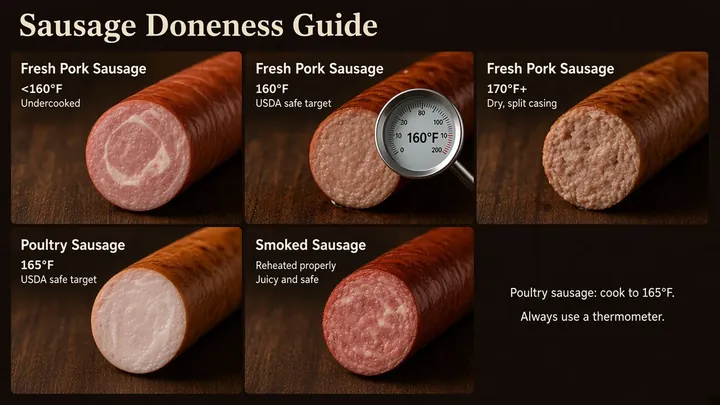
Skinless hot dogs have had their casings stripped off after cooking [1]. Natural-casing dogs keep theirs, which is where the "snap" comes from. Raw sausages like bratwurst and fresh links are a different animal: they need full cooking. See our sausage doneness guide.
Twelve hot dog styles
1. Carolina slaw dog
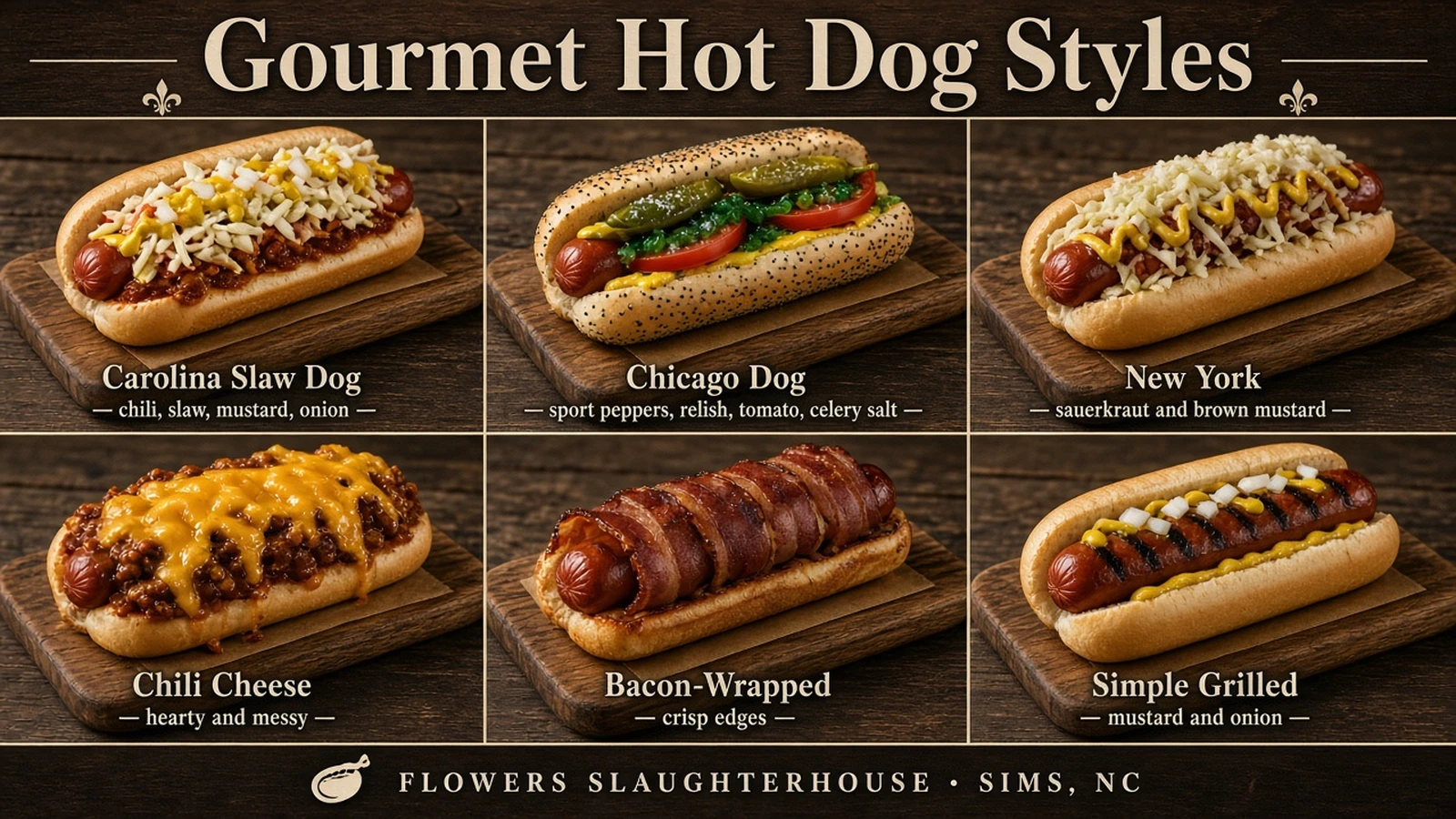
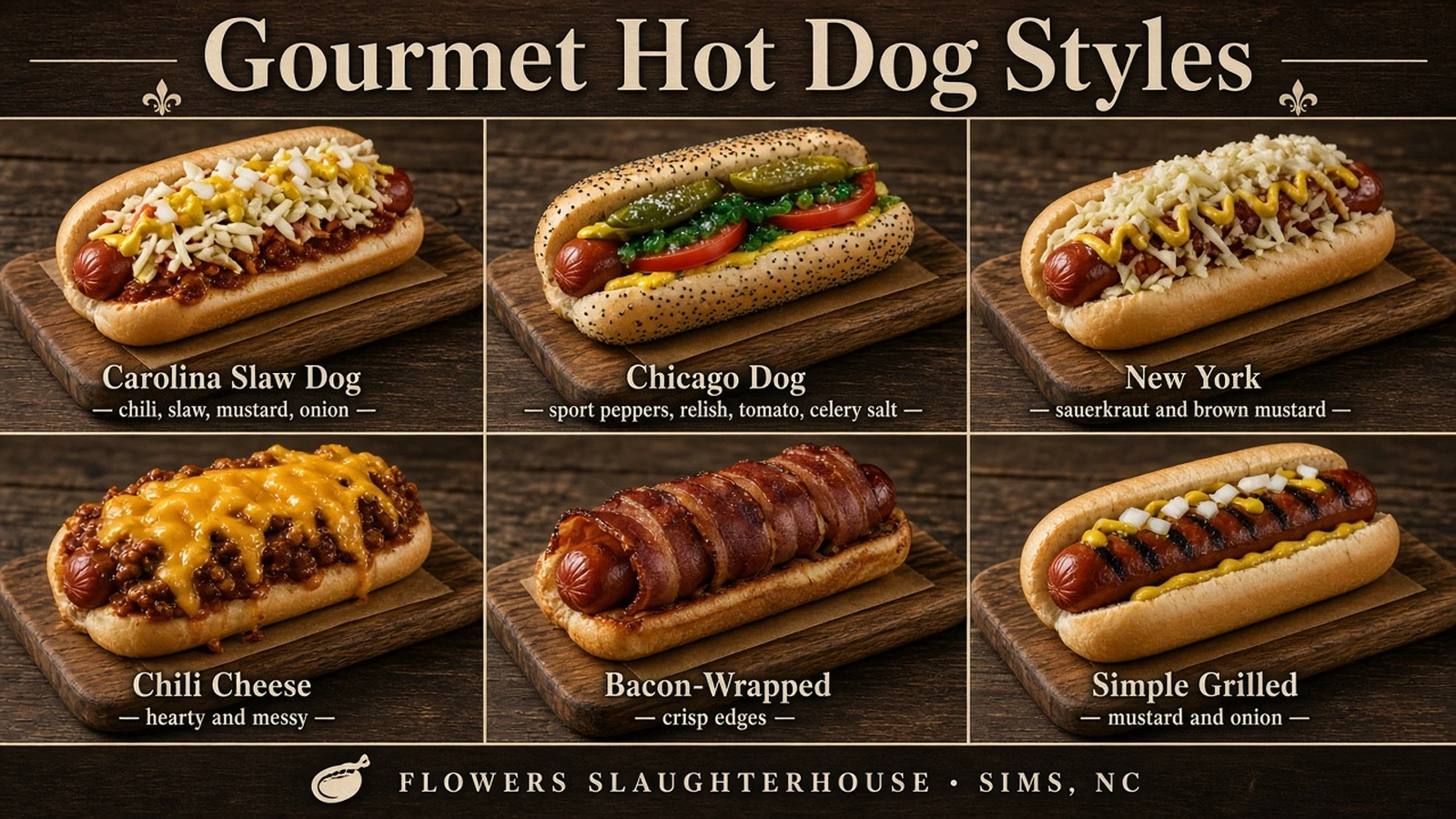
Chili, finely chopped coleslaw, chopped onion and yellow mustard. America's Test Kitchen places slaw dogs (chili dogs with mustard, onions and coleslaw) in West Virginia and several Southern states [3], and the National Hot Dog and Sausage Council says dogs across the South come topped with coleslaw [2]. Around here, the slaw is a condiment, not a side. Keep the chili thick and beanless and the slaw fine and a little sweet, so it sits on the dog instead of sliding off.
2. Chicago-style
Yellow mustard, bright green sweet relish, chopped raw onion, tomato, a dill pickle spear, sport peppers and celery salt on a poppy-seed bun [2]. ATK adds that the dog is all-beef, usually natural casing, and steamed along with the bun, with "never, ever ketchup" [3].
3. New York street cart
Steamed onions and a pale, deli-style yellow mustard, says the Hot Dog Council [2]. ATK describes the cart version, the "dirty water dog," with sauerkraut, mustard and onions cooked in a tangy-sweet tomato sauce [3].
4. Detroit Coney
A loose, beanless, beefy chili sauce, a line of mustard and lots of chopped onion over a natural-casing dog. ATK says the Detroit sauce should "puddle on the dog, not mound" [3].
5. Cincinnati Coney
Cincinnati-style chili and a heap of finely grated cheddar [2]. Add mustard and onion if you like.
6. Sonoran
A bacon-wrapped dog, griddled crisp, in a bolillo roll with pinto beans, tomatoes, onions, salsa verde, mustard and mayonnaise [3]. It came to Tucson from Hermosillo, Sonora, in the 1980s [3].
7. Seattle
Cream cheese and grilled onions on a split, grilled dog in a toasted bun, with sriracha and jalapeños as popular extras [2].
8. Kansas City
Sauerkraut and melted Swiss on a sesame-seed bun [2]. It eats like a Reuben, and ATK adds brown mustard [3].
9. Washington, D.C. half-smoke
Not a hot dog exactly: the half-smoke is a half-pork, half-beef sausage, coarser and spicier than a frank, topped with chili, mustard and onions [2].
10. New Jersey Italian
A deep-fried dog in a wedge of pizza bread, with sautéed onions, peppers and fried potatoes [3].
11. Cleveland Polish Boy
Kielbasa or a hot dog, then French fries, then barbecue or hot sauce, then coleslaw, all on one bun [2].
12. Texas dog
Chili, cheese and jalapeños, the Hot Dog Council says, and a ballpark favorite in Houston [2].
Four gourmet builds to try
These aren't regional traditions. They're ideas for a topping bar.
- Banh mi dog: quick-pickled carrot and daikon, cucumber, cilantro, sliced jalapeño and sriracha mayo.
- Elote dog: charred corn tossed with mayo, lime, chili powder and crumbled cotija.
- Buffalo dog: hot sauce butter, a drizzle of blue cheese dressing and thin-sliced celery.
- Mac and cheese dog: a spoon of baked mac and cheese, toasted breadcrumbs and a few dashes of hot sauce.
How to cook hot dogs
Since hot dogs are already cooked, pick your method for texture:
- Grilled: medium heat, turning often, until blistered and hot through. Score them lightly to keep them from splitting.
- Griddled or butterflied: split lengthwise, leaving one side hinged, and sear cut-side down. That's how Seattle stands do it, and it gives more surface for toppings [3].
- Steamed: ATK steams dogs in a basket over boiling water for 5 to 7 minutes, covered, then lays the buns on top for about a minute [3]. That's the Chicago way.
- Simmered: in water or beer until heated through. Don't boil hard, or they'll split.
Hot dog food safety
Heat them through for people at risk. Listeria can grow slowly at refrigerator temperatures and can be found in ready-to-eat foods like hot dogs. FSIS says pregnant women, older adults and people with weakened immune systems should reheat hot dogs until steaming hot before eating [1].
Cut them up for little kids. Whole hot dogs are a choking hazard for children under 4. FSIS cites the American Academy of Pediatrics: cut hot dogs lengthwise or into very small pieces, and take off the casing first if there is one [1]. The AAP lists hot dogs among the foods to keep away from children until age 4 or older unless they're chopped into tiny pieces [4].
Store them right [1]:
| Hot dogs | Refrigerator | Freezer (best quality) |
|---|---|---|
| Unopened package, no date | 2 weeks | 1–2 months |
| Opened package | 1 week | 1–2 months |
Watch the clock at the cookout. Don't leave hot dogs out more than 2 hours, or 1 hour when it's over 90°F [1]. Keep the chili hot at 140°F or above and the slaw cold at 40°F or below [5]. Mayo-based slaw belongs on ice, not in the sun.
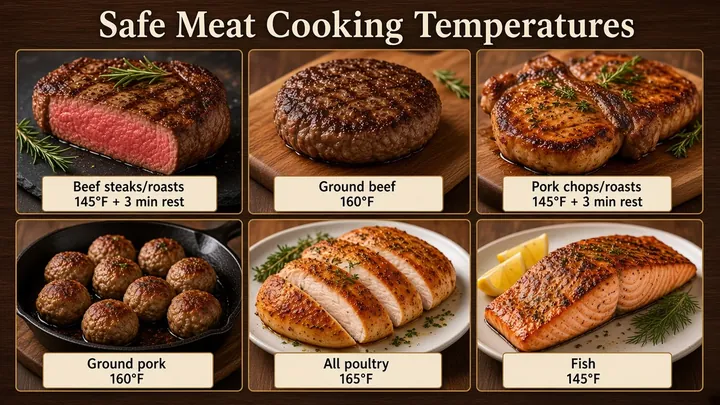
Make your chili safely. If you're making hot dog chili from raw ground beef, cook it to 160°F [6]. Leftover chili keeps 3 to 4 days and should be reheated to 165°F [5].
Dates on the package. "Sell-by" is for the store and isn't a safety date. "Use-by" and "best if used by" are about quality. Hot dogs kept refrigerated or frozen should still be safe after the date passes, if they've been handled properly [1].
Frequently asked questions
Are hot dogs already cooked?
Yes. Federal rules define hot dogs as cooked and/or smoked sausages. Still, FSIS says people at higher risk of foodborne illness should reheat them until steaming hot because of Listeria.
What is a Carolina-style hot dog?
A hot dog topped with chili, coleslaw, chopped onions and usually yellow mustard. The slaw goes right on the dog.
What goes on a Chicago-style hot dog?
An all-beef dog on a poppy-seed bun with yellow mustard, bright green relish, chopped onion, tomato, a pickle spear, sport peppers and celery salt. No ketchup.
How long do hot dogs last in the refrigerator?
An unopened package with no date keeps about 2 weeks, and an opened package about 1 week. In the freezer, use them within 1 to 2 months for best quality.
Planning the cookout?
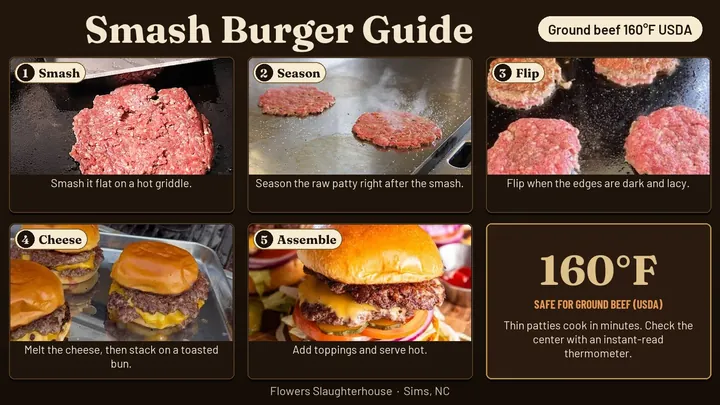
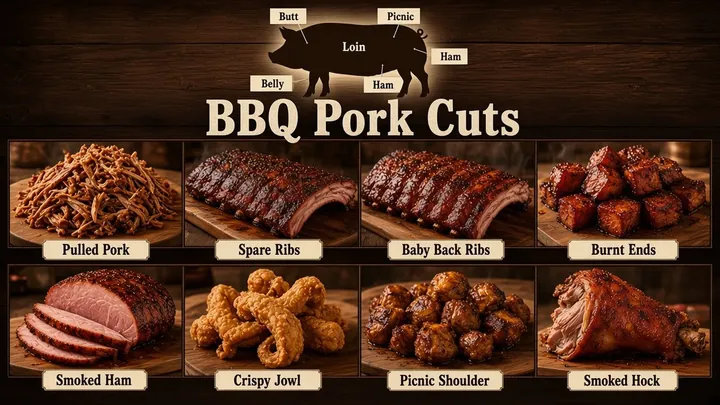
Hot dogs are only one part of a good cookout. If you're feeding a crowd, our pork page covers fresh and hot pork sausage, and our pork cut sheet is where you pick sausage seasoning and whether you want links, bulk or patties. Call or text 252-885-1892 to talk through a hog or a pig pickin'. For burgers on the same grill, see our burger patty recipes and smash burger how-to, and for pork barbecue, our BBQ pork cuts guide.
Sources
- Hot Dogs and Food Safety — USDA Food Safety and Inspection Service
- Regional Hot Dogs — National Hot Dog and Sausage Council
- A Guide to All-American Regional Hot Dogs — America's Test Kitchen
- Choking Prevention for Babies & Children — HealthyChildren.org (American Academy of Pediatrics)
- Keep Food Safe! Food Safety Basics — USDA Food Safety and Inspection Service
- Safe Minimum Internal Temperature Chart — USDA Food Safety and Inspection Service
More in Cooking & Recipes · Pork articles · Beef & Veal articles