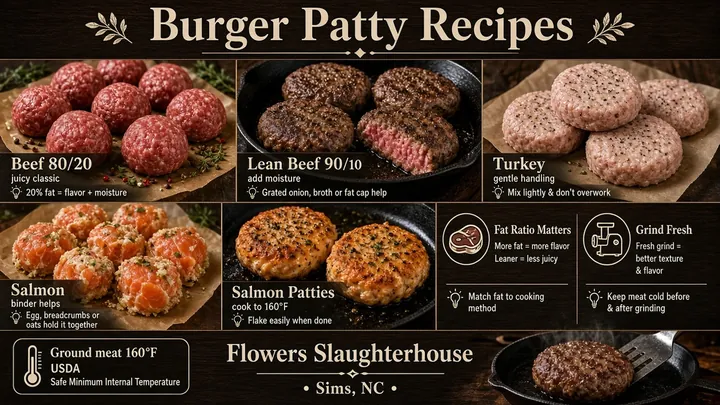
We grind a lot of beef at our plant in Sims, and burgers are what most of it turns into. This guide covers burger doneness levels, why ground beef has a different rule than steak, how to temp a patty, and how to keep a 160°F burger juicy.

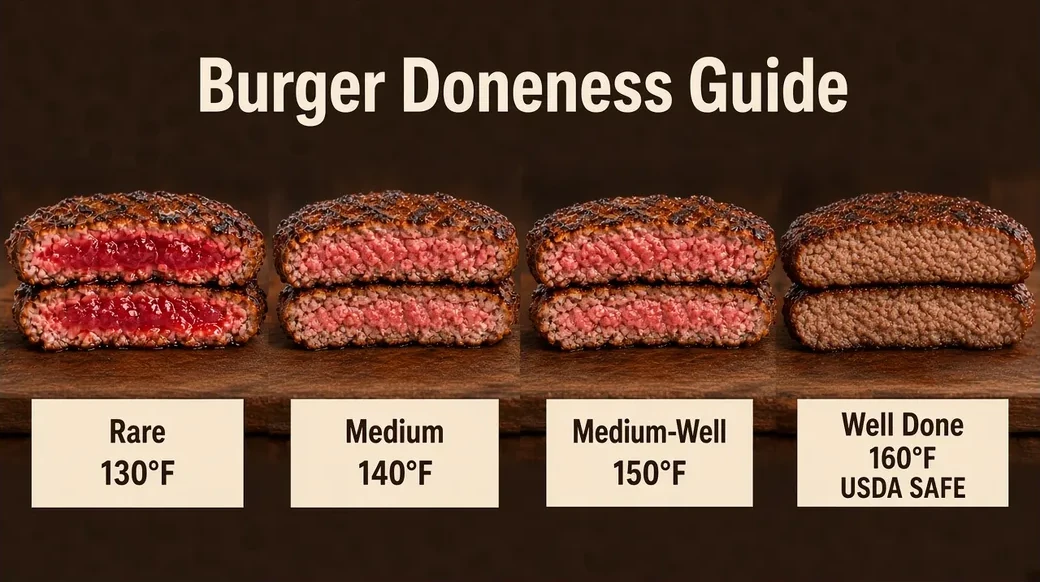
Burger doneness chart
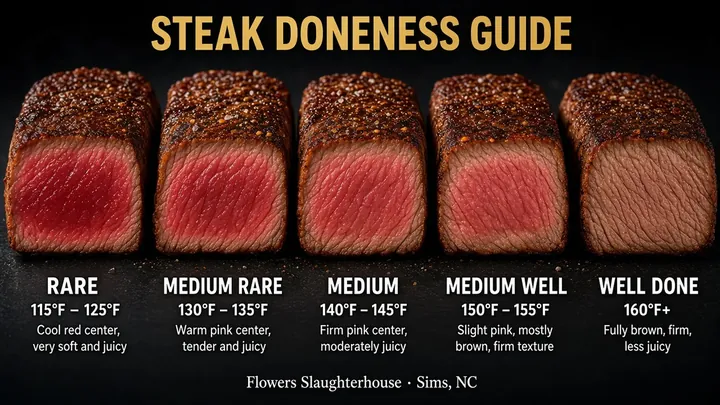
Restaurant menus and burger charts use the same doneness words as steak. Here's what they mean in temperature, and which one meets the USDA standard [3].
| Burger doneness | Internal temperature | Meets USDA 160°F for ground beef? |
|---|---|---|
| Rare / medium-rare | 130–135°F | No |
| Medium | 140–145°F | No |
| Medium-well | 150–155°F | No |
| Well done | 160°F and up | Yes |
Notice there's no "what it looks like" column. That's on purpose. FSIS has found that color and texture are not reliable signs of doneness in ground beef [2]. In one study, patties cooked to 150°F looked the same as patties cooked to 160°F [2]. The thermometer is the only thing that tells you.
Why a burger isn't a steak
A medium-rare steak and a medium-rare burger are not the same risk.
On a whole steak, bacteria sit mostly on the outside surface, which gets seared. Grinding changes that. FSIS explains that grinding mixes any bacteria on the surface all through the meat and exposes more surface area [1]. Now the center of the patty matters, and it has to get hot enough.
The main concern is E. coli O157:H7 and related Shiga toxin-producing E. coli (STECs). FSIS says these bacteria survive refrigerator and freezer temperatures, and scientists believe it takes only a small number to cause serious illness, especially in children and older adults. Cooking ground beef to 160°F kills them [1]. USDA declared E. coli O157:H7 an adulterant in raw ground beef in 1994, after the 1993 outbreak tied to undercooked fast-food hamburgers sickened hundreds of people [2].
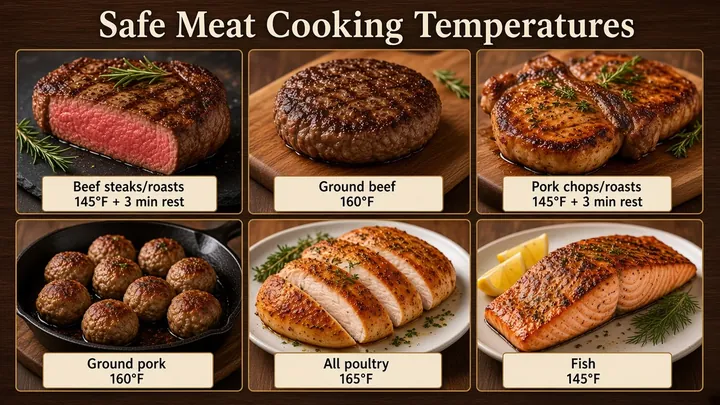
That's why the numbers are different [3]:
| Product | USDA safe minimum |
|---|---|
| Beef steaks, chops, roasts | 145°F + 3-minute rest |
| Ground beef, burgers, meatloaf, meatballs | 160°F |
| Ground turkey or chicken burgers | 165°F |
Higher-risk groups include children under 5, pregnant women, adults 65 and older, and people with weakened immune systems [1]. If you're cooking for any of them, 160°F isn't optional.
Why color lies
FSIS describes two opposite problems [2]:
Premature browning: brown but not done. Ground beef that has been exposed to air for a while, stored a long time, or thawed and held in the refrigerator can already be partly brown before it hits the grill. It looks done early. This can happen after as little as one day of storage.
Persistent pink: pink but done. Some ground beef stays pink above 160°F. Meat with a higher pH, meat from older animals or bulls with more pigment, and lean or low-fat blends can all stay pink. Some low-fat patties stayed pink at 160–165°F.
FSIS's bottom line: at 160°F, a safely cooked patty may look brown, pink, or anything in between [2].
How to check a burger's temperature
- Use an instant-read digital thermometer near the end of cooking [2].
- Insert the probe at least ½ inch into the thickest part of the patty. If the patty is too thin to go in from the top, slide the probe in sideways from the edge [2].
- If you're not sure of the reading, check a second spot [2].
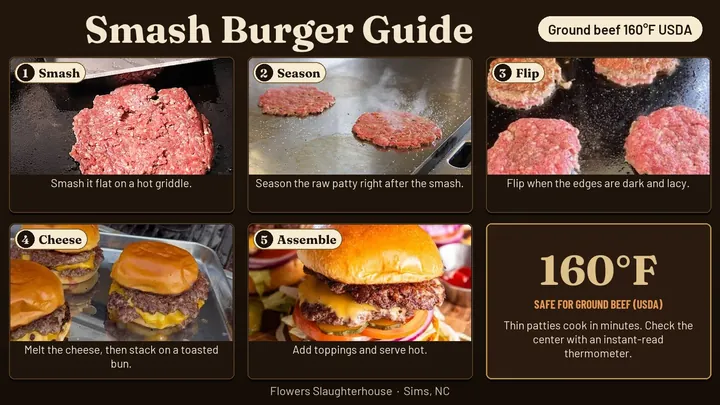
- Take it off the heat at 160°F.
- Put cooked burgers on a clean plate, not the one that held the raw patties [1].
Check your thermometer now and then in ice water. It should read 32°F [4].
How long to cook a burger
FSIS lists a fresh 4-ounce patty at 3 to 5 minutes per side grilled, broiled or fried [5]. The beef checkoff's grilling method is ½-inch patties over medium heat until a thermometer inserted horizontally into the center reads 160°F [6]. Thicker patties, frozen patties and a crowded grill all take longer, so use the times for planning and the thermometer for the answer.
How to keep a well-done burger juicy
160°F doesn't have to mean dry.
- Pick the right grind. The beef checkoff says ground beef that is at least 70% lean (often 73/27 or 75/25) is moist and juicy when cooked properly, and 80–85% lean is a middle option [6]. Very lean beef (93% and up) dries out faster and is more likely to stay pink while cooking, so lean on the thermometer even more [2].
- Don't overcook past 160°F. FSIS notes that the higher the cooking temperature, the more a patty shrinks, and that moderate heat keeps more juice and flavor in [1].
- Don't press it. Pushing a spatula down on the patty squeezes the juice out.
- Handle it as little as you can. Overworked ground beef gets dense. Form patties gently and press a shallow dimple in the center so they stay flat.
- Add moisture. Cheese, a sauce, or a little grated onion in the mix all help a well-done burger.
Deer burger and other ground meats
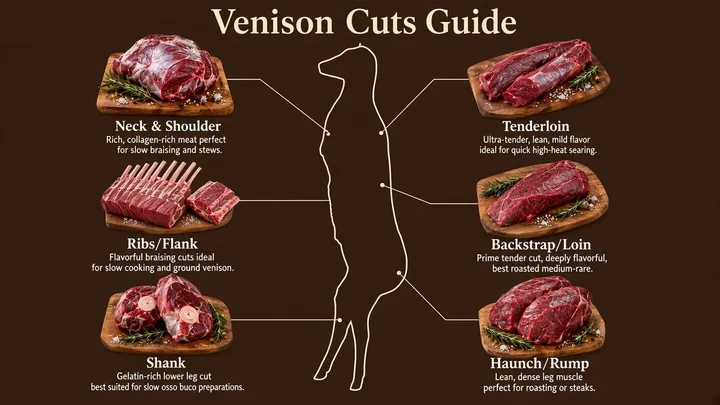
The 160°F rule isn't just for beef. USDA's chart lists 160°F for all ground meats and 165°F for ground poultry [3]. That covers ground venison too. Deer burger is very lean, so it dries out fast and can stay pink. Use a thermometer, and ask us about your grind options when you drop off your deer. See our venison cuts guide and deer processing page for options.
Burgers when eating out
Restaurants follow the FDA Food Code, not the home-cooking chart. FSIS says to ask your server whether burgers are cooked to at least 155°F for 15 seconds, which is the Food Code's safe option for restaurants [2]. At home, the target is 160°F.
Handling ground beef safely
FSIS rules of thumb for ground beef [1]:
- Refrigerator: 40°F or below, and use within 1 to 2 days.
- Freezer: safe indefinitely, best quality within about 4 months. Date your packages.
- Thaw in the refrigerator, or in cold water or the microwave and cook right away. Never thaw on the counter.
- Don't partly cook burgers to finish later. Partial cooking lets bacteria survive and grow.
- Leftovers: refrigerate within 2 hours (1 hour above 90°F). They keep 3 to 4 days. Reheat to 165°F.
- "Hamburger" vs. "ground beef": both can have up to 30% fat. Beef fat can be added to hamburger, but not to ground beef.
Frequently asked questions
Can I eat a medium-rare burger?
USDA doesn't recommend it. Ground beef needs to reach 160°F to kill E. coli O157:H7 and other bacteria that grinding can mix into the center. A medium-rare burger at 130–135°F is well short of that.
Is a pink burger safe?
It can be, if a thermometer shows 160°F. Some ground beef stays pink at a safe temperature, and some turns brown before it's safe. Color can't tell you either way, so use a thermometer.
Why is steak safe at 145°F but burgers need 160°F?
On a whole steak, bacteria are mostly on the surface, which gets seared. Grinding spreads them through the meat, so the center of a burger has to get hotter.
Do burgers need to rest?
USDA's chart lists 160°F for ground meat with no required rest time. A minute or two on a clean plate before serving doesn't hurt.
Ground beef from your own beef
When we process a beef, a good share of it becomes ground beef or patties, packed the way you ask. If you want more burger and fewer roasts, or patties instead of bulk packs, put it on your beef cut sheet. Call or text 252-885-1892 with questions, or read more about beef processing. For steaks, see our steak doneness guide. For every species, see our safe meat cooking temperatures chart.
Sources
- Ground Beef and Food Safety — USDA Food Safety and Inspection Service
- Color of Cooked Ground Beef as It Relates to Doneness — USDA Food Safety and Inspection Service
- Safe Minimum Internal Temperature Chart — USDA Food Safety and Inspection Service
- Food Thermometers — USDA Food Safety and Inspection Service
- Beef From Farm to Table — USDA Food Safety and Inspection Service
- Everything to Know About Ground Beef — Beef. It's What's For Dinner. (Cattlemen's Beef Board / NCBA)