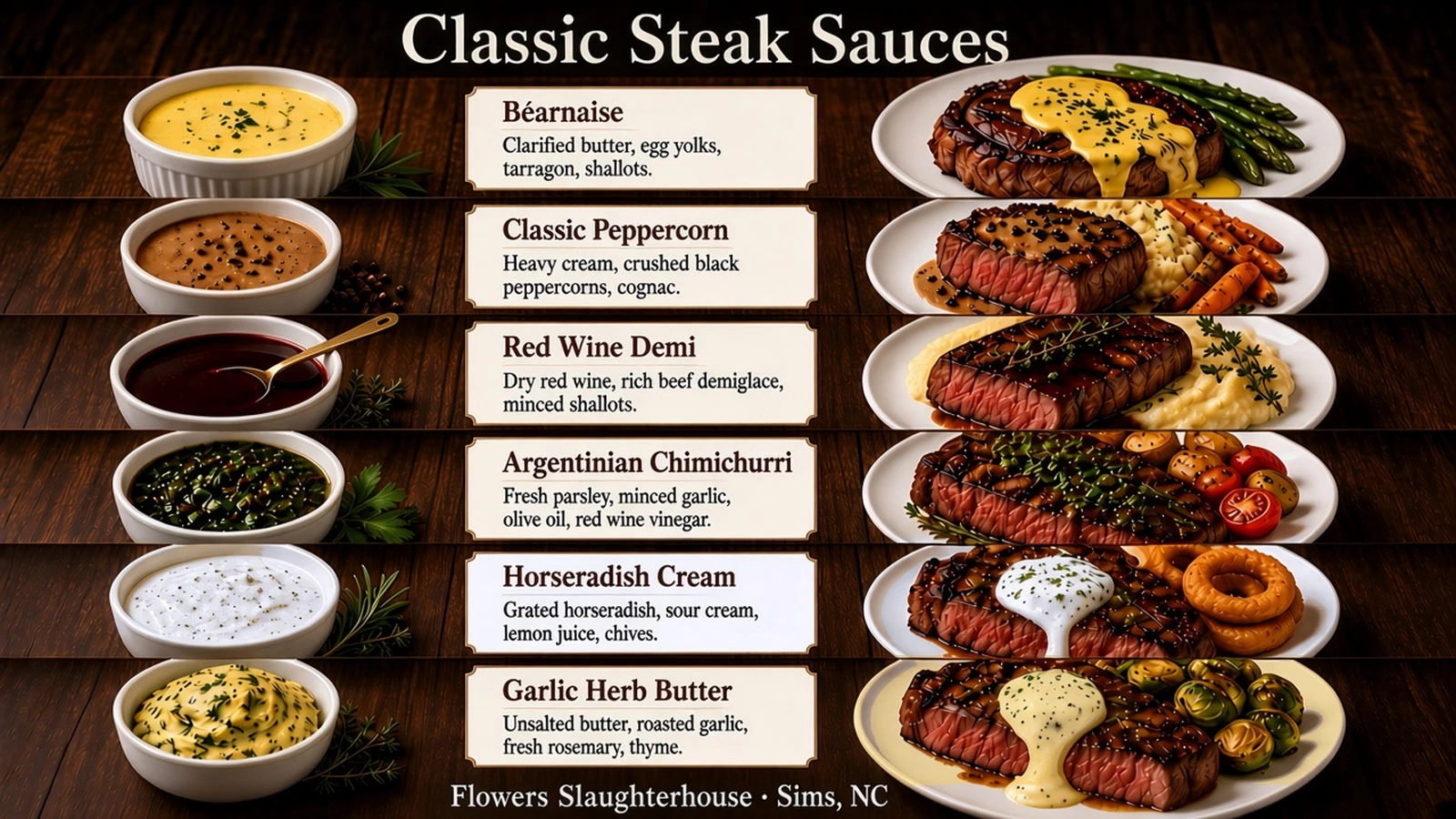
Four of these six go back at least to Auguste Escoffier's A Guide to Modern Cookery, first published in English in London in 1907. It's free on Project Gutenberg [1]. He called bordelaise "especially suitable for grilled butcher's meat." Below are simple home versions that don't need a restaurant's stockpot.

Which sauce for which steak
| Steak | Good match | Why |
|---|---|---|
| Filet (tenderloin) | Béarnaise, bordelaise, mushroom | Very tender but mild and lean, so it can take richness |
| Ribeye | Chimichurri, peppercorn | Lots of marbling. Acid and pepper balance the fat |
| New York strip | Peppercorn, garlic herb butter, bordelaise | Firm, beefy, handles anything |
| Top sirloin | Mushroom, garlic herb butter | Lean and affordable. Butter helps |
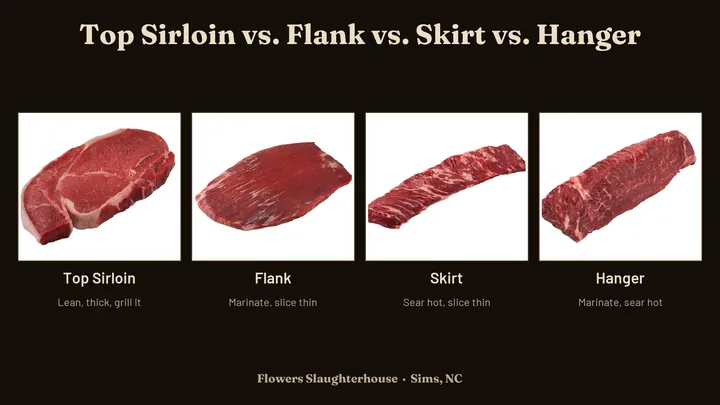
| Flank, skirt, hanger | Chimichurri | Thin, beefy, grilled hot and sliced |
| T-bone, porterhouse | Garlic herb butter, béarnaise | A strip and a filet in one steak |
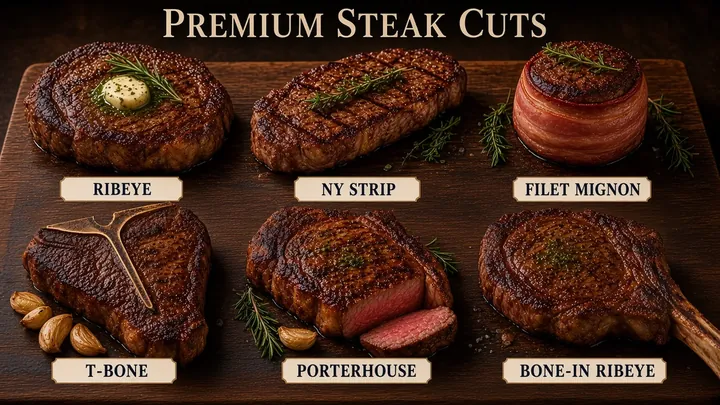
For more on each steak, see our premium steak cuts guide and the top sirloin, flank, skirt and hanger guide.
Cook the steak first, then the sauce
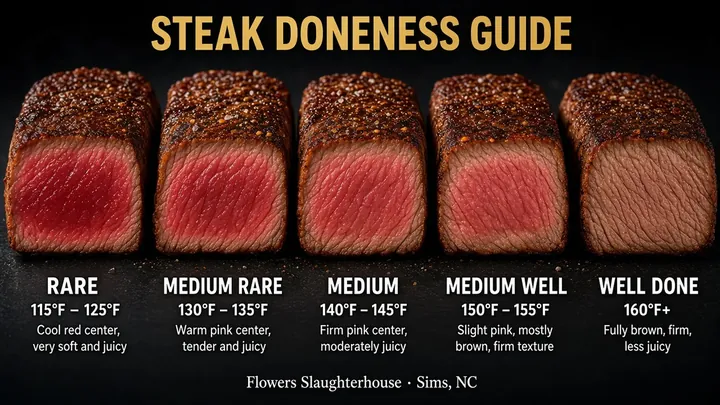
Cook steaks to at least 145°F and let them rest for 3 minutes, which is USDA's safe minimum for beef steaks [2]. Our steak doneness guide has pull temperatures by doneness. The beef checkoff suggests resting a grilled steak about 5 minutes [3]. That rest is your sauce window. Pan sauces like peppercorn, bordelaise and mushroom start in the same skillet, with the browned bits the steak left behind.
1. Béarnaise
Béarnaise is a warm emulsion of egg yolks, butter, tarragon and a vinegar reduction. Escoffier's recipe reduces vinegar with shallots, tarragon, chervil and pepper by two-thirds, then whisks in five yolks and six ounces of melted butter over low heat. He warned it "need only be tepid, for it would probably turn if it were over-heated," and said to serve it "with grilled, butcher's meat and poultry" [1].
Home version (serves 4): Simmer 3 tablespoons white wine vinegar, 2 tablespoons white wine, 1 minced shallot, 1 tablespoon chopped tarragon and a few cracked peppercorns until about 1 tablespoon of liquid is left. Strain and cool slightly. In a heatproof bowl over barely simmering water, whisk 3 egg yolks with the reduction until thick and pale. Off the heat, drizzle in ½ cup (1 stick) warm melted butter while whisking. Stir in more chopped tarragon, salt and a pinch of cayenne.
Safety note: the yolks in béarnaise are only gently warmed, not fully cooked. FDA says that for dishes where eggs stay raw or undercooked, use shell eggs pasteurized to destroy Salmonella or pasteurized egg products [4]. Look for the word "pasteurized" on the carton. Serve béarnaise right away and don't keep it warm for hours. USDA's rule is that perishable food shouldn't sit out more than 2 hours, or 1 hour above 90°F [5].
Best with: filet, T-bone, porterhouse.
2. Peppercorn sauce
The bistro peppercorn sauce (steak au poivre) is the quickest pan sauce there is. Escoffier's older poivrade was a vinegar and brown-sauce base, with crushed peppercorns added only ten minutes before straining. He wrote that "if the pepper were put in the sauce earlier, it might make it bitter" [1]. That's still good advice.
Home version (serves 2): After the steaks come out, pour off all but 1 tablespoon of fat. Add 1 minced shallot and cook 1 minute. Off the heat, add 3 tablespoons brandy or cognac, then return to the heat and let it bubble almost dry. Add ½ cup beef broth and reduce by half. Stir in ⅓ cup heavy cream and 1 to 2 teaspoons coarsely crushed black peppercorns, then simmer until it coats a spoon. Season with salt and finish with any juices from the resting steak.
Best with: strip, ribeye.
3. Bordelaise (red wine sauce)
Escoffier's bordelaise reduces red wine by three-quarters with shallots, pepper, thyme and bay, then adds a rich brown sauce, meat glaze, a few drops of lemon and poached slices of beef marrow [1].
Home version (serves 4): In the steak pan, soften 2 minced shallots in 1 tablespoon butter. Add 1 cup dry red wine, a sprig of thyme and a bay leaf and reduce by three-quarters. Add 1 cup beef stock (homemade or a good boxed one) and reduce by half again. Strain, then whisk in 2 tablespoons cold butter off the heat. A squeeze of lemon brightens it. If you have marrow bones, poach a few slices of marrow and stir them in at the end for the traditional version.
Best with: filet, strip, any grilled steak.
4. Chimichurri
Chimichurri is an uncooked Argentine sauce of parsley, garlic, oregano, vinegar and oil. It's sharp and green, which is exactly what a fatty ribeye or a charred skirt steak wants.
Home version (makes about 1 cup): Finely chop 1 cup flat-leaf parsley, 2 tablespoons fresh oregano (or 2 teaspoons dried) and 3 to 4 cloves garlic. Stir in ¼ cup red wine vinegar, ½ teaspoon red pepper flakes, ½ teaspoon salt and ½ cup olive oil. Let it sit 15 minutes before serving.
Storage: this is fresh garlic and herbs in oil, and garlic-in-oil kept at room temperature is a botulism risk. The National Center for Home Food Preservation says garlic-in-oil should be made fresh, kept at 40°F or lower and used within 4 days, or frozen [6]. Oregon State University Extension gives the same 4-day rule for homemade herbs in oil [7]. Never keep it at room temperature overnight.
Best with: ribeye, skirt, flank, hanger.
5. Garlic herb butter (maître d'hôtel)
Compound butter is the lazy cook's steak sauce: make it once, slice a coin onto each hot steak. Escoffier's maître d'hôtel butter is just softened butter, chopped parsley, salt, pepper and a few drops of lemon juice. He said to serve it "with grills in general" [1].
Home version: Mash 1 stick softened butter with 1 tablespoon chopped parsley, 1 small clove garlic grated, 1 teaspoon chopped chives or thyme, a few drops of lemon juice and a pinch of salt. Roll it into a log in plastic wrap and chill. Because it contains fresh garlic, we hold it to the same limit as garlic-in-oil: refrigerate it and use it within 4 days, or freeze the log and slice coins off it frozen [6].
Best with: strip, top sirloin, T-bone, porterhouse.
6. Mushroom sauce (chasseur style)
Escoffier's "hunter's sauce" starts with mushrooms browned quickly in butter and oil, then adds shallots, white wine and brandy, half-glaze, tomato sauce and parsley [1].
Home version (serves 4): In the steak pan, brown 8 ounces sliced mushrooms (cremini, or a mix with shiitake or oyster) in 1 tablespoon each butter and oil. Add 1 minced shallot for a minute, then ¼ cup white wine and 2 tablespoons brandy and reduce by half. Add ¾ cup beef stock and 1 tablespoon tomato paste and simmer until slightly thickened. Finish with a tablespoon of butter and chopped parsley. For a creamier version, swap 3 tablespoons heavy cream in for the tomato paste.
Best with: top sirloin, filet, chopped steak.
Make-ahead and leftovers
- Pan sauces (peppercorn, bordelaise, mushroom) can be made a day ahead, chilled and rewarmed gently.
- Béarnaise is best made right before serving. We wouldn't hold or reheat leftovers.
- Chimichurri and garlic butter get the garlic-in-oil limit: up to 4 days in the refrigerator, or freeze them [6].
- Don't leave sauces on the table. Refrigerate within 2 hours, or 1 hour on a hot day [5].
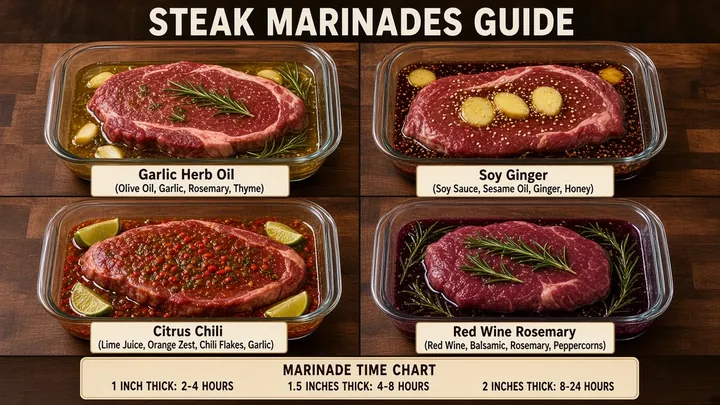
Most of these sauces work on more than beef. Our lamb chop sauces guide covers mint sauce, red wine pan sauce and chimichurri for lamb, and the steak marinades guide covers flavor before the grill instead of after.
Frequently asked questions
What is the best sauce for steak?
It depends on the steak. Peppercorn and chimichurri stand up to a fatty ribeye. Béarnaise, bordelaise and mushroom sauce add richness to lean filet and sirloin. Garlic herb butter works on almost anything.
Is béarnaise safe to eat?
The egg yolks in béarnaise are only gently warmed, so they aren't fully cooked. FDA advises using pasteurized eggs or pasteurized egg products for dishes like this. Serve it right away and don't let it sit out more than 2 hours.
How long does homemade chimichurri last?
Up to 4 days in the refrigerator at 40°F or colder, because it contains fresh garlic and herbs in oil. Freeze it for longer storage, and don't keep it at room temperature.
What's the difference between au poivre and peppercorn sauce?
Steak au poivre usually means the steak itself is crusted in cracked pepper, then served with a pan sauce. Peppercorn sauce is the sauce alone, made in the pan and poured over any steak. They taste much the same.
Steaks worth saucing
If you're raising a steer for your freezer, the cut sheet decides how many steaks you'll get and how thick they are. If you want marrow bones for bordelaise, ask about them when you call. Call or text 252-885-1892, see our beef processing page or fill out the beef cut sheet.
Sources
- A Guide to Modern Cookery (A. Escoffier, 1907 English edition) — Project Gutenberg
- Safe Minimum Internal Temperature Chart — USDA Food Safety and Inspection Service
- Grilling Basics — Beef. It's What's For Dinner. (Cattlemen's Beef Board / NCBA)
- What You Need to Know About Egg Safety — U.S. Food and Drug Administration
- "Danger Zone" (40°F – 140°F) — USDA Food Safety and Inspection Service
- Freezing Garlic-in-Oil — National Center for Home Food Preservation, University of Georgia
- Herbs and Vegetables in Oil — Oregon State University Extension Service