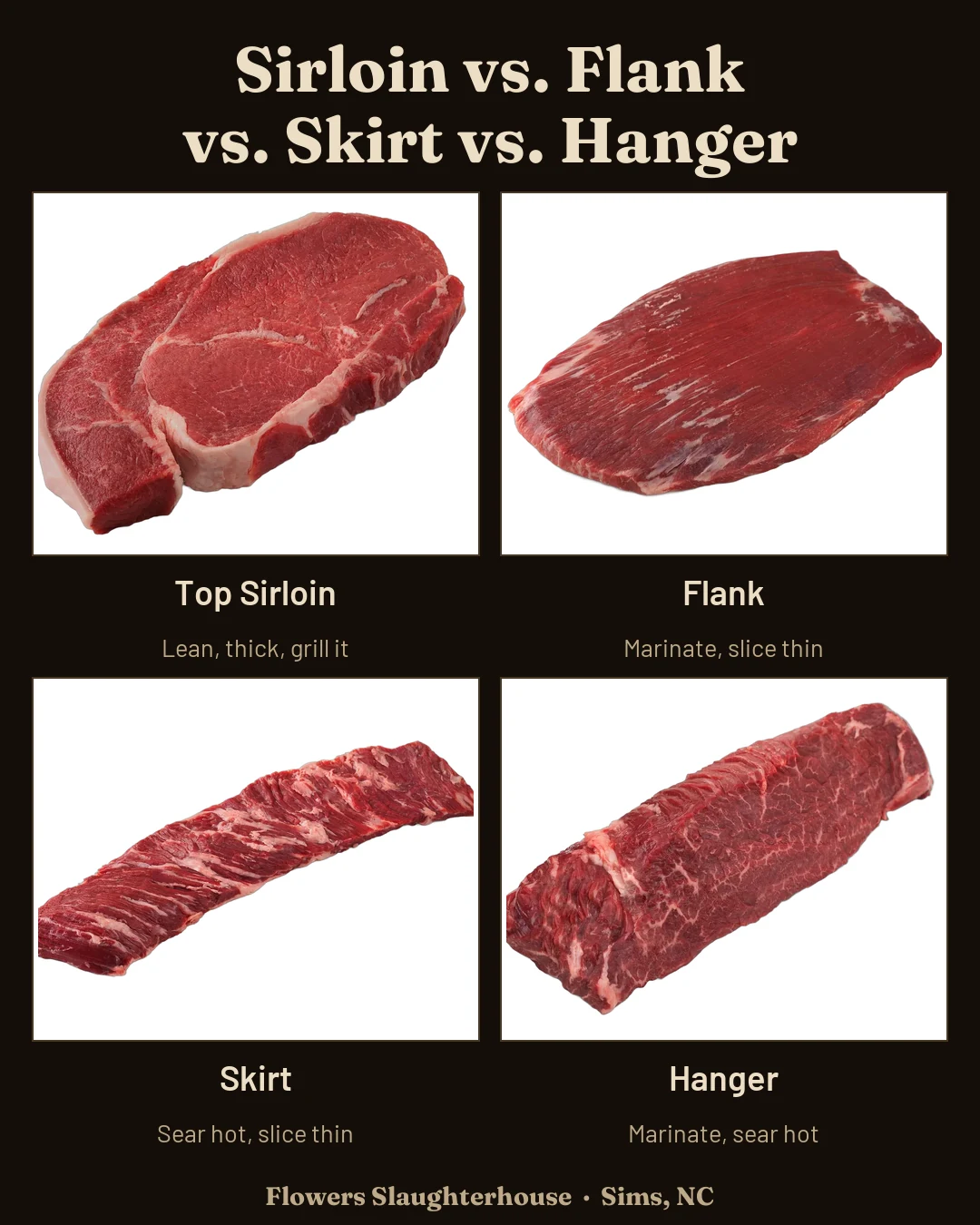

Side by side
| Top sirloin | Flank | Skirt | Hanger | |
|---|---|---|---|---|
| Where it's from | Top of the sirloin [1] | Flank, below the loin [2] | Short plate (diaphragm and inside muscle) [3] | Pillar of the diaphragm [5] |
| IMPS/NAMP number | 1184 | 193 | 121C outside, 121D inside | 140 (hanging tender), 1140 (hanger steak) |
| Shape | Thick, even steak | Wide, flat, even | Long, thin strip | Thick, two lobes with a membrane between |
| Fat | Lean | Lean | Well marbled | Moderate |
| Marinate? | Optional | Yes | Yes | Yes |
| Best cooking | Grill, broil, skillet | Grill, broil, stir-fry | Grill hot, stir-fry | Grill, skillet |
| Slice | Any way | Thin, across the grain | Thin, across the grain | Across the grain |
The IMPS/NAMP numbers are the industry IDs that restaurants and processors use so everyone means the same cut [1]. They're handy if you're comparing a menu or a wholesale price list.
Top sirloin
The sirloin sits behind the short loin and is split into the top sirloin butt and the bottom sirloin butt. The top side gives grilling steaks. The bottom side gives cuts like tri-tip and sirloin bavette [1]. The beef checkoff calls top sirloin "a flavorful cut that's versatile and juicy," good as a steak or cut into kabobs [1]. In stores you'll also see it as "top sirloin butt steak" or "top sirloin center-cut steak."
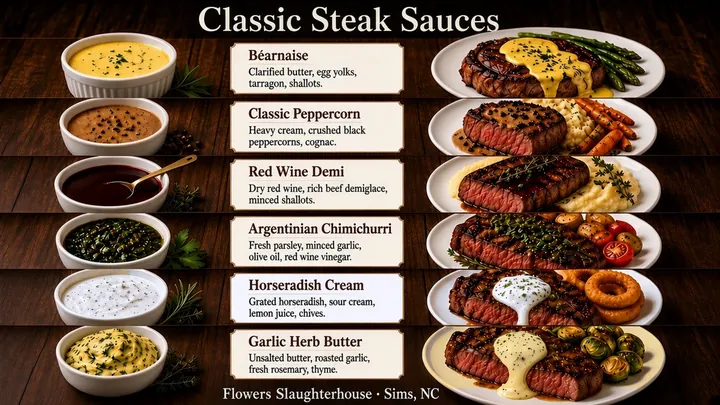
How to cook it: grill or pan-sear it like any steak. Over charcoal, the checkoff's approximate total grill times are 7 to 11 minutes for a ¾-inch steak, 11 to 15 minutes for 1 inch and 22 to 26 minutes for 1½ inches [6]. Because it's lean, it dries out faster than a ribeye if you push it past medium. A garlic herb butter or mushroom sauce helps (see our steak sauces guide).
On a cut sheet: we'd ask for 1 to 1¼ inches thick. Thin sirloin overcooks before it browns.
Flank
The flank sits under the loin. The checkoff describes flank cuts as "lean, very flavorful, and best when braised, or marinated and grilled," and the flank steak itself as "best when marinated and grilled or sliced thin and stir-fried" [2]. Other names include jiffy steak and plank steak. It's the classic London broil cut.
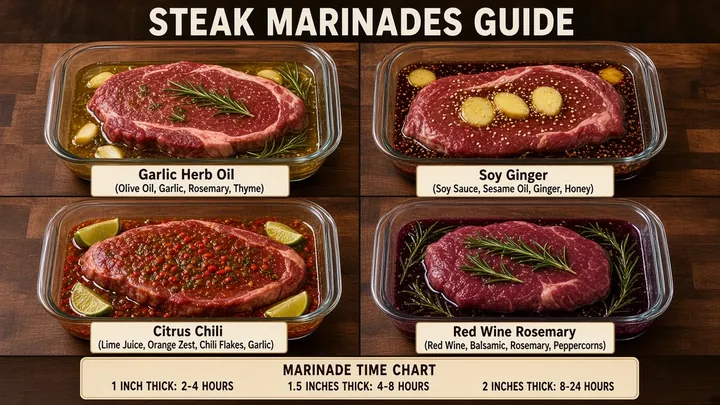
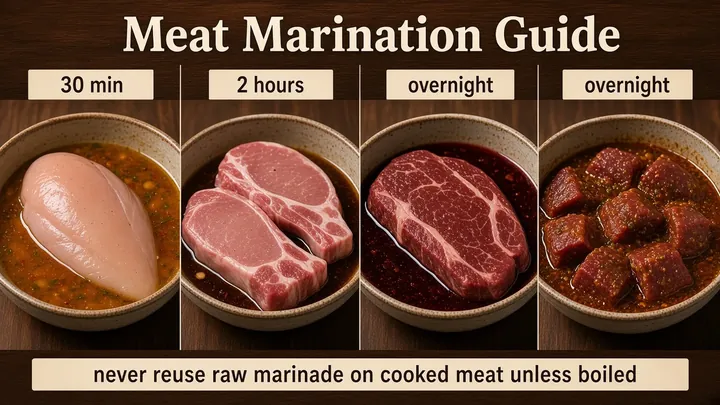
How to cook it: marinate it 6 to 24 hours for tenderizing [7], grill it hot to medium-rare or medium, rest it, then slice it thin on a bias across the grain. The checkoff's butcher's note says slicing against the grain matters "even more so for thin, coarse cuts such as the Flank Steak" [2]. Cut with the grain and it chews like a rubber band.
Skirt
There are two skirt steaks, both from the short plate under the rib. The outside skirt (121C) is the diaphragm muscle [3]. The inside skirt (121D) is a separate muscle, opposite the outside skirt [4]. Both are sold as skirt steak, fajita meat or arrachera, and the checkoff's advice for both is the same: "marinate and grill hot for fajitas or use for stir-fry" [3].
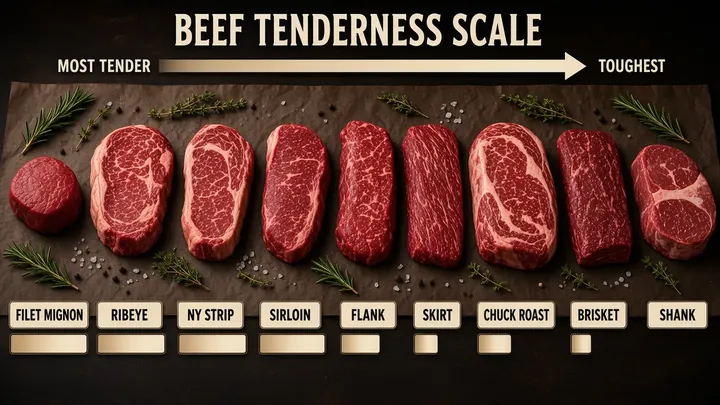
The outside skirt is the better of the two. In a Texas A&M study that measured shear force on 40 beef muscles, the diaphragm (outside skirt) was the single most tender muscle tested [8]. It's also well marbled, which is why it eats so rich for such a thin steak. Our beef tenderness scale shows where it ranks against everything else.
How to cook it: marinate 2 to 6 hours (it's thin, so flavor gets in fast), pat it dry and cook it over the hottest fire you can make. A 1- to 1½-pound skirt takes about 7 to 12 minutes total over charcoal [6]. Cut it into 4- to 6-inch pieces so it fits the grill and the pan, then slice across the grain, which on a skirt runs across the short side.
Hanger
The hanging tender is the pillar of the diaphragm [5]. Trimmed and split, it becomes the hanger steak, which the checkoff describes as "a thicker cut within the Short Plate that's full of flavor with a coarse texture. Marinate and grill" [9].
There's one hanging tender per beef, not one per side, which is why you rarely see a pile of hangers in a grocery case.
How to cook it: the hanger has a tough membrane running down the middle. The checkoff's butcher's note says to remove it to improve tenderness [9], which leaves you two long lobes. Marinate them a few hours, sear hot to medium-rare or medium, rest and slice across the grain. In our experience it eats best at medium-rare to medium.
Which one should you buy?
- A steak dinner on a budget: top sirloin. Season it and grill it like a strip.
- Fajitas and tacos: skirt, then flank.
- Feeding a crowd from one piece: flank. It's even and easy to slice for a platter.
- The best flavor per bite: hanger or outside skirt.
- Stir-fry: flank or skirt, sliced thin before cooking.
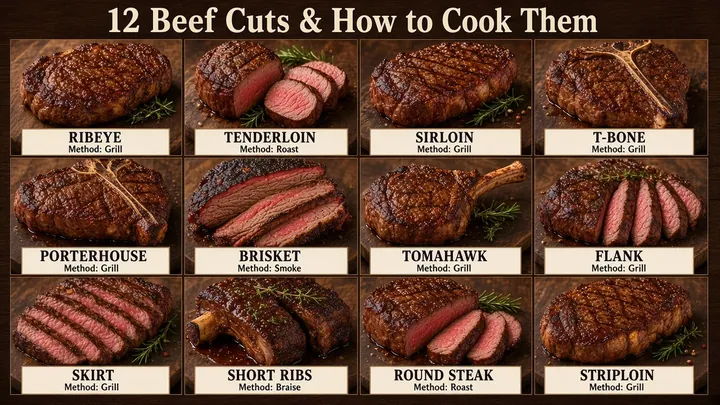
Our twelve beef cuts guide covers more cuts and cooking methods, and the steak marinades guide has nine marinades with times for each of these steaks. Marinating times for other meats are in our marinating times guide.
Safe temperature
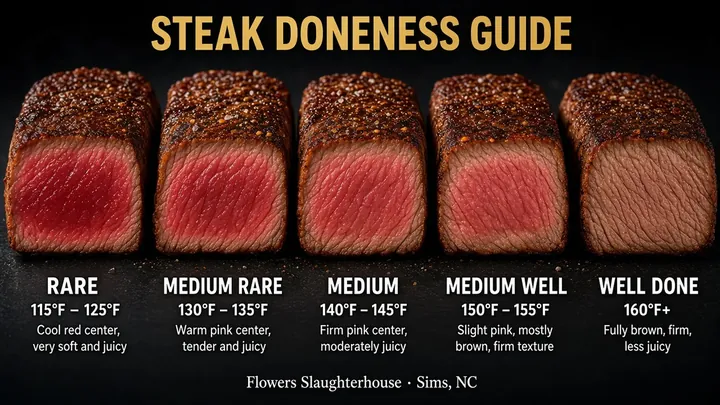
USDA's safe minimum for beef steaks is 145°F with a 3-minute rest [10]. Thin steaks like skirt climb fast, so use an instant-read thermometer in the thickest part. If you've run a steak through a needle tenderizer or used an injector, surface bacteria can be pushed inside, and USDA says to cook mechanically tenderized beef to at least 145°F with a 3-minute rest [11]. Doneness temperatures for each level are in our steak doneness guide.
Frequently asked questions
Is skirt steak the same as flank steak?
No. They're often swapped in recipes, but they come from different parts of the beef. Skirt is from the short plate, and it's thinner, longer and fattier. Flank is from the flank, below the loin, and it's wider, thicker and leaner. Both are marinated, grilled hot and sliced across the grain.
Why is hanger steak hard to find?
There's only one hanging tender per beef, and it's small. That scarcity is why it's often nicknamed the butcher's steak.
Do I need to marinate top sirloin?
No. Top sirloin is tender enough to season and grill. A short marinade of 15 minutes to 2 hours adds flavor if you want it, but it isn't needed for tenderness.
What's the most tender of the four?
The outside skirt. In a Texas A&M study of 40 beef muscles, the diaphragm (outside skirt) was the most tender muscle tested. Top sirloin is tender too. Flank is the chewiest of the four, which is why it's sliced thin.
Getting these cuts on your cut sheet
On a home-raised beef, flank, skirt and hanger are small cuts that are easy to overlook. If you want them as steaks, write them on the cut sheet. If you don't, they make good grind. There's only one hanger per beef, so if you're splitting the animal with someone, decide ahead of time who gets it. Call or text 252-885-1892, see our beef processing page or fill out the beef cut sheet.
Sources
- Top Sirloin Steak — Beef. It's What's For Dinner. (Cattlemen's Beef Board / NCBA)
- Flank Steak — Beef. It's What's For Dinner. (Cattlemen's Beef Board / NCBA)
- Outside Skirt — Beef. It's What's For Dinner. (Cattlemen's Beef Board / NCBA)
- Inside Skirt — Beef. It's What's For Dinner. (Cattlemen's Beef Board / NCBA)
- Hanging Tender — Beef. It's What's For Dinner. (Cattlemen's Beef Board / NCBA)
- Grilling Basics — Beef. It's What's For Dinner. (Cattlemen's Beef Board / NCBA)
- Become a Beef Expert (Marinade Quick Tips) — Beef. It's What's For Dinner. (Cattlemen's Beef Board / NCBA)
- Warner-Bratzler shear evaluations of 40 bovine muscles (Belew, Brooks, McKenna and Savell, Meat Science 64:507–512, 2003) — PubMed / National Library of Medicine
- Hanger Steak — Beef. It's What's For Dinner. (Cattlemen's Beef Board / NCBA)
- Safe Minimum Internal Temperature Chart — USDA Food Safety and Inspection Service
- Mechanically Tenderized Beef — USDA Food Safety and Inspection Service