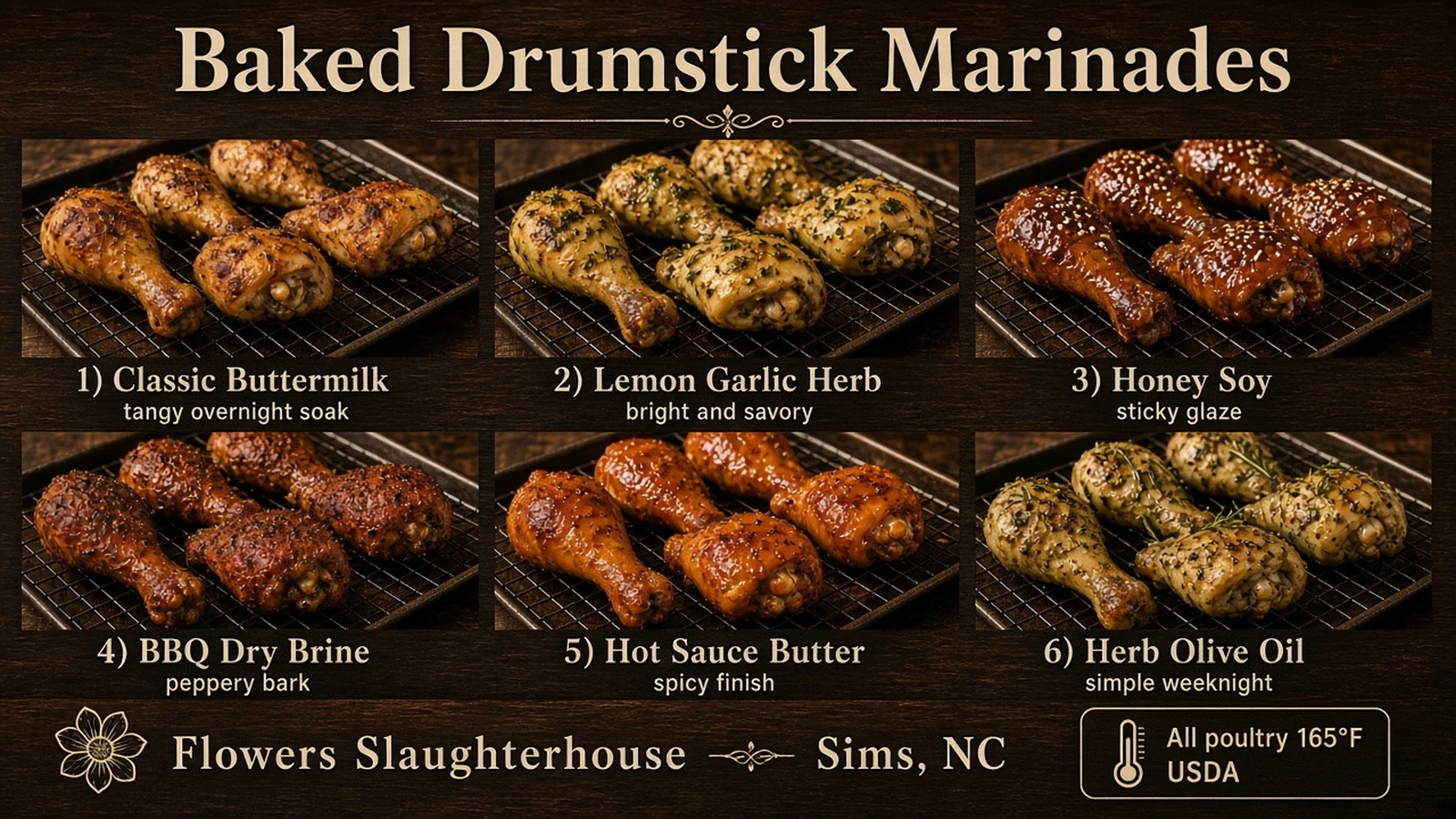
Drumsticks are about the most forgiving cut on the bird. They're dark meat, with more fat and connective tissue than the breast, so they stay juicy in a hot oven and take a marinade well. They're cheap, kids can hold them, and a sheet pan of them feeds a crowd. Below are six marinades we like, the food-safety rules that go with them, and a simple way to bake them.
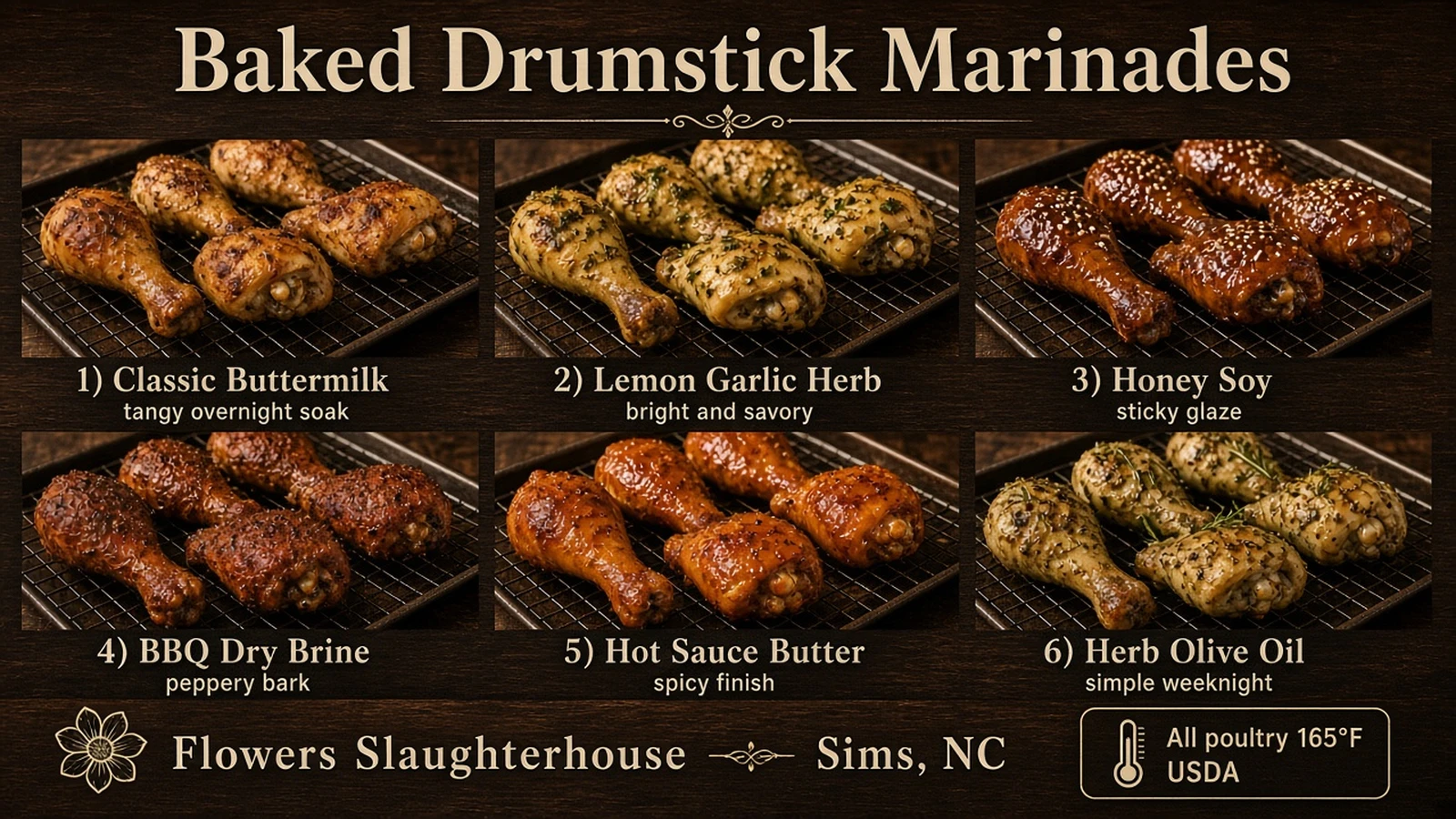
Drumstick marinades at a glance
Each recipe below makes enough for about 3 pounds of drumsticks (10 to 12 legs). The times are our rule of thumb for flavor, not a USDA number. The only USDA limit is the 2-day refrigerator maximum for raw chicken in a marinade [1].
| Marinade | Flavor | Our marinating time | Watch out for |
|---|---|---|---|
| Garlic herb | Bright, savory | 2–12 hours | Lemon can make the skin soft if it sits longer |
| Honey soy ginger | Sweet, salty | 2–12 hours | Honey burns; glaze at the end |
| Eastern NC vinegar barbecue | Tangy, peppery | 4–24 hours | Brush thick sauce on late |
| Buttermilk oven-fried | Mild, crunchy | 4–24 hours | Needs a rack for a crisp bottom |
| Parmesan crust | Cheesy, salty | 30 minutes–4 hours | Don't overcrowd the pan |
| Sweet and sour | Fruity, sticky | 2–12 hours | Sugar scorches fast |
1. Garlic herb
- ¼ cup olive oil
- Juice and zest of 1 lemon
- 6 garlic cloves, minced
- 1 tablespoon chopped fresh rosemary (or 1 teaspoon dried)
- 2 teaspoons fresh thyme leaves
- 2 teaspoons kosher salt
- 1 teaspoon black pepper
This is the everyday one. The oil carries the garlic and herbs into the skin, and the salt seasons the meat. If you leave it overnight, cut the lemon juice in half and add the rest after baking, because acid softens the surface of the meat over long soaks. Bake at 400°F and finish with a little more lemon zest.
2. Honey soy ginger
- ⅓ cup soy sauce
- 3 tablespoons honey
- 2 tablespoons rice vinegar
- 1 tablespoon grated fresh ginger
- 4 garlic cloves, grated
- 1 tablespoon toasted sesame oil
- Red pepper flakes to taste
Pour off and reserve about a quarter of the mix before it touches raw chicken. That clean portion becomes your glaze. Brush it on for the last 10 minutes of baking, and scatter sesame seeds and sliced green onion over the top.
A note for families with babies: honey can cause infant botulism, and the CDC says not to give honey to children younger than 12 months [3]. Leave it out, or swap in brown sugar, if the littlest ones are eating.
3. Eastern NC vinegar barbecue
- ¾ cup cider vinegar
- 2 tablespoons brown sugar
- 1 tablespoon red pepper flakes
- 2 teaspoons kosher salt
- 1 teaspoon black pepper
- ½ teaspoon cayenne
- 2 tablespoons vegetable oil
Around Sims, barbecue sauce means vinegar and pepper, and it works on chicken as well as it does on a hog. This thin sauce doubles as the marinade. Bake the legs plain after marinating, then brush on more of the same sauce (kept separate from the raw-chicken batch) or a thicker tomato-based sauce in the last 10 minutes. Vinegar is acidic, so we keep this one to a day at most for texture.
4. Buttermilk oven-fried
Marinade:
- 2 cups buttermilk
- 1 tablespoon hot sauce
- 2 teaspoons kosher salt
- 1 teaspoon garlic powder
Coating:
- 1½ cups panko or crushed cornflakes
- ½ cup flour
- 1 teaspoon paprika
- 1 teaspoon salt
- ½ teaspoon black pepper
- Oil spray
Buttermilk is mild, so this one can go overnight. Lift each leg out, let the extra drip off, roll it in the coating and set it on a rack over a sheet pan. Spray the tops with oil. Bake at 425°F, turning once. The rack lets hot air reach the bottom, so you get crunch all the way around. Throw out any leftover coating that touched raw chicken. For the deep-fried version and how each flour behaves, see our fried meat coatings guide.
5. Parmesan crust
- ½ cup plain Greek yogurt or mayonnaise
- 1 tablespoon Dijon mustard
- 1 teaspoon garlic powder
- ¾ cup finely grated parmesan
- ½ cup panko
- 1 teaspoon Italian seasoning
- ½ teaspoon black pepper
This is more of a coating than a marinade. Toss the legs in the yogurt and mustard, let them sit while the oven heats, then press them into the cheese and crumb mix. Parmesan is salty, so go light on any added salt. Bake on a rack at 400°F, and leave space between the legs. If they touch, they steam and the crust goes soft.
6. Sweet and sour
- ½ cup pineapple juice
- ¼ cup ketchup
- ¼ cup rice vinegar
- 3 tablespoons brown sugar
- 2 tablespoons soy sauce
- 2 garlic cloves, minced
Reserve a third of it before marinating. After the legs come out of the oven, simmer the reserved portion in a small pan until it's glossy and thick, then toss the hot drumsticks in it. Pineapple juice has an enzyme that softens meat, so don't push this one past half a day.
Marinade safety rules
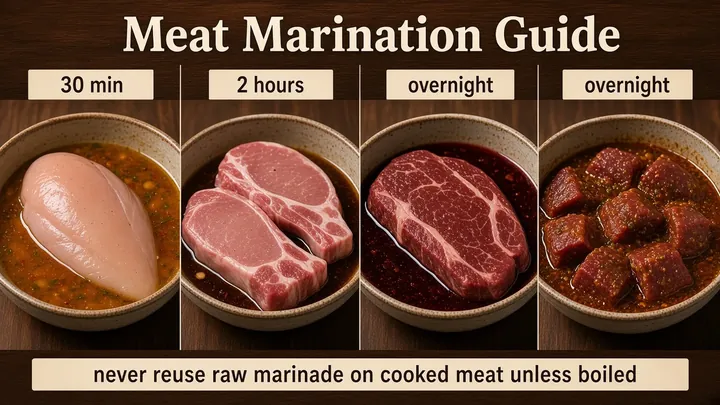
These are the same rules we follow for any meat. Our marination time guide has the full list for every species.
- Marinate in the refrigerator, covered [4]. Never on the counter.
- Two days is the limit for raw chicken in a marinade [1].
- Don't reuse raw marinade as a sauce. FSIS says to bring it to a full boil before brushing it on cooked chicken and to throw out any uncooked leftovers [1]. It's easier to set some aside before the chicken goes in.
- Don't rinse the chicken first. Rinsing doesn't kill bacteria. It just splashes them around the sink [1].
- Wash up after. Hands, board, knife and counter get hot, soapy water once the raw chicken is in the oven [4].
How long to bake chicken drumsticks
FSIS planning times for chicken parts at 350°F [1]:
| Cut | Weight | Roasting at 350°F |
|---|---|---|
| Drumsticks | 4 oz | 35–45 minutes |
| Legs or thighs | 4–8 oz | 40–50 minutes |
| Wings or wingettes | 2–3 oz | 30–40 minutes |
Most people bake drumsticks hotter than that, at 400 to 425°F, for browner, crisper skin. At those temperatures our drumsticks usually land around 35 to 50 minutes, depending on size and how full the pan is. Treat that as a starting point, not a rule.
A few things that help:
- Pat them dry after marinating. Wet skin steams instead of browning.
- Use a rack on a foil-lined sheet pan. Sugar drips and burns on bare foil, and the rack keeps the bottoms from going soggy.
- Turn them once, about halfway.
- Glaze late. Anything with honey, sugar, ketchup or fruit juice goes on for the last 8 to 10 minutes.
Where to check the temperature
Push the probe into the thickest part of the drumstick and stay off the bone, which reads hotter than the meat around it [5]. Check more than one leg, because pieces on the edge of the pan cook faster than the ones in the middle [5].
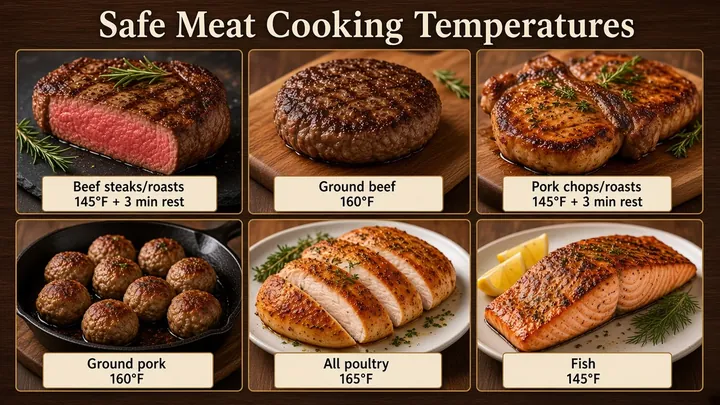
165°F is the safe minimum for all poultry, including legs [2]. FSIS also says you can cook poultry hotter for personal preference [1]. With drumsticks, most people do. Dark meat has more connective tissue, and around 175 to 185°F it pulls cleanly off the bone. That range is our preference for texture. The safety line is still 165°F.
"Why is it red by the bone?"
Two things that worry people and usually shouldn't:
- Dark bones. In young chickens the bones haven't fully hardened, so pigment from the marrow can seep out and turn dark when cooked. FSIS says that's safe to eat [1].
- Pink meat. Fully cooked chicken can stay pink, especially in young birds or meat that was grilled or smoked. Color isn't a test for safety. Only the thermometer is [1].
Cooking drumsticks from frozen
You can bake drumsticks straight from the freezer. FSIS says chicken can be cooked from frozen in the oven or on the stove, and that it takes about 50 percent longer [1]. Frozen legs won't take a marinade, though, so season them after they've thawed on the surface or brush on a glaze at the end. Don't put frozen chicken in a slow cooker [1]. If you're short on time, our Instant Pot chicken times cover drumsticks under pressure.
Storing leftovers
Get leftovers into the refrigerator within 2 hours. Eat them within 3 to 4 days, or freeze them for up to about 4 months for best quality [1]. Reheat to 165°F [2]. A hot oven or air fryer brings the skin back better than a microwave.
Frequently asked questions
How long should I marinate chicken drumsticks?
For flavor, 2 to 12 hours is plenty for most marinades, and mild buttermilk can go up to a day. Keep them in the refrigerator, and don't go past 2 days, which is USDA's limit for raw chicken in a marinade.
What temperature should baked drumsticks reach?
At least 165°F in the thickest part, away from the bone. That's the safe minimum for all poultry. Many cooks take drumsticks to 175–185°F because dark meat gets more tender there.
How long do drumsticks take at 400°F?
Usually about 35 to 50 minutes, depending on size and how crowded the pan is. FSIS lists 35 to 45 minutes at 350°F for 4-ounce drumsticks. Always check with a thermometer.
Can I use the leftover marinade as a sauce?
Only if you bring it to a full boil first. Otherwise throw it out. It's simpler to set aside some clean marinade before the raw chicken goes in.
More from the Meat Library
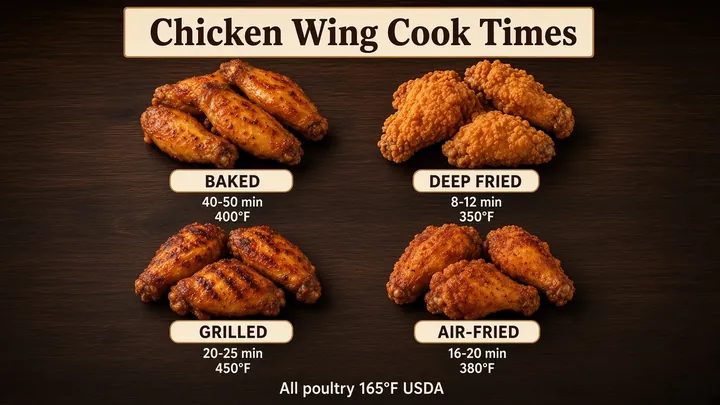
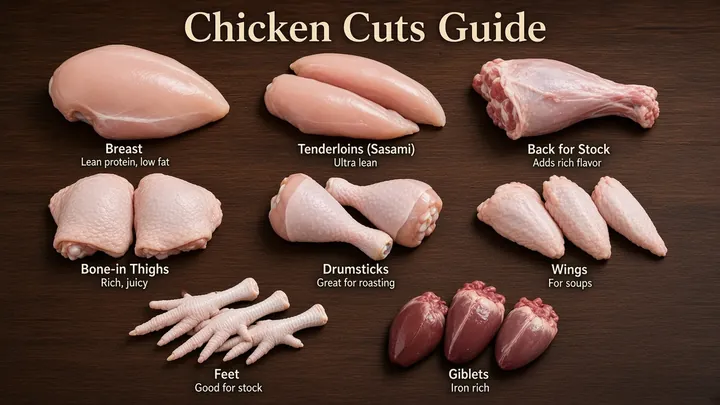
For how a whole bird breaks down into drumsticks, thighs and wings, see our chicken cuts guide. Wing times by method are in our chicken wing cook times guide, and every species is on one page in our safe meat cooking temperatures chart. If you keep a flock and want to talk about processing, call or text 252-885-1892 or check our chicken and poultry page for what we currently offer.
Sources
- Chicken from Farm to Table — USDA Food Safety and Inspection Service
- Safe Minimum Internal Temperature Chart — USDA Food Safety and Inspection Service
- Foods and Drinks to Avoid or Limit — Centers for Disease Control and Prevention
- Keep Food Safe! Food Safety Basics — USDA Food Safety and Inspection Service
- Food Thermometers — USDA Food Safety and Inspection Service