We break beef down every week, and most of our customers see their beef as a full freezer, not a few steaks from the store. This guide goes through the carcass one primal at a time: the retail cuts each one gives you, the best way to cook them, and what to put on your cut sheet.

The beef primals at a glance
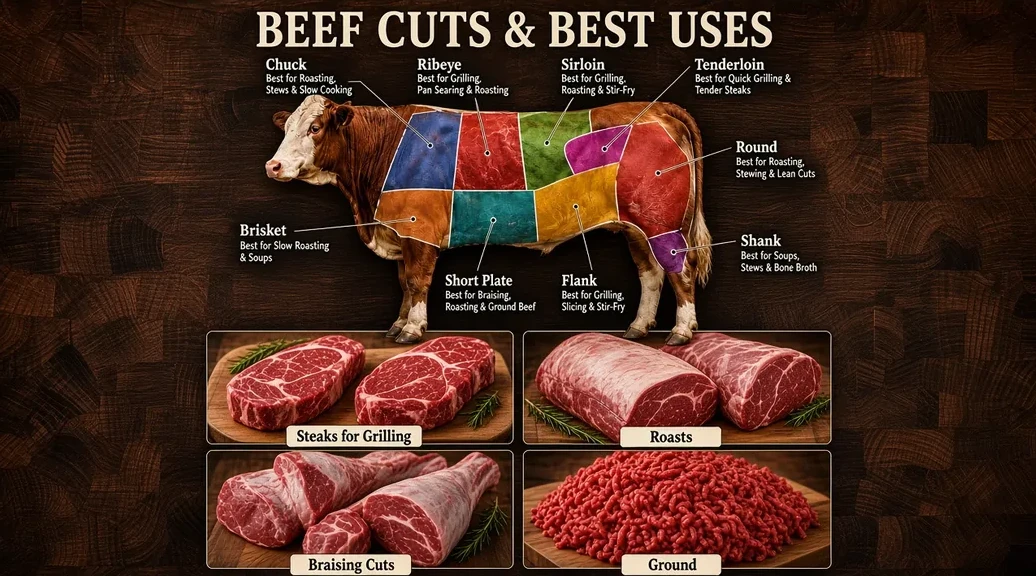
USDA names four basic primals: chuck, loin, rib and round [1]. In the cutting room we also separate out the brisket, plate, flank and shank, and we split the loin into short loin and sirloin, because each one goes to different cuts. Here's the map:
| Primal | Where it is | Common retail cuts | Best cooking methods |
|---|---|---|---|
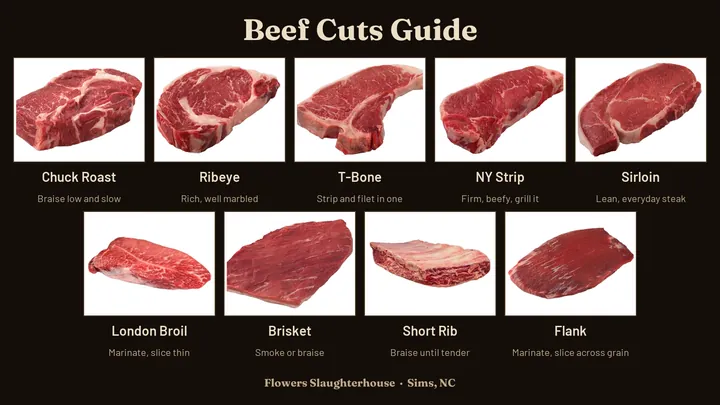
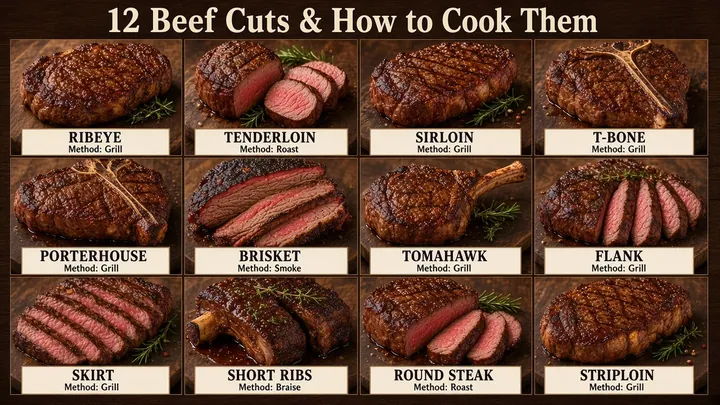
| Chuck | Shoulder and neck | Chuck roast, chuck eye steak, Denver steak, flat iron, chuck short ribs, stew meat, ground beef | Braise, slow-cook, pot roast; a few steaks can be grilled |
| Rib | Ribs 6–12, upper back | Ribeye steak, bone-in rib roast (prime rib), back ribs | Grill, broil, pan-sear, roast |
| Short loin | Middle of the back | Strip steak, T-bone, porterhouse, tenderloin (filet) | Grill, broil, pan-sear |
| Sirloin | Behind the short loin | Top sirloin steak, tri-tip, sirloin roasts | Grill, roast |
| Round | Hind leg | Top round, bottom round, eye of round, sirloin tip, cube steak, jerky meat | Roast and slice thin, braise, marinate |
| Brisket | Lower chest | Whole brisket, flat ("first cut"), point | Smoke, braise, oven-roast low |
| Plate | Belly, below the rib | Skirt steak, plate short ribs | Skirt: hot and fast; ribs: braise or smoke |
| Flank | Belly, below the loin | Flank steak | Marinate and grill, or braise |
| Shank | Front and rear legs | Shank cross-cuts, soup bones | Simmer, braise, stock |
Chuck: lots of flavor, needs time
The chuck is the shoulder. It does a lot of work, so it has plenty of connective tissue and plenty of flavor. That's where pot roast, stew meat and much of your ground beef come from. Cooked low and slow in liquid, it gets tender. FSIS times a 3- to 4-pound chuck roast at about 1½ to 2½ hours braised at 325°F [1].
The chuck also has a few steaks worth knowing. The beef checkoff calls the chuck eye steak a lower-cost alternative to the ribeye that's good on the grill, and says the Denver steak, from the center of the under blade, is tender and best over high heat [2]. Chuck short ribs get moist and tender with slow cooking [2].
Rib: the ribeye and prime rib
The rib primal gets very little work and has a lot of marbling. USDA notes that marbling makes beef more tender, flavorful and juicy [1]. You can cut it into ribeye steaks (bone-in or boneless) or leave it whole as a rib roast. Keep in mind that every roast you leave whole means fewer ribeye steaks. Back ribs come off when the ribeye is boned out, and the checkoff calls them beef's signature BBQ rib, good with a dry rub on the grill [2].
Short loin and sirloin: the steak section
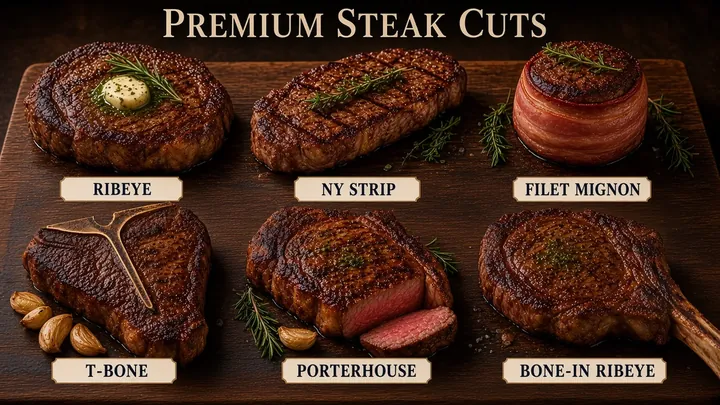
The short loin is where the strip steak, T-bone and porterhouse come from. It's also home to the tenderloin, the most tender muscle on the animal. A T-bone and a porterhouse are both a piece of strip and a piece of tenderloin on the same bone. The porterhouse is cut where the tenderloin is bigger. On your cut sheet you'll usually decide between T-bones/porterhouses and boneless strips plus a whole tenderloin. You can't get both from the same side.
The sirloin sits behind the short loin. It gives you top sirloin steaks and the tri-tip, a small triangular roast that's good grilled or roasted and sliced across the grain.
Names change from region to region. FSIS points out that one boneless top loin steak may be sold as a strip, Kansas City, New York strip, hotel-cut, ambassador or club sirloin steak [1]. If a name on your cut sheet doesn't make sense to you, ask.
Round: lean, cheap, slice it thin
The round is the hind leg. It's big and lean. The checkoff calls the bottom round roast a great value and very lean, best roasted or slow-cooked and sliced thin [2]. Round steaks do well marinated. Eye of round makes good roast beef or jerky. A lot of round goes to cube steak or ground beef, depending on what your family eats. FSIS times a 2½- to 4-pound round or rump roast at 30–35 minutes per pound at 325°F [1].
Brisket, plate and flank: the underside
- Brisket is the chest muscle, with a lean flat (the checkoff calls it the "first cut") and a fattier point [2]. Smoke it or braise it. FSIS times a 3- to 4-pound braised brisket at about 1½ to 2½ hours at 325°F [1]. A smoked whole brisket takes a lot longer.
- Plate gives skirt steak and plate short ribs. Cook skirt hot and fast and slice it across the grain. Short ribs need a long braise or smoke.
- Flank sits below the loin. The checkoff describes flank cuts as lean and very flavorful, best braised, or marinated and grilled [3].
Shank: soup and stock
The shank is all working muscle and connective tissue. Cross-cut shanks and soup bones belong in a pot. FSIS lists stew meat and cross-cuts at 2 to 3 hours covered with liquid and simmered [1]. Many customers put the shank into ground beef. Others keep a few packs for vegetable beef soup in the winter.
How much of each cut you'll get from one beef
Most customers are surprised by how small a share of the animal ends up as steak. Using South Dakota State University Extension's example, a 1,200-pound steer with average muscling gives roughly a 750-pound carcass. That carcass gives about 490 pounds of boneless, trimmed beef, which is about 40% of live weight [4]. SDSU breaks it out like this:
| Category | Approx. pounds (from a 750-lb carcass) |
|---|---|
| Lean trim / ground beef | 185 lb |
| Chuck roasts and steaks | 90 lb |
| Round roasts and steaks | 85 lb |
| Rib and loin steaks | 80 lb |
| Other (brisket, flank, short ribs, skirt) | 50 lb |
Source: SDSU Extension [4].
By SDSU's numbers, you might get about 18 pounds of strip steaks and 9 pounds of tenderloin, plus two tri-tips of about 1½ pounds each [4]. That explains why filet costs what it does. Your numbers will vary with the animal's fat, muscling, and how much you have boned out.
Using this guide on your cut sheet
With the primals in mind, the beef cut sheet is easier to fill out. The main choices:
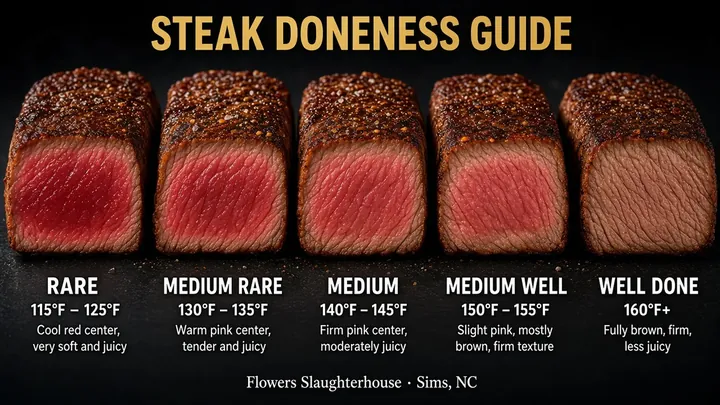
- Steak thickness. Thicker steaks are easier to cook to the doneness you want. See our steak doneness guide.
- Bone-in or boneless. T-bones and porterhouses, or strips and a whole tenderloin. Bone-in or boneless ribeyes.
- Roasts or ground. Each chuck and round roast you keep is that much less ground beef.
- Brisket, short ribs, flank and skirt. Keep them whole, or send them to the grinder.
- Soup bones, organs and extras. Shank, oxtail, heart, liver and tongue, if you want them.
The beef cut sheet goes through these in order, and our glossary defines terms like hanging weight.
Safe temperatures by cut
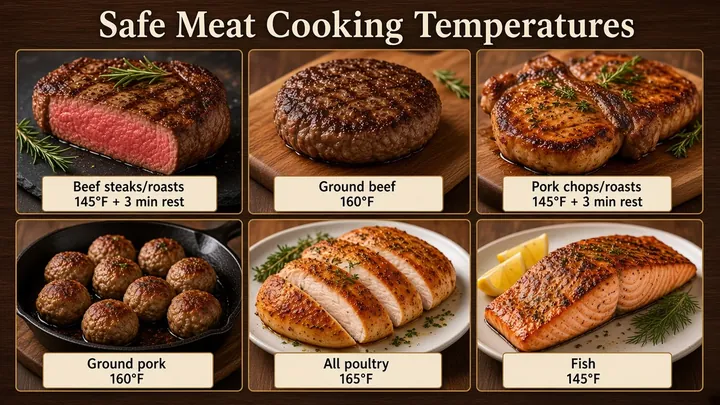
Whatever cut you choose, the USDA safe minimums are the same: 145°F with a 3-minute rest for steaks and roasts, and 160°F for ground beef [5]. Braised and smoked cuts like chuck, brisket and short ribs go well past those numbers. They're cooked until tender, not to a target temperature. Our safe cooking temperatures chart covers every species.
Frequently asked questions
What are the four basic beef primals?
USDA lists chuck, loin, rib and round as the four basic primal cuts [1]. Processors usually separate out brisket, plate, flank and shank too.
Which beef cuts are best for grilling?
Rib and loin cuts like ribeye, strip, T-bone, porterhouse, tenderloin and top sirloin. USDA says loin and rib cuts can be cooked with dry heat such as broiling or grilling [1]. Flank and skirt also grill well if you marinate them and slice thin.
How much meat comes from a whole beef?
SDSU Extension estimates about 490 pounds of boneless, trimmed beef from a 1,200-pound steer, roughly 40% of live weight [4]. Bone-in cuts make the take-home weight higher.
Should I age beef in my home refrigerator?
No. FSIS says aging takes 10 days to 6 weeks under controlled conditions and doesn't recommend doing it in a home fridge [1]. The beef checkoff describes commercial wet aging at 32–34°F for up to 3 weeks and dry aging for up to 4 weeks [6].
Bring us a beef
If you're raising a steer or splitting one with neighbors, we'll go over the cut sheet with you before the cutting starts. Call or text 252-885-1892, read through our beef page, or book a processing date. Flowers Slaughterhouse, 5154 St. Rose Church Rd, Sims, NC 27880.
Sources
- Beef From Farm to Table — USDA Food Safety and Inspection Service
- Cuts — Beef. It's What's For Dinner. (Cattlemen's Beef Board / NCBA)
- Flank Primal — Beef. It's What's For Dinner. (Cattlemen's Beef Board / NCBA)
- How Much Meat Can You Expect from a Fed Steer? — South Dakota State University Extension
- Safe Minimum Internal Temperature Chart — USDA Food Safety and Inspection Service
- Become a Beef Expert — Beef. It's What's For Dinner. (Cattlemen's Beef Board / NCBA)