Goat meat is called chevon (from the French for goat) or cabrito when it's from a young kid. FSIS notes that demand for goat has grown in parts of the Southeast, and goat is often the centerpiece at holidays and family gatherings [1]. This guide is for goat raisers, curry and barbecue cooks, and anyone who's bought a goat and wants to know what to do with each cut.

Kid vs. older goat: why age matters
Goat meat varies more by age than most meats. FSIS explains [1]:
- Kids (under a year) are often slaughtered at 3 to 5 months and 25 to 50 pounds. They don't carry much body fat until about a year old.
- Meat from older goats is darker and less tender, but juicier and more flavorful.
- Females (does) are usually more tender for steaks and chops. Meat from males tends to be lighter in color and lower in fat.
- Goat meat isn't graded. There are no USDA quality or yield grades for goat [1].
That leads to a simple rule. Kid goat cooks like lamb: chops, leg, rack, crown roast and kebabs all work [1]. Adult goat is almost always stewed. FSIS says it's tough cooked fast, but flavorful and tender in a stew [1].
Goat is also very lean. A goat carcass rarely has much fat to protect it from drying out [1]. Alabama Extension lists a 3.5-ounce serving of roasted goat at 143 calories, 27 grams of protein and 3 grams of fat [2]. That leanness is the reason high heat and long cooking times both dry goat out quickly.
Goat cuts at a glance
| Primal | Common cuts | Tenderness | Best methods |
|---|---|---|---|
| Neck | Neck slices, bone-in neck | Tough | Stew, curry, braise |
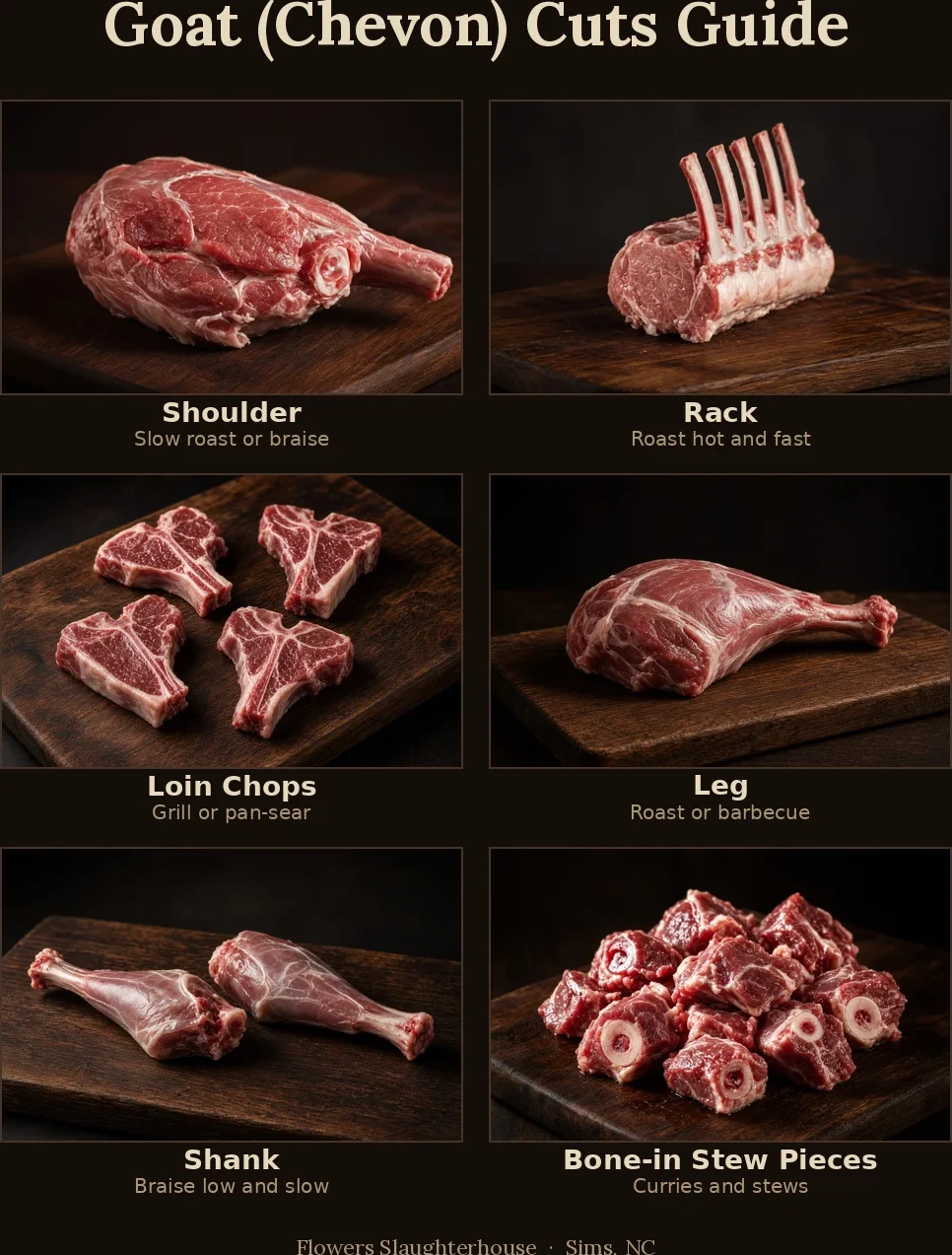
| Shoulder | Shoulder roast, arm and blade chops, bone-in cubes, stew meat | Tough to medium | Braise, stew, slow roast, curry |
| Rack (rib) | Rack of goat, rib chops | Tender | Grill, broil, pan-sear, roast hot |
| Loin | Loin chops, saddle, boneless loin, tenderloin | Most tender | Grill, broil, pan-sear |
| Leg | Whole leg, butterflied leg, leg steaks, sirloin chops | Medium | Roast, grill butterflied, braise |
| Shank | Fore and hind shanks | Tough | Braise |
| Breast / flap | Breast, riblets | Tough, fatty for goat | Braise, slow smoke, ground |
| Trim | Ground goat, sausage | — | Burgers, kebabs, meatballs (160°F) |
Alabama Extension lists the ribs, loin, leg and hind shank as the main cuts and says the rib, loin and leg are best grilled or fried, while shanks do well braised, roasted or stewed [2].
Neck and shoulder: curry and stew meat
The front of the goat does the most work, so it has the most connective tissue. It's also where a lot of the best goat dishes start.
- Neck is bony and full of collagen. Cut into slices, it's ideal for curry and soup.
- Shoulder can stay whole as a roast or be cut into arm and blade chops. Most goat shoulder ends up as bone-in cubes for curry goat, stews and barbecue. The bone adds flavor and body to the sauce.
FSIS says less tender goat cuts should be braised (roasted or simmered in a small amount of liquid in a tightly covered pan) or stewed [1]. For an older goat, plan on 2 hours or more at a low simmer.
Rack and loin: the chops
The middle of the back is the tenderest part of a goat.
- Rack of goat is the rib section. Leave it whole as a roast, "french" the bones for presentation, or cut it into rib chops.
- Loin chops are the little T-bones from behind the rack. Cut across both sides of the backbone together, they're saddle chops.
- Goat tenderloin is tiny on a goat. It's a few bites per side. Most customers leave it in the loin chops.
These cuts want dry heat: grilling, broiling or a hot pan. The Nebraska Sheep and Goat Producers' cooking guide says high-heat dry methods work best for tender goat cuts, and it suggests searing chops and rack first, then finishing them in a moderate oven [3]. Because goat is so lean, pull chops at 145°F, rest them 3 minutes, and don't walk away from the grill.
Leg: roasts, steaks and kebabs
The leg is the largest primal and the most versatile.
- Whole leg, bone-in, roasted low to moderate. The Nebraska guide says goat leg is best roasted at low to moderate temperatures for less shrinkage and better yield [3].
- Butterflied leg, boned and opened flat so it cooks evenly on a grill. It's a good way to feed a crowd [3].
- Leg steaks and sirloin chops, cut across the leg for grilling or pan-frying.
- Kebab cubes from the leg hold together better on a skewer than shoulder meat.
A leg from an older goat is better braised or cubed for stew.
Shanks, breast and ground goat
- Shanks are the lower legs. Like lamb shanks, they need a long braise until the meat pulls off the bone.
- Breast and flap (the belly) are thin and carry what little fat a goat has. Braise them, smoke them low, or send them to the grinder.
- Ground goat makes good burgers, kofta and meatballs. It must reach 160°F [1]. Because goat is lean, some cooks have a little fat added at grinding. Talk to us about what's possible before you fill out the sheet.
Whole goat for a cookout
A whole kid goat on a spit or in a pit is a tradition at a lot of gatherings. The Nebraska guide lists whole goat and leg of goat as good rotisserie choices because of their even, cylindrical shape [3]. Whatever the method, check the thickest part of the leg and shoulder with a thermometer. Those are the last parts to get done.
Goat safe cooking temperatures
| What you're cooking | Safe minimum | Rest |
|---|---|---|
| Goat steaks, chops, roasts | 145°F (62.8°C) | 3 minutes [1] |
| Ground goat | 160°F (71.1°C) | — [1] |
| Leftovers, reheated curry and stew | 165°F (73.9°C) | — [4] |
Stewed and braised goat will be far past 145°F by the time it's tender. The safe numbers matter most for chops, rack and roasted leg, where you're trying not to overcook. The FSIS numbers match the FoodSafety.gov chart [5].
Storing goat meat
FSIS handling guidance for goat [1]:
| Cut | Refrigerator (40°F) | Freezer (0°F), best quality |
|---|---|---|
| Ground or cubed goat (stew meat) | 1–2 days | 4 months (ground: 3–4 months) |
| Chops, steaks, legs, loins | 3–5 days | 6–9 months |
Frozen goat stays safe indefinitely. The freezer time is about quality. If you'll keep it more than 2 months, overwrap store packaging [1]. Vacuum-sealed packages from a processor already hold up well. Thaw goat in the refrigerator, or in cold water changed every 30 minutes, never on the counter [1].
Planning a goat cut sheet
Goats are small, so every choice takes something away from something else. A few questions to settle before drop-off:
- What will you cook most? If it's curry, cubing most of the shoulder, neck and breast bone-in makes sense. If you grill, keep the rack and loin as chops.
- Chops or roasts? Rack whole or cut into chops? Loin chops single or as saddle chops?
- Leg: Whole, halved, butterflied, steaks, or cubed for kebabs?
- Ground: How much trim to grind, and how you want it packaged.
- Extras: Do you want the head, feet or organs back? Write it down. Unlisted items usually don't come home.
- Package size: Goat portions are small, so tell us how many people you usually feed.
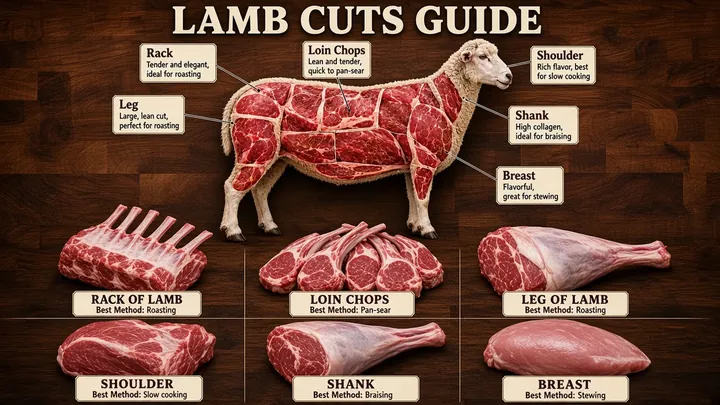
Goats and lambs cut along almost the same lines, so our lamb cuts guide is a useful companion. The lamb and goat cut sheet covers both.
Frequently asked questions
What is chevon?
Chevon is another name for goat meat, especially from goats around a year old or younger. Cabrito usually means meat from a very young kid.
What is the most tender cut of goat?
The loin, followed by the rack (rib chops). Both are best cooked quickly with dry heat and pulled at 145°F.
What temperature should goat meat be cooked to?
USDA says 145°F with a 3-minute rest for goat steaks, chops and roasts, and 160°F for ground goat.
Why is my goat meat tough?
Usually it's an older animal cooked too fast, or a lean cut cooked too long. FSIS says meat from adult goats is tougher and does best stewed. Kid goat chops and leg can be grilled or roasted like lamb.
Bringing us a goat
We process lamb, sheep and goat as custom work. The meat is cut to your sheet and returned to you for your household, not for sale. Call before you bring anything other than beef, pork or deer so we can set a date. Call or text 252-885-1892, fill out the lamb and goat cut sheet, or see our lamb, goat and specialty page for details.
Sources
- Goat From Farm to Table — USDA Food Safety and Inspection Service
- Goat: New Year, New Meat! — Alabama Cooperative Extension System
- USDA Tips for Cooking Goat — Nebraska Sheep and Goat Producers Association
- Safe Minimum Internal Temperature Chart — USDA Food Safety and Inspection Service
- Safe Minimum Internal Temperatures — FoodSafety.gov