Duck shows up two ways in eastern North Carolina: as a frozen Pekin from the grocery store, and as a wood duck or mallard in a hunter's cooler. This guide covers both. It starts with the parts of the bird, then how to cook each one, then how to break a whole duck down yourself.

Duck anatomy at a glance
| Part | What it is | Best ways to cook it |
|---|---|---|
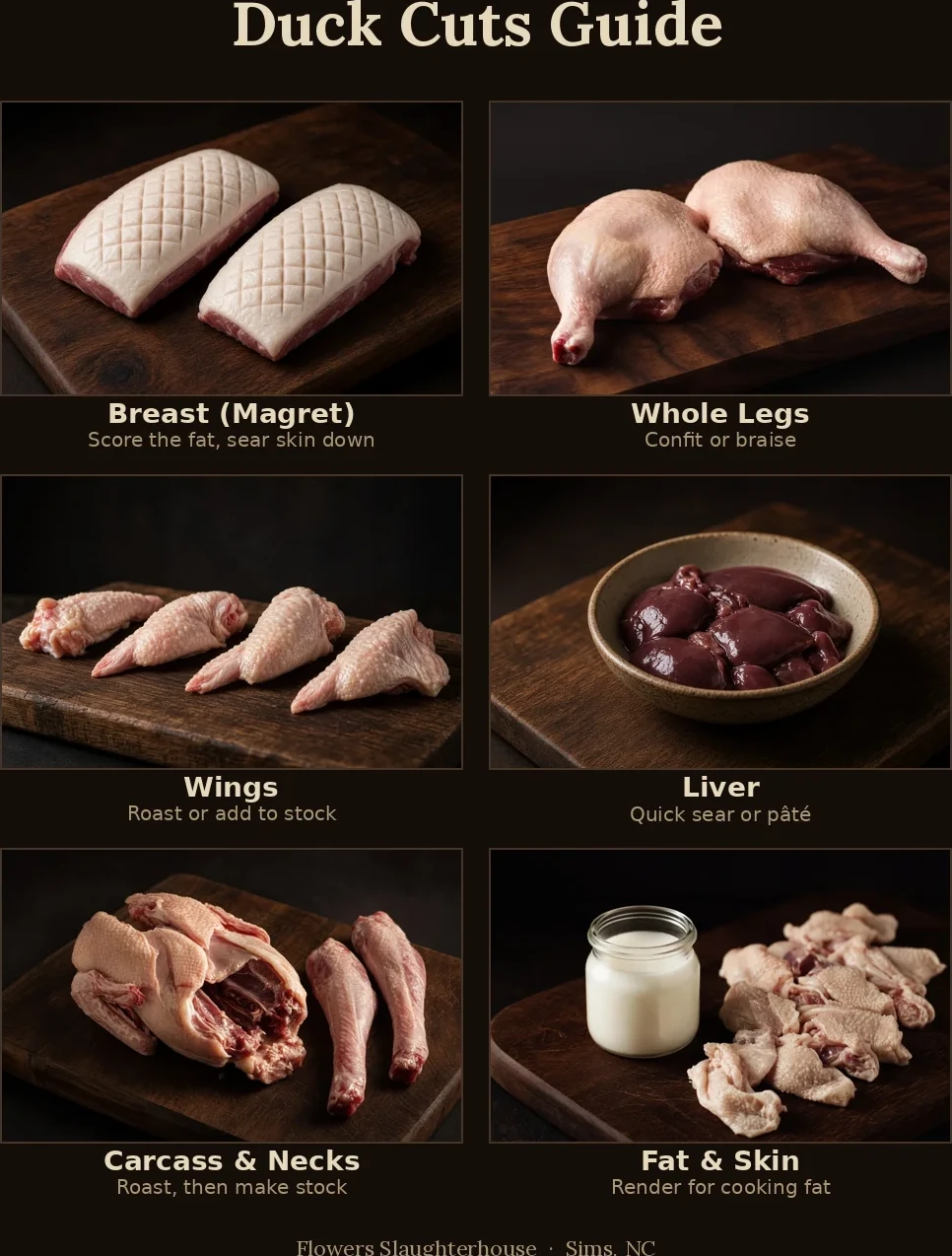
| Breast | The big muscle on each side of the keel bone, with a thick fat cap | Score the skin, render skin-side down, finish in the oven or on the grill |
| Tenderloin | Small strip under each breast half | Quick sear, or leave on the breast |
| Thigh | Upper leg, the meatiest dark cut | Roast, braise, confit, smoke |
| Drumstick | Lower leg | Braise, confit, smoke |
| Wing (drumette, wingette, tip) | Not much meat on a duck | Roast for snacks, or use for stock |
| Neck and back | Mostly bone and skin | Stock, gravy, rendering |
| Giblets (heart, gizzard, liver) | Packed with whole birds | Simmer the heart and gizzard. Sauté the liver |
| Feet and tongues | Specialty items | Braised or steamed in many Asian cuisines |
| Fat and skin | The layer under the skin | Render for cooking fat. Crisp the skin |
FSIS lists the retail forms you're most likely to see: whole duckling with giblets and neck; bone-in parts such as whole legs, breast quarters and breasts; boneless breast with or without skin; giblets; tongues and feet; and processed products such as smoked breast and sausage [1].
Why duck is dark meat all the way through
FSIS counts duck as poultry and calls it "white" meat for nutrition purposes. But ducks fly, and flight muscles need oxygen. The protein that holds oxygen in muscle, myoglobin, also makes the meat darker, so a duck breast is much darker than a chicken or turkey breast and stronger in flavor than even chicken leg meat [1].
The fat layer
Ducks swim, and a layer of fat under the skin keeps them afloat. That fat isn't marbled into the meat, so it pulls off easily if you're deboning. On a whole bird, FSIS says to prick the skin all over so the fat can render out. The bird isn't done until that layer has melted away [1]. Save what renders into the pan. Strained and refrigerated, duck fat is one of the best things there is for roasting potatoes.
What the labels mean
FSIS classes for domestic ducks [1]:
- Broiler or fryer duckling: usually under 8 weeks, 3 to 6½ pounds, tender with a soft bill.
- Roaster duckling: usually under 16 weeks, 4 to 7½ pounds, still tender.
- Mature or old duck: over about 6 months, tougher meat, mostly used in processed products.
Most U.S. ducks are White Pekin, a breed that came over from China in 1873 [1]. All ducks and geese sold are federally or state inspected. Grade A is the top grade you'll see in a store [1]. Plan on 1 to 1½ pounds of raw whole duck per person [1].
Cooking times by cut
FSIS's planning chart for duckling [1]:
| Cut | Roast | Grill (direct) | Smoke (indirect) | Braise |
|---|---|---|---|---|
| Whole duckling, 4–6 lb (don't stuff) | 30–35 min/lb at 350°F | Not preferred | About 2½ hours | Not preferred |
| Breast | Brown skin-side down in a skillet over medium heat, then 12 minutes in a 425°F oven | Skin-side down 6 min, turn, 7–8 min more | 1–2 hours | 60–75 minutes |
| Legs or thighs | 1¼–1½ hours at 325°F | 30 minutes, turning every 5 | 1½–2 hours | 1½ hours |
The times are for planning. The thermometer decides when it's done.
Duck breast and the 165°F question
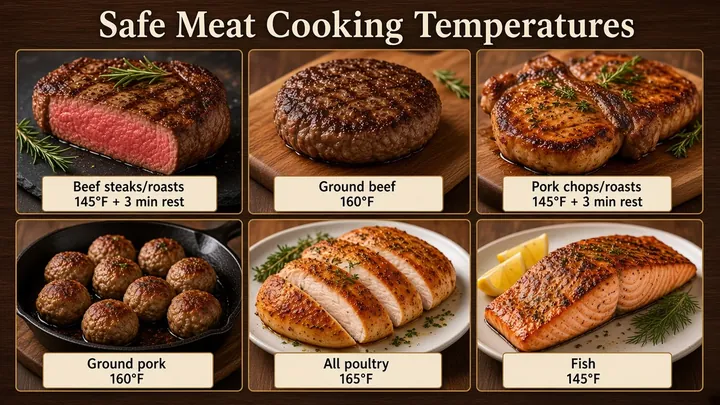
Restaurants often serve duck breast pink, closer to a medium-rare steak than to roast chicken. We want to be straight with you: USDA's safe minimum for duck, like all poultry, is 165°F, for the breast, legs, thighs and wings alike [1]. FSIS also notes that cooked duck can still look pink in the center at 165°F because of the cooking method or ingredients, and that's safe [1]. So a rosy-looking breast isn't automatically undercooked. Check it with a thermometer.
For a whole duck, check three spots: the innermost part of the thigh, the innermost part of the wing and the thickest part of the breast [1]. Keep the probe off the bone [3].
How to cook each part
Breast. Score the skin in a crosshatch without cutting into the meat. Start skin-side down in a cold or medium-hot pan and let the fat render slowly until the skin is thin and crisp. Pour off the fat as it builds up. Flip, then finish in a 425°F oven, as FSIS suggests, until the thickest part reads 165°F [1]. Rest a few minutes and slice.
Legs and thighs. These have the most connective tissue. They're best braised, smoked or cooked slowly in their own fat (confit) until the meat pulls away from the bone.
Wings. There isn't much meat on them. Roast them crisp for a snack, or put them in the stockpot.
Neck, back and wing tips. Roast them, then simmer for stock. Duck stock makes a rich gravy and a good base for rice.
Giblets. Simmer the heart and gizzard until tender. Liver cooks fast, so sauté it quickly. Giblets need 165°F too [2].
How to break down a whole duck
Buying a whole duck and cutting it up yourself gets you two breasts, two legs, a stockpot's worth of bones and a jar of fat for the price of the bird.
- Thaw the duck in the refrigerator, take out the neck and giblets, and pat the bird dry.
- Pull each wing away from the body and cut through the shoulder joint to remove it.
- Pull a leg away from the body, slice through the skin between the leg and breast, and bend the leg back until the hip joint pops. Cut through the joint and along the backbone to take the whole leg off, keeping the "oyster" of meat on the back attached. Repeat on the other side.
- Run your knife down one side of the breastbone, keeping the blade against the bone, and peel the breast away from the ribs in one piece with its skin and fat cap. Repeat on the other side. The tenderloin stays tucked underneath.
- Trim any loose skin and fat from the carcass and save it to render.
- Put the carcass, neck and wing tips in a pot for stock.
Keep raw duck and its juices away from other food, and wash your hands, board and knife in hot, soapy water when you're done.
Thawing and storage
FSIS guidance [1]:
- Thawing: in the refrigerator, a whole duck takes 1 to 2 days or longer and parts about a day. In cold water, a 3- to 4-pound duck takes 2 to 3 hours. Keep it sealed and change the water every 30 minutes. Never thaw on the counter.
- Fresh duck or giblets: 1 to 2 days in the refrigerator, or up to 6 months frozen for best quality.
- Cooked duck: 3 to 4 days in the refrigerator, or 2 to 3 months frozen.
- Marinating: in the refrigerator, up to 2 days.
- Never partly cook ahead. Don't brown or partly cook duck to finish later.
Wild ducks
Wild ducks are leaner than a farm Pekin, and their age is anyone's guess. North Dakota State University Extension's game bird guide recommends [4]:
- Field dress promptly, keep the birds cool, and don't pile warm birds together.
- For ducks, cut off the wings at the joints, remove the head and pluck the pin feathers. Scalding in 145°F water loosens feathers, and a paraffin-wax dip takes off down and pin feathers.
- Cook young birds with dry heat and older birds with moist heat like braising or stewing.
- Trim off as much fat as you can to cut down a strong, gamey taste.
- Cook wild game birds to at least 165°F.
If you leave migratory birds with anyone else to clean, process or store, federal law requires a tag on them signed by the hunter with your address, the number and species of birds, and the date they were killed [5].
Frequently asked questions
What temperature should duck be cooked to?
165°F for every part, measured with a food thermometer in the thickest part of the breast and the innermost thigh and wing. Duck can still look a little pink at 165°F and be safe.
What are the parts of a duck?
Two breasts with tenderloins, two legs (thigh and drumstick), two wings (drumette, wingette and tip), the neck and back, giblets (heart, gizzard and liver), the feet and the fat and skin.
Why is duck breast dark meat?
Ducks fly, and their breast muscles carry more myoglobin, the protein that holds oxygen in muscle. That makes the breast darker and stronger tasting than chicken or turkey breast.
How do you get crispy duck skin?
Score the skin, start it skin-side down over gentle heat, and give the fat time to render out before you turn up the heat. On a whole duck, prick the skin all over before roasting.
Have birds to process?
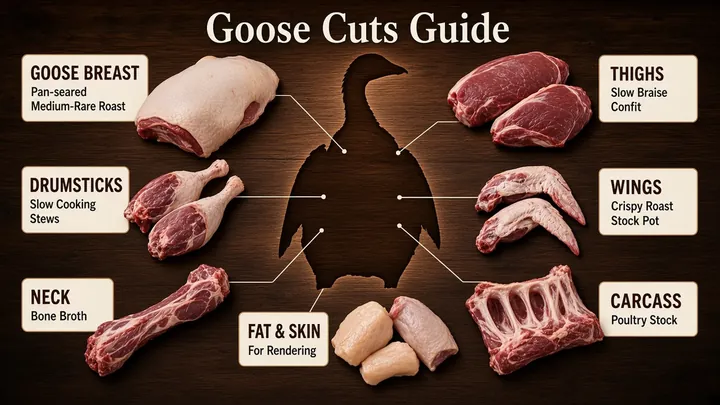
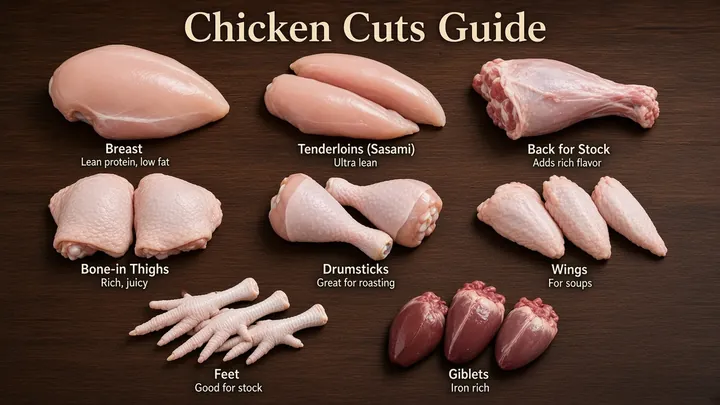
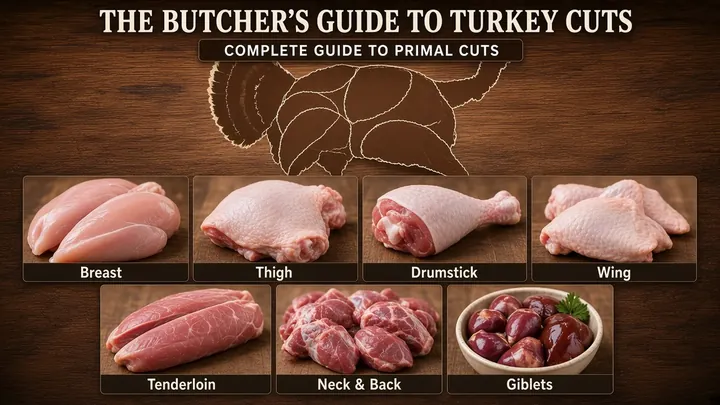
We cut beef, pork and deer every week, and we're glad to answer questions about anything headed for your freezer. Our poultry services are still being finalized, so if you raise ducks or hunt them and want to talk about processing, call or text 252-885-1892 first, or check our poultry page and misc species page for what we currently offer. For other birds, see our chicken cuts guide, turkey cuts guide and goose cuts guide. For every species in one place, see our safe meat cooking temperatures chart.
Sources
- Duck and Goose from Farm to Table — USDA Food Safety and Inspection Service
- Safe Minimum Internal Temperature Chart — USDA Food Safety and Inspection Service
- Food Thermometers — USDA Food Safety and Inspection Service
- A Pocket Guide to Care and Handling of Game Birds from Field to Table — North Dakota State University Extension
- 50 CFR 20.36 Tagging Requirement — Electronic Code of Federal Regulations